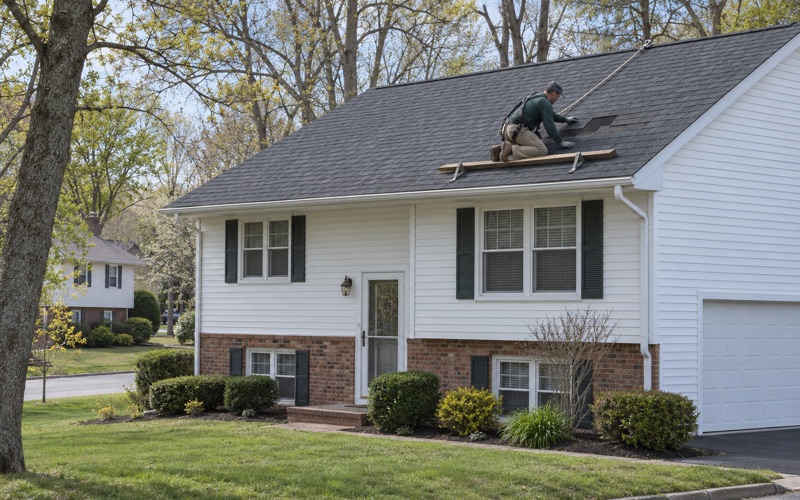
Jackson Elite Roofing brings more than 20 years of experience to roofing in Aberdeen, and this page is written for the owner who is getting ready to sell or re-rent a house. A stained ceiling, a few lifted shingles or a gutter pulling away from the fascia is easy to live with for years. It looks very different the week a house goes on the market.
We start every leak call in the attic as well as on the roof, so the water is followed to the spot where it actually gets in before a number is put on anything. Then you get a plain answer on whether the roof can be repaired, and only if it cannot do we talk about replacement. For a seller on a deadline, that order saves money and days.
Aberdeen adds a step that catches some sellers off guard: a township certificate has to be issued before the house can change hands. Below, we walk through that rule, what landlords face between tenants, and how to fit roof work in front of a closing without letting it run into the date.
Aberdeen’s Certificate of Occupancy Comes Before Any Sale
What the Township Ordinance Requires
Aberdeen Township does not let a house change hands on a handshake and a deed. Under Section 12-2.4 of the township code, as amended by Ordinance 17-2023, adopted December 21, 2023, no owner, agent, real estate agent or broker may sell, transfer, rent or lease a dwelling unit until a certificate of occupancy has first been obtained from the township’s Housing Officer.
The certificate certifies that the building and premises comply with the township’s other ordinances. That wording is broad, and we have not seen a roofing checklist behind it, so we do not tell sellers what the Housing Officer will or will not look at. What we can tell you is the condition of your roof, plainly, before anyone else forms an opinion of it.
Ten Days and the $175 Charge
The ordinance says the certificate is to be granted or denied within ten days of the application. The same 2023 amendment set the residential transfer-of-ownership charge at $175, up from the $150 that Ordinance 3-2016 had set; the charge is non-refundable and paid to the Housing Department. Check the current figure with the township before you file, since ordinances change.
Ten days is not long if a contractor still has to be found, scheduled and paid in that window. A seller who learns about a roof problem after applying is working against two clocks at once, the township’s and the buyer’s. Having the roof looked at before the application goes in takes one of those clocks off the table.
Settling It Before the Application, Not After
A sagging gutter, a stained ceiling or a patch of missing shingles is far easier to settle before the paperwork starts than to argue over once it is underway. Whether or not anyone at the township ever looks up, a buyer’s inspector usually will, and a defect found late tends to become a price conversation rather than a repair.
We file nothing with the township and we are not home inspectors. Our part is narrower and practical: find what is wrong with the roof, fix what can be fixed, and give you a written record of what was done. That record is yours to share with your agent, the buyer and anyone else who asks.
Looking for roofing closer to Lumberton? See Roofing Services in Lumberton.
A New Certificate for Every New Tenant
Landlords Between Tenancies
The rule does not stop at sales. Ordinance 18-2023 amended Section 12-2.5 so that a certificate of occupancy is required before a new occupancy of a rental unit and again before each succeeding tenancy. A 2019 township rental registration form had already told owners to obtain a certificate for each new occupant from the fire district and the Township Housing Inspector.
This touches a sizable share of Aberdeen. Census figures count 2,228 renter households out of 8,097 occupied homes, and 175 of those renters live in detached houses. For an owner of a rented single-family home or a small multi-unit building, every turnover is another certificate application and another reason to know the roof’s condition before the next lease starts.
Working Inside the Turnover Window
The stretch between one tenant moving out and the next moving in is the best time to do roof work on a rental. Nobody’s furniture needs covering, the attic can be opened without disturbing anyone, and a ceiling stain can be traced back to its source while the rooms are empty. We schedule around move-out dates when an owner gives us them early.
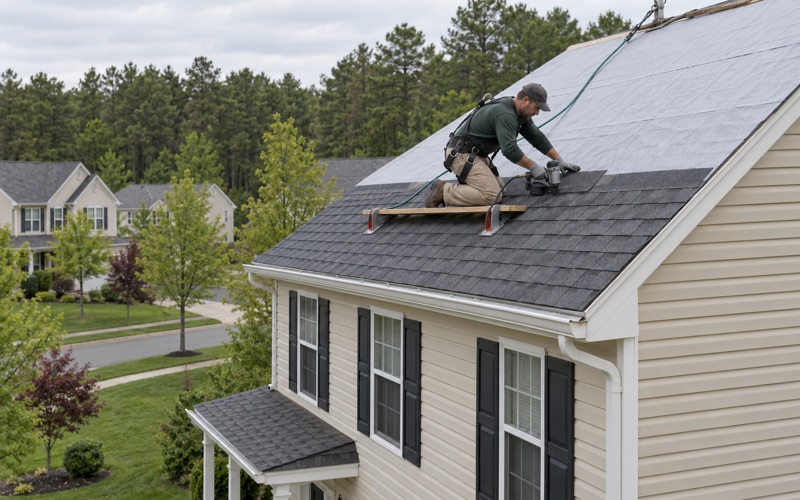
Short windows reward a clear plan. Our written scopes break tear-off, decking, underlayment, flashing, ventilation and gutters into separate lines, so a landlord comparing two estimates can see exactly where they differ. Knowing the full job in advance also means the work can be sized to the days actually available between leases. A repair that fits in a morning gets done in a morning, and a replacement is planned around the vacancy.
Older Rentals and Painted Trim
Aberdeen’s rental rules also reach lead. Section 12-2.6.1 adds a lead-safe certification whenever a certificate is applied for on a rental dwelling unit built before 1978. Census figures date most of the township’s homes to before 1980, so painted fascia and trim on an older rental deserve some thought before anyone starts scraping.
When fascia or trim has to come off or be disturbed on a pre-1978 home, the work falls under the EPA’s RRP lead-safe rule. We plan containment and cleanup for that part of the job up front, so it does not surprise a landlord who is already juggling a certificate application and a move-in date.
Roof Leaks and Gutters to Settle Before Listing
Tracing a Ceiling Stain to Its Source
A brown ring on a bedroom ceiling is the defect a seller most wants gone, and the easiest one to misread. The stain sits where the water dripped, which can be several feet from where it entered. Painting over it hides the symptom for a showing, but a buyer’s inspector with a moisture meter can still find it, and the leak keeps going.
From the attic side, the story is easier to read. Wet sheathing, rusted nail tips and staining along a rafter show the path the water took, and the source is often a flashing joint or a pipe boot rather than the open field of shingles. Fixing the real entry point is usually cheaper than fixing the guess.
Missing Shingles, Flashing and Pipe Boots
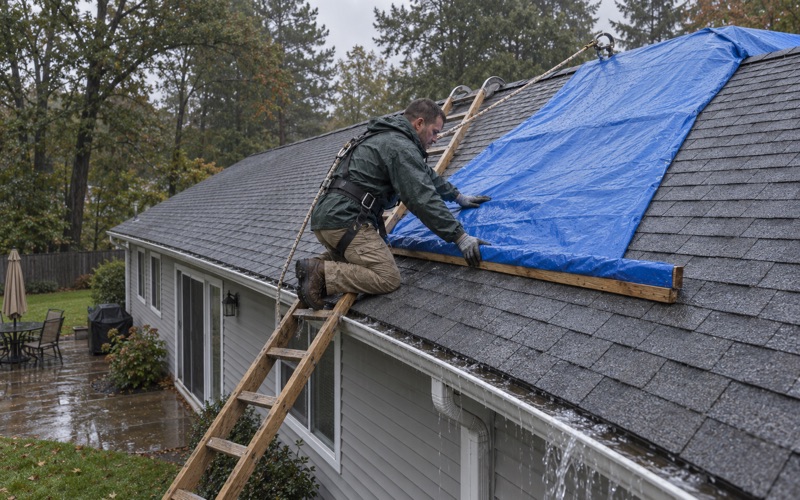
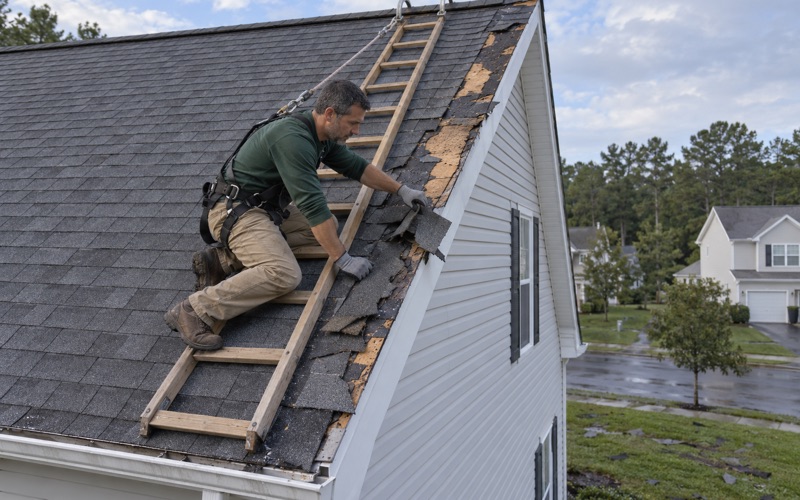
Bare spots where shingles have blown off are obvious from the curb, and buyers notice them in listing photos. Most can be repaired with matching or close-matching shingles if the surrounding roof is still sound. We tell you honestly when that is the case, and when the roof around the gap is too brittle to take a patch without cracking.
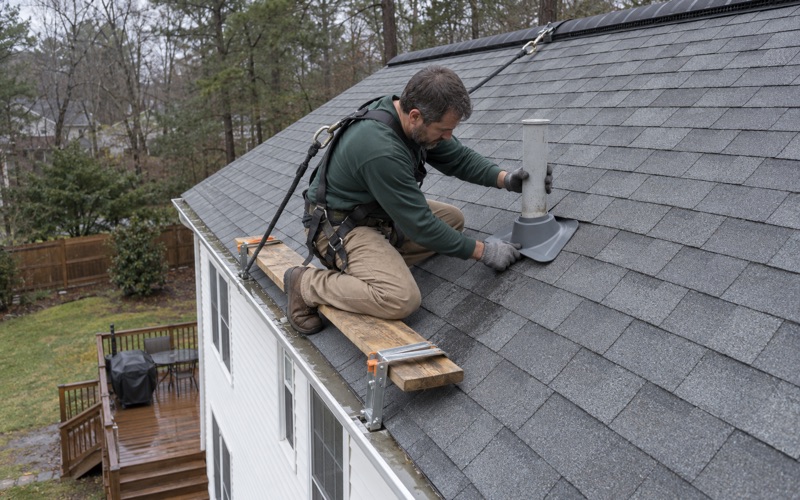
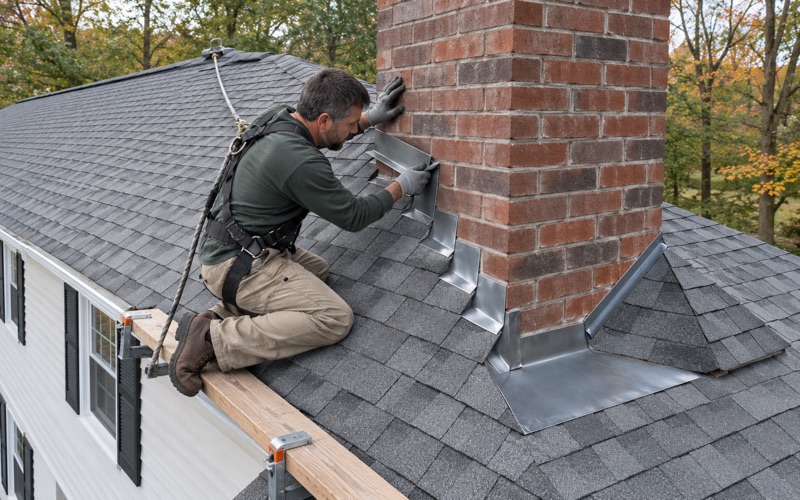
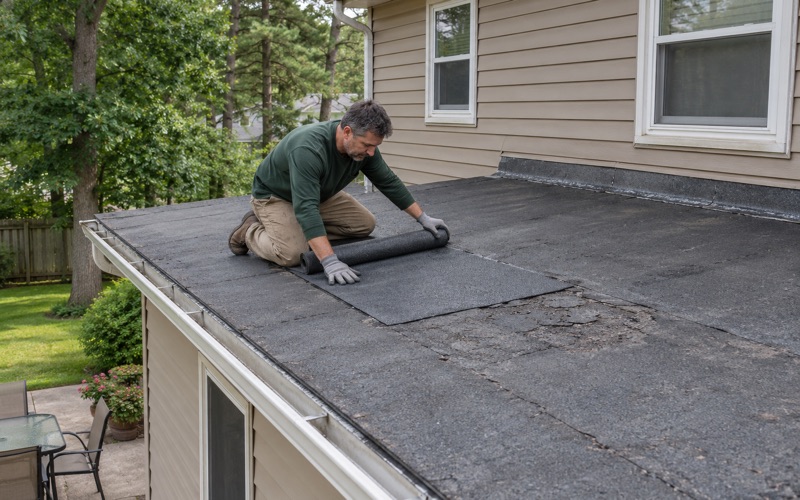
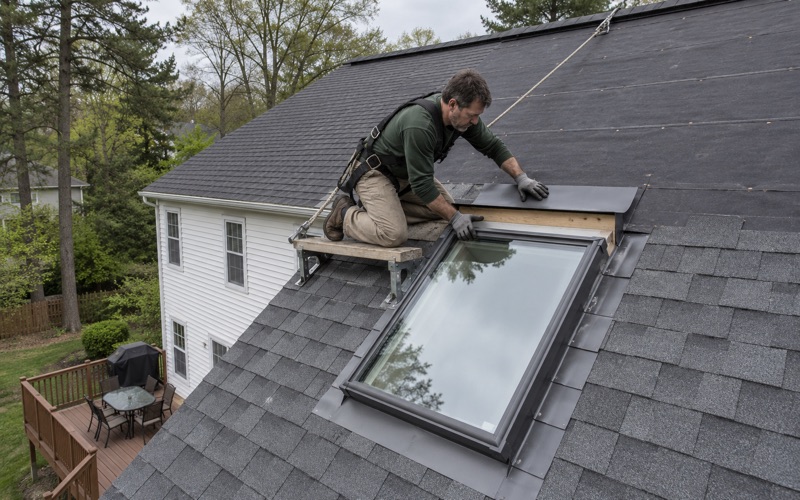
Flashing is where a lot of leaks start. Step flashing along a sidewall, counter flashing at a chimney and the rubber collars on vent pipes all wear out faster than the shingles around them. When a roof is replaced we put in new step, counter and chimney flashing instead of reusing the old metal under fresh material.
Gutters That Sag or Overflow
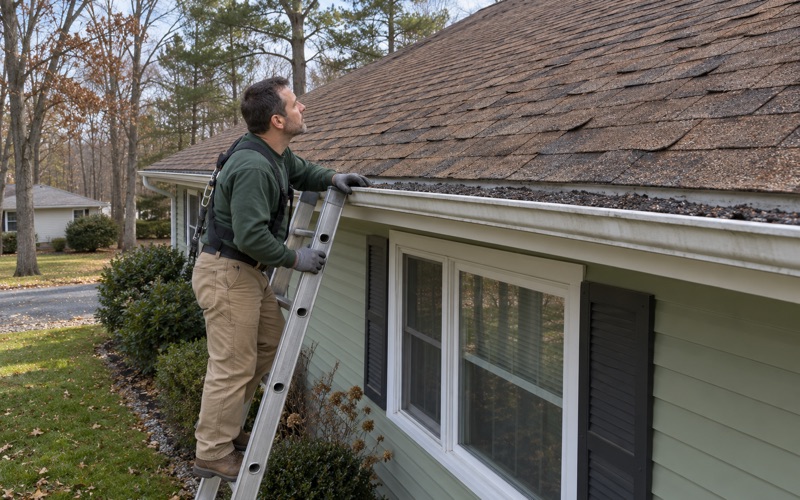
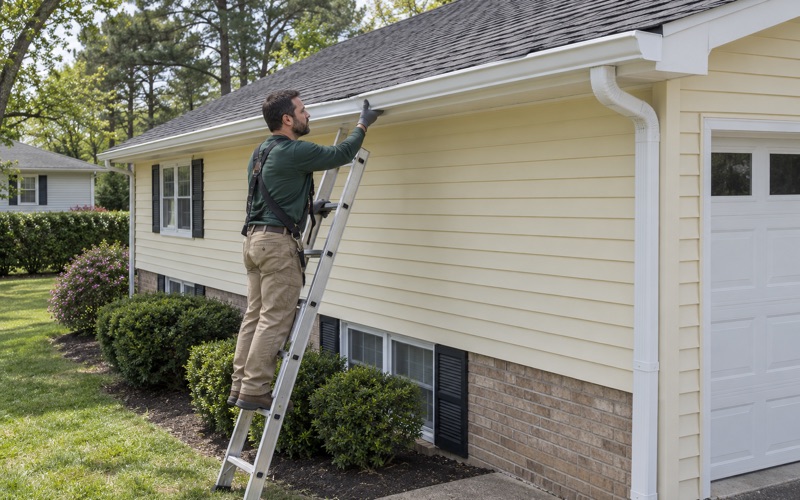
A gutter hanging off the fascia, or one spilling over its front edge in every rain, tells a buyer the water around the house is not being managed. The damage it causes is usually at the eave: rotted fascia, wet soffits and staining down the siding. On a listing, that is the kind of detail that ends up on an inspection report.
We size and pitch gutters and leaders along with the roof, so water runs to the downspouts instead of pooling in the middle of a run. Where trees overhang, we clear out the needles and leaves that clog them and look at the limbs too, since a branch that scrapes the shingles in every wind is part of the roof’s condition.
Timing Roof Work Around an Aberdeen Closing
Repair First, Replacement Only When It Is Due
Sellers in Strathmore, Cliffwood and the rest of Aberdeen often assume a buyer will demand a new roof. That is not a given when the existing one is sound and its defects are fixed. We give you a straight answer on whether a repair will carry the roof through a sale before replacement comes up at all.
Sometimes the answer is that the roof is worn through and patching would be money spent twice. When replacement is the honest call, we say so early, so the decision about whether to replace before listing or credit the buyer is made with real numbers rather than at the closing table under pressure.
A Written Report for the Buyer’s Inspector
For any home being sold, we write up the roof’s condition in a report the seller can hand to the buyer’s inspector. It records what we found, what we repaired and what we left alone and why. A buyer reading a dated, specific account of the roof tends to ask fewer open-ended questions about it.
Photos come with it. If the old roof comes off and the decking underneath is damaged, we photograph it and show you before any sheet is replaced, at a per-sheet price already set in the contract. That way the report and the invoice tell the same story, and nothing in the file looks like a surprise to a buyer.
Building the Schedule Back From the Closing Date
Work backward from closing. Our contracts follow New Jersey’s home improvement rules, including the three-day cancellation notice, so a signed contract is not a start date on its own. Add time for materials, a weather window and, if the house carries solar panels, the removal and reinstall, which we put in the schedule rather than discover on the day.
On a replacement we also check attic ventilation, because a roof that cannot breathe ages from underneath, and a buyer’s inspector may well note a hot, damp attic. At the end of each work day the driveway, yard and gutters are cleaned, with a magnet sweep for nails, so the house can still be shown while the job is underway.
If you are listing in the next few months, call us before the certificate application, not after. A roof that has been looked at, repaired where it needed it and written up gives you one less thing to negotiate when the buyer’s report arrives.
- 20+ Years in Business
- Free Written Estimates
- Attic Checked on Every Leak Call