Jackson Elite Roofing brings more than 20 years of roofing in Asbury Park to one question many owners never ask: once rain lands on the roof, where does it go next? A tight shingle field means little if the edges, valleys and drains cannot move the water off quickly. We look at the whole path, from the ridge to the ground, before we talk about anything else.
When a leak call comes in, we climb into the attic as well as onto the roof. Water often enters several feet from the stain on the ceiling, and pricing a fix before we know the real entry point is guesswork. You also hear from us, plainly, whether the roof can be repaired before replacement is ever on the table.
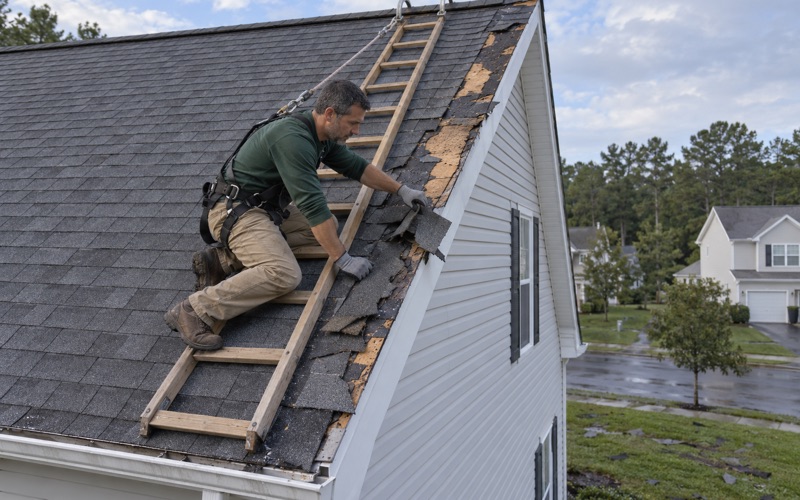
If replacement is the right call, our written scope breaks tear-off, decking, underlayment, flashing, ventilation and gutters into separate lines. That lets you set our estimate beside another one and compare them item by item instead of trying to read two lump sums. Gutters sit on that list on purpose, because on many local roofs they are the part doing the hardest work.
The September 29, 2023 Rain in Asbury Park
What the gauges recorded
On September 29, 2023, the National Weather Service office in Mount Holly had logged 4.39 inches of rain in Asbury Park by 6:23 p.m. that Friday, and the rain was still falling when that number went out. It was a running count taken in the middle of the storm, not a final figure for the day.
Later totals from the National Weather Service and Rutgers put Deal Lake, on the city’s northern edge, at 5.84 inches for the day. Taken together, the two readings describe a single afternoon and evening in which several inches of water came down on the same blocks, the same porches and the same roof edges in a matter of hours.
Where the water ended up
The reports from that day describe water filling apartment parking lots and elevator shafts at buildings on Deal Lake Drive and at Asbury Tower, a senior apartment building, where the elevators were shut down. On Cookman Avenue, the basement of the House of Independents took on three feet of water.
None of those reports described roof damage, and we will not pretend they did. The flooding was water at ground level, which is not roofing work and not something we take on. What the storm does show is how much water a roof in this city can be handed in one stretch, and how fast it all has to go somewhere.
Why drainage gets tested before shingles
In rain that heavy, the first parts of a roof to be pushed are the ones that collect and carry water: gutters, leaders, scuppers and valleys. That is general roofing practice rather than anything measured on a particular house here. Shingles shed water well while it keeps moving; trouble starts where it backs up and finds a seam.
The city sits in the National Weather Service’s Eastern Monmouth forecast zone. That is a forecast area, not a climate record, so we do not quote a design rainfall rate for Asbury Park. We plan drainage so it keeps pace with storms like the one already on the books, and we explain each choice in writing.
Looking for roofing closer to Eatontown? See Eatontown Roofing.
Where a Roof Sheds Four Inches of Rain in an Afternoon
Valleys carry the heaviest load
A valley gathers water from two roof planes and sends it down one narrow channel, so it carries far more than any open stretch of shingles. On a house with dormers or a cross-gable, a single valley can be draining a large share of the whole roof. When that channel is worn, cut short or packed with debris, water climbs sideways under the courses.
On a replacement we line every valley with ASTM D1970 self-adhering ice and water barrier before the finish goes on, then choose an open metal or closed-cut valley to suit the shingle and the pitch. The membrane is the backup that matters when a downpour briefly outruns the valley and water stands where it normally just passes through.
Eaves, drip edge and the gutter line
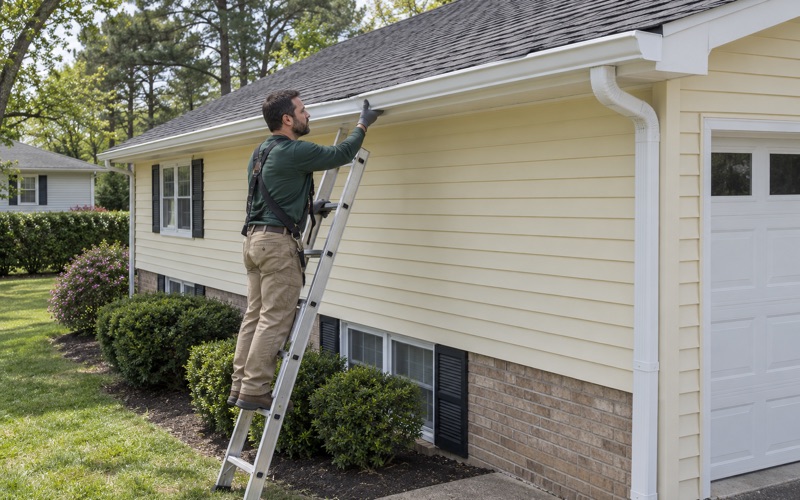
At the eave, water leaves the shingles and has to drop cleanly into the gutter instead of curling back toward the fascia. Drip edge at eaves and rakes is what makes that break. Without it, a heavy rain wicks behind the gutter, soaks the fascia board and runs down the face of the wall behind it.
We install drip edge on every roof we replace and set the gutter so the shingle edge lands over its center rather than beside it. On older houses where the fascia has gone soft, we show you the rot before we touch it. Painted trim on a home built before 1978 is handled under the EPA lead-safe rule.
Reading overflow marks
A gutter that overflowed in a big storm usually leaves evidence: streaks on the siding, a washed-out strip of mulch, staining on the underside of the soffit. We look for those marks because they show exactly where the system ran out of room during the last real test, which is better information than any guess.
Overflow at one corner often means a leader that is too small or partly blocked, not a gutter that is too short. Overflow along the whole run points to pitch or capacity. Each answer leads to a different repair, and we explain which one we found before we price anything, so you are not paying to fix the wrong part.
Gutters, Leaders and Splash-Out on Prewar Houses
Old houses, original drainage
Asbury Park’s housing is old. Census estimates for 2024 date 3,225 of the city’s 8,681 housing units, or 37.1 percent, to 1939 or earlier. Many of those houses still carry gutters and leaders sized for a different era, patched over the decades or replaced piece by piece without anyone looking at the system as a whole.
On a prewar house we measure the roof areas feeding each gutter run, count the leaders and check where each one drops. Seamless aluminum gutters and leaders can be sized up and pitched to the roof, and adding a leader on a long run is often cheaper than replacing a gutter that was never the problem.
Where leaders send the water
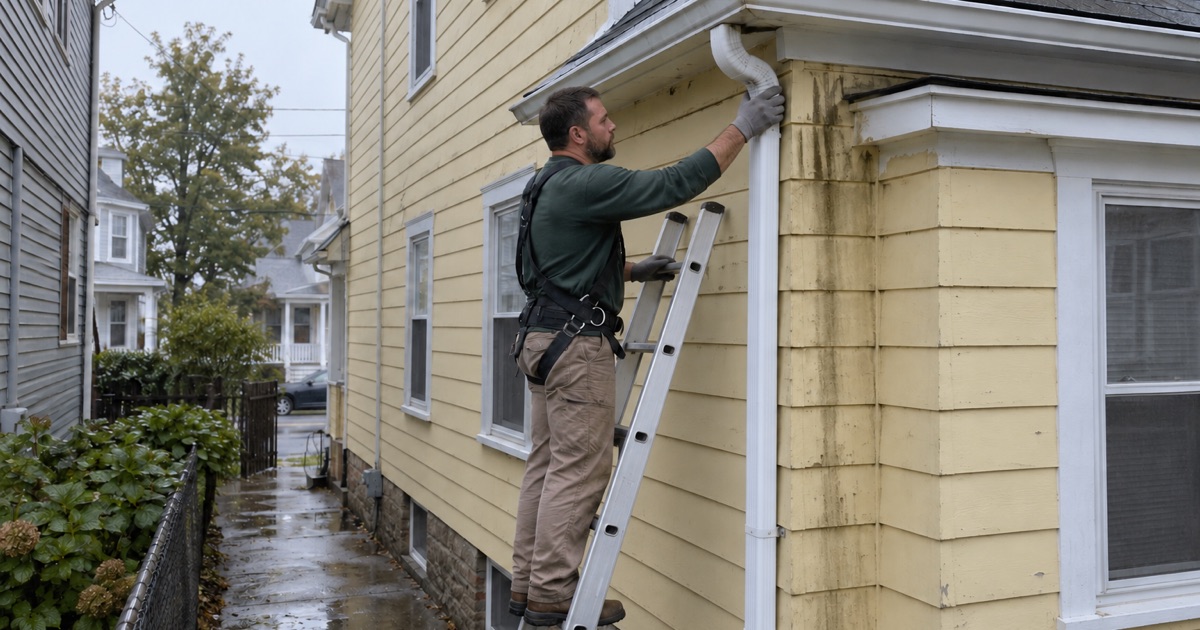
A leader that empties right against the foundation simply moves the roof’s water to the wall. We extend leaders or add splash blocks so the discharge lands away from the house, and we look at where it then travels: toward a neighbor’s yard, a walkway or a basement window well that will hold it.
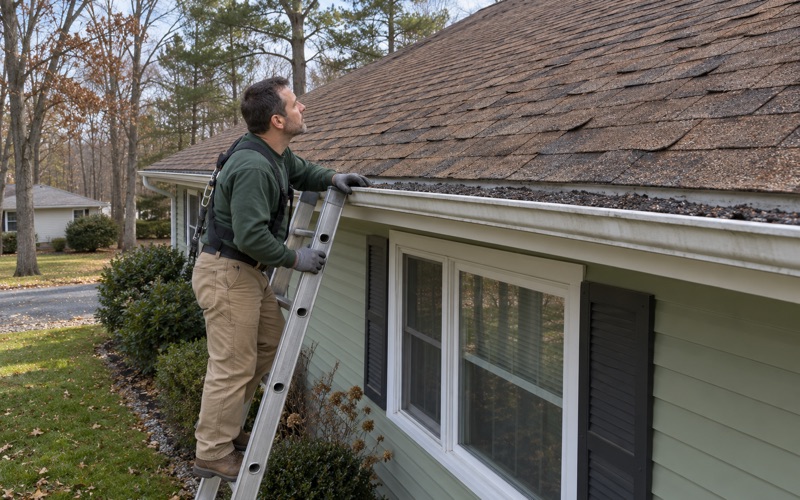
We size gutters and leaders together with the roof rather than as an afterthought, and we keep the outlets clear of the pine needles and leaves that choke them every fall. A clogged outlet turns the best gutter on the block into a trough that spills over the front edge at the first heavy rain.
Flashing where roofs meet walls
Prewar houses here tend to have roofs meeting walls at porches, bays and additions, and each of those joints sends water sideways. Kick-out flashing at the bottom of a roof-to-wall line throws that water into the gutter instead of letting it run down behind the siding, which is where hidden rot usually starts.
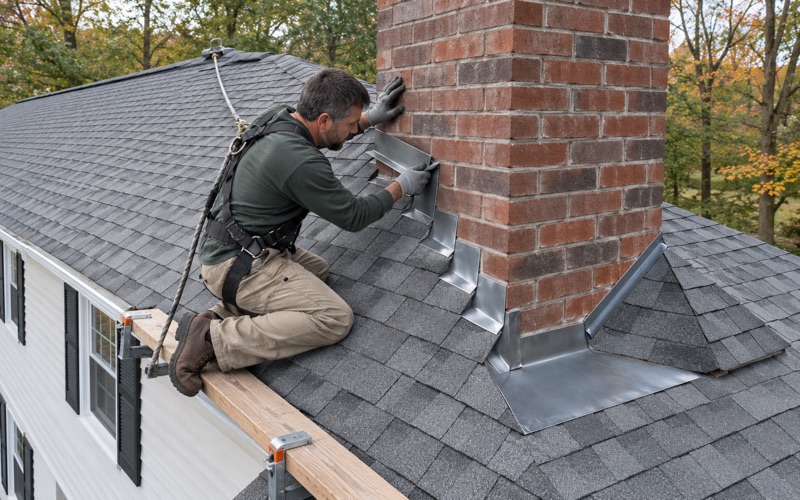
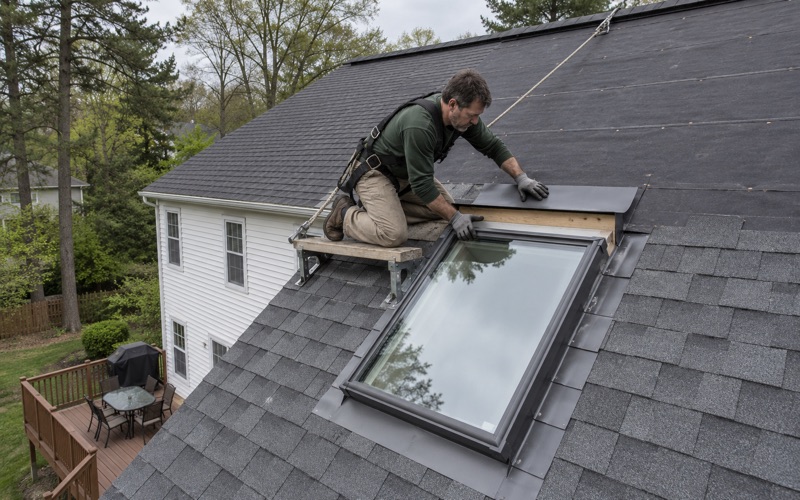
Step, counter and chimney flashing is replaced with the roof, not reused under new shingles. A chimney wider than 30 inches gets a cricket behind it so water splits around the masonry instead of pooling against it. These details cost little when the roof is open and far more once a hidden leak has run for a few seasons.
Scuppers, Flat Roofs and Checking Drainage After a Storm
Scuppers and parapets on multi-unit buildings
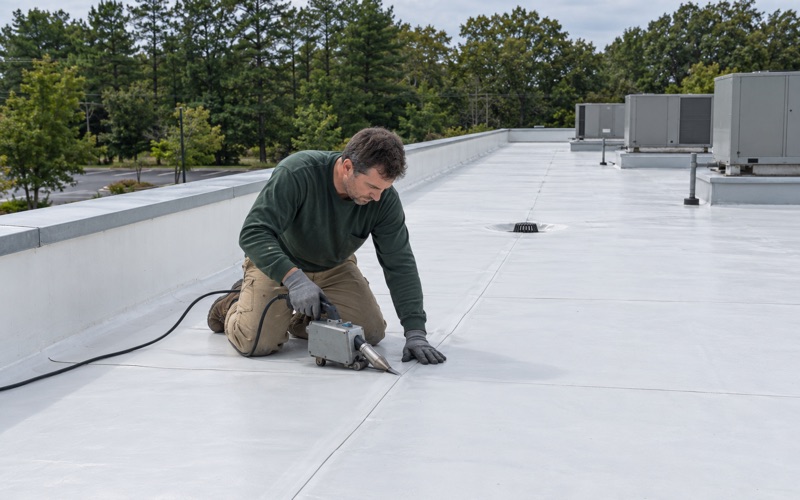
Census estimates count 1,759 units in Asbury Park in two- to four-unit buildings, and many of those have low-slope roofs behind a parapet. With no eave to drop over, water leaves through scuppers in the parapet wall or internal drains in the roof. If those openings are small or partly blocked, water sits on the membrane.
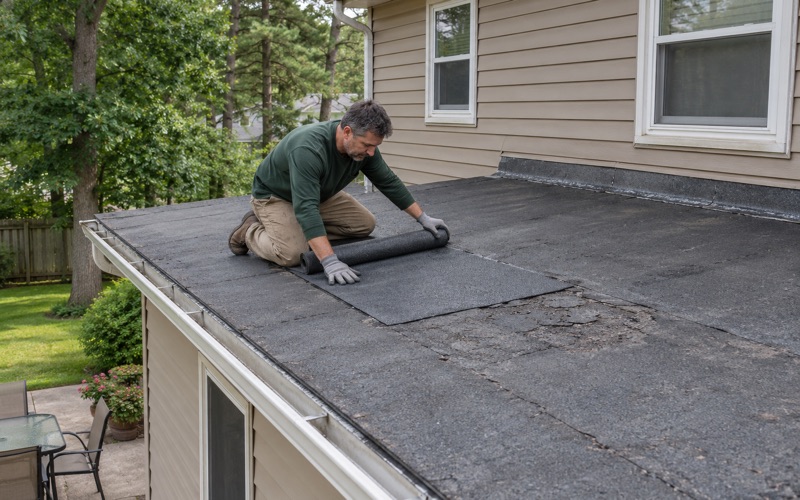
We check that scuppers are large enough, flashed into the membrane and open, and that the roof actually slopes toward them instead of ponding in the middle. On replacement we work in EPDM, TPO and torch-down modified bitumen, building tapered insulation where needed so a heavy rain reaches the outlets rather than resting on the roof.
Who signs off on the work
Under N.J.A.C. 5:23-2.7, replacing the roof covering on a detached one- or two-family house is ordinary maintenance and needs no permit. Three- and four-unit buildings, attached rows and larger buildings fall outside that exemption, so that work goes through the Asbury Park Construction Department at 1 Municipal Plaza, and we plan the schedule around it.
For buildings of three or more units, the state’s multiple-dwelling rule, N.J.A.C. 5:10-7.4, requires roofs to be maintained so they keep water out, with badly worn material repaired or replaced. Owners of those buildings can call us to confirm the drainage is doing its job, and we put what we find in writing they can keep on file.
A drainage check after heavy rain
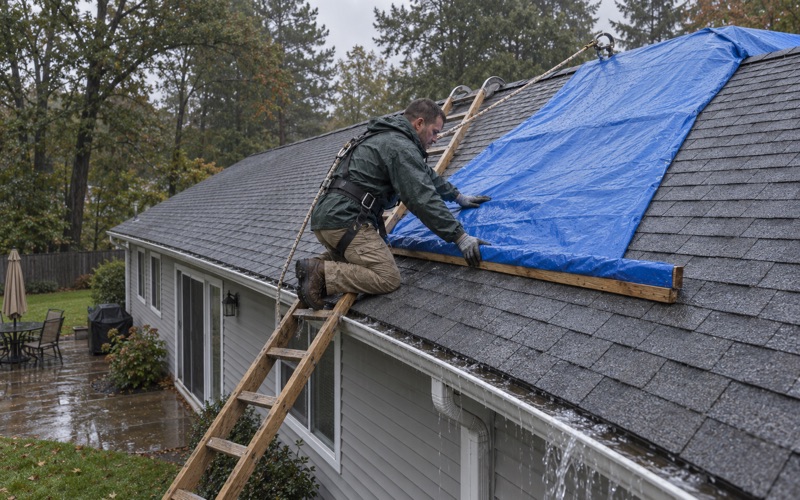
After a storm like the one on September 29, 2023, we walk the roof and the attic in the same visit. Up top we clear valleys, gutters and scuppers and look for debris lines that show where water backed up. Inside we look for damp sheathing or fresh staining that would mark a new entry point.
If we find storm damage, we photograph it and write it up so you can file your own claim, and we will meet the insurance adjuster on site when you ask. If the drainage simply needs more capacity, we tell you that instead. Every work day ends with the yard, driveway and gutters cleaned, including a magnet sweep for nails.
- 20+ Years in Business
- Free Written Estimates
- Attic Checked on Every Leak Call