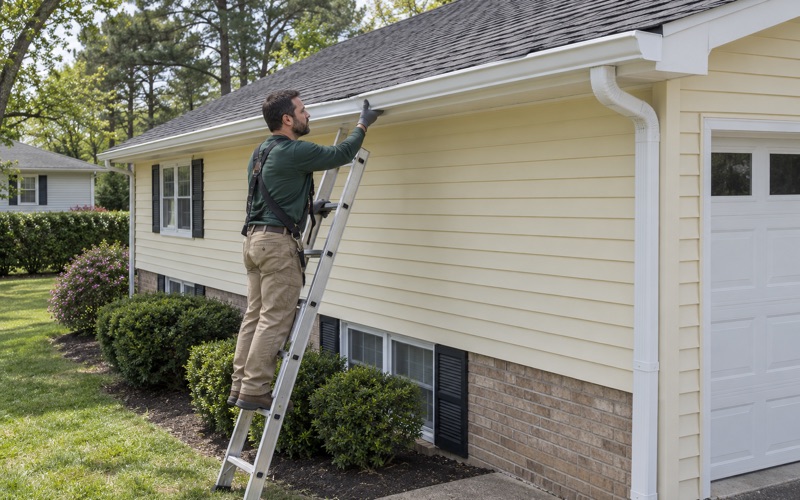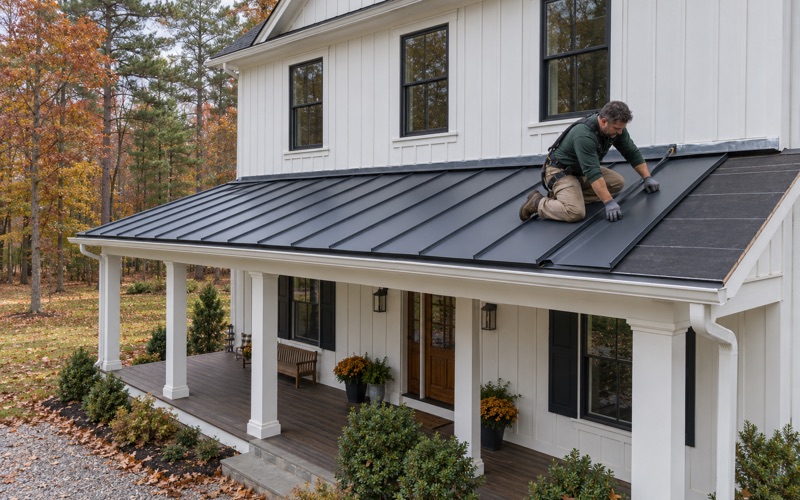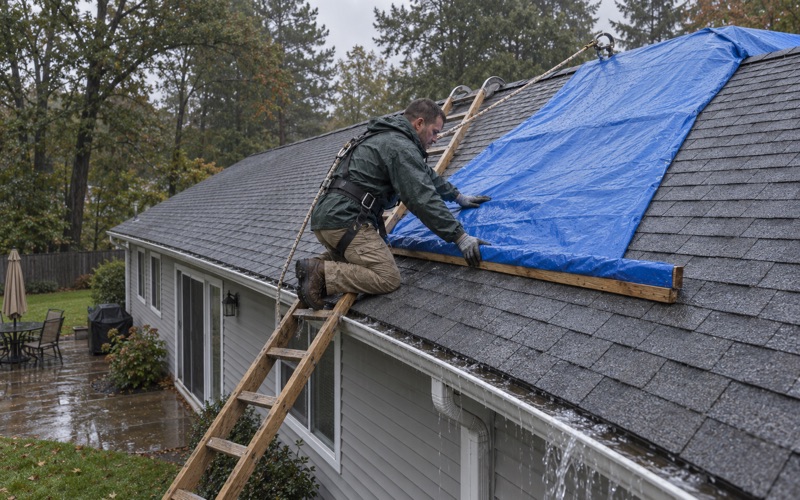
Jackson Elite Roofing brings more than 20 years of experience to roofing in Beachwood, from a single lifted tab to a full tear-off and new deck where one is needed. Most calls start with a question about a leak or a storm, and our first job is answering it plainly: can this roof be repaired, or has it reached the end? You get that answer before anyone mentions a replacement price.
Every leak visit covers the attic as well as the shingles. Water rarely drips where it enters, so we follow the stain back along rafters and sheathing until we find the real entry point, then price the fix for that spot. A repair aimed at the wrong place costs twice, once for the patch and again for the ceiling it failed to save.
This page is about one question owners ask after a big coastal storm: which deductible applies when wind damages the roof? The answer in New Jersey turns on how the National Weather Service labeled the storm when it reached the state, and that classification can matter more to an owner’s out-of-pocket cost than the wind speed itself. Here is how the rule works and what we document.
Beachwood Homes and the Deductible Question
A Borough of Owner-Occupied Detached Houses
Beachwood is a borough of 2.76 square miles in Ocean County, incorporated in 1917 from parts of Berkeley Township after a 1914 summer-colony plan backed by the New-York Tribune. Today almost every home is a detached house: the 2024 American Community Survey counts 4,245 detached units out of 4,258, and 3,690 owner-occupied detached houses.
That makes the roof a personal expense here far more often than an association line item. When a storm passes, the owner is the one reading the policy, calling the carrier and deciding whether to file. Knowing which deductible a wind claim may fall under is part of deciding whether a repair is worth claiming at all.
Houses From the 1970s and 1980s
Most of the borough’s housing went up during its growth years: 2,607 units, about 61 percent, were built between 1960 and 1989, with 1,182 from the 1970s alone. Many of those roofs are on their second or third covering, and some carry two layers that New Jersey’s rehabilitation subcode requires stripping before the next one goes on.
An older roof also changes how storm damage reads. A shingle that lifts on a worn roof may look like wind damage to an owner and like age to an adjuster. We note the condition we find honestly, including wear that was there before the storm, because a write-up that overstates storm damage helps nobody.
Why the Deductible Gets Asked About First
A standard deductible is usually a fixed dollar amount. A hurricane deductible is different: New Jersey’s 2012 guidance says it typically runs two to five percent of a property’s insured value. On a house insured for several hundred thousand dollars, that percentage can exceed the cost of a modest roof repair entirely.
So owners reasonably want to know which one they could face before they call anyone. The rule is narrower than many people assume, and it does not depend on what the storm felt like from the front porch. It depends on two tests the state wrote down, and both have to be met.
Looking for roofing closer to Point Pleasant? See Roofing in Point Pleasant.
How New Jersey Decides a Storm Is a Hurricane
The First Test: A Hurricane Named by the National Weather Service
Under DOBI Bulletin 11-16, the state’s insurance regulator allows an insurer to apply a hurricane deductible only when the storm is a hurricane named by the National Weather Service. A tropical storm, a nor’easter or a post-tropical system does not qualify, however strong it is. The classification comes from forecasters, not from the insurer or the homeowner.
For Beachwood, forecasts and warnings come from the NWS Mount Holly office, which covers the borough within forecast zone NJZ020. That office’s products and storm summaries are where the classification of a storm affecting Ocean County is recorded, which makes its wording worth reading after any major storm.
The Second Test: 74 MPH Sustained, Measured in New Jersey
The bulletin’s second condition is wind speed: sustained winds of 74 mph or more measured in New Jersey. Sustained wind is an average over time, not a single gust, and the reading has to come from within the state. A storm can produce violent gusts along the coast and still fall short of that sustained figure.
That distinction matters because gust reports dominate the news after a storm. Owners hear a dramatic number and assume the high deductible applies. Under the state’s tests, gusts alone do not settle it; the sustained measurement and the storm’s name do.
What the Two Tests Leave Out
Neither test asks how much damage a particular house took or how loud the wind sounded overnight. Two roofs could suffer the same lifted ridge caps under a hurricane and under a post-tropical storm with identical winds, and only one of those storms would bring the percentage deductible into play.
None of this is a forecast for the next storm. A future system could arrive in New Jersey as a named hurricane with qualifying sustained winds, and then a percentage deductible may apply under policies that carry one. The point is to check the official record before assuming either outcome.
Individual policies still differ in wording, and we have not read yours, so the policy itself and your carrier are where the final answer lives. What the state rule gives you is a starting point for the right question: was this storm a named hurricane with qualifying sustained winds in New Jersey?
Sandy and Executive Order 107
Reclassified Before Landfall
Sandy is the case that made the rule familiar along the Jersey Shore. The NWS Mount Holly storm summary records that after 5:00 p.m. on October 29, 2012, Sandy’s classification was changed to post-tropical. Its landfall came about three hours later, at 8:00 p.m., just south of Atlantic City.
By the time the center crossed the coast, then, it was no longer a hurricane in the Weather Service’s own terms. That single change in label, made hours before landfall, is what the state relied on when owners began asking which deductible their carriers could apply.
The State’s Ruling
On November 2, 2012, the Christie Administration announced under Executive Order 107 that because the National Weather Service classified Sandy as a post-tropical storm prior to landfall in New Jersey, the storm did not meet the first regulatory threshold required to apply a hurricane deductible.
For owners, the practical effect was simple to state. Wind claims from Sandy were subject to the standard deductible on each policy rather than a percentage of the home’s insured value, which on many houses could mean a much smaller share of the repair coming out of the owner’s pocket.
The ruling did not depend on the second test at all. Once the first threshold failed, the question of sustained wind speed never had to be answered. That is the clearest example of classification, rather than force, deciding which deductible a roof claim falls under.
Gusts Near 90 MPH Did Not Change It
Sandy was not a mild storm on this stretch of coast. The same NWS summary notes that several wind gusts in Ocean County were close to 90 mph, with the highest in its coverage area, 89 mph, at Surf City, and many regions reporting gusts over 50 mph.
Even so, the post-tropical label kept the hurricane deductible off the table statewide. For a Beachwood owner weighing a future claim, the lesson is that a frightening night is not evidence of which deductible applies. The storm’s official name at landfall in New Jersey is the fact to check first.
Documenting Wind Damage for Your Own Claim
What We Photograph and Write Up
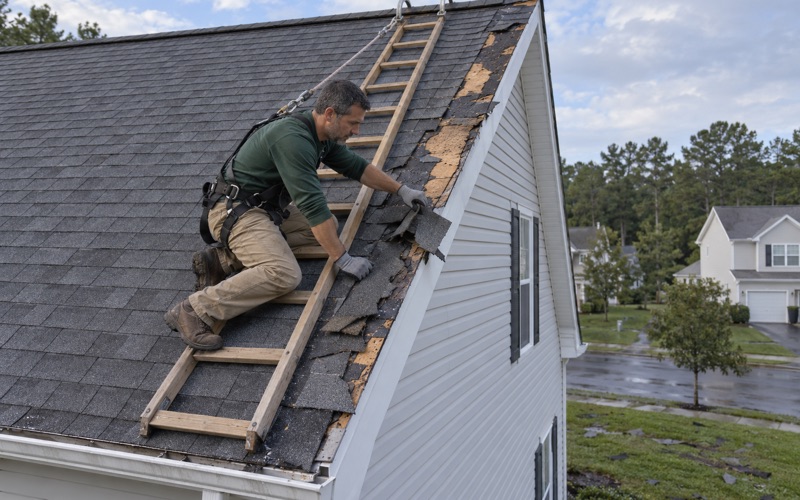
After a named storm or any hard blow, we inspect the roof and the attic, then photograph what we find: creased or missing shingles, lifted ridge caps, displaced drip edge, torn pipe boots and loosened step flashing. Each photo is tied to a written note on location and condition, so the record makes sense to someone who never climbed up.
That write-up belongs to you, for your own claim with your own carrier. If you ask, our crew will meet the insurance adjuster on site to show what we found. We do not handle, negotiate or settle claims; New Jersey reserves that work for public adjusters licensed under N.J.S.A. 17:22B.
Timing matters too. Each photo carries the date of the visit, so the record shows when the damage was found relative to the storm. If a repair is needed before an adjuster can visit, the photos come first, so the fix never hides what the adjuster needs to see.
Repair or Replace, Priced Line by Line
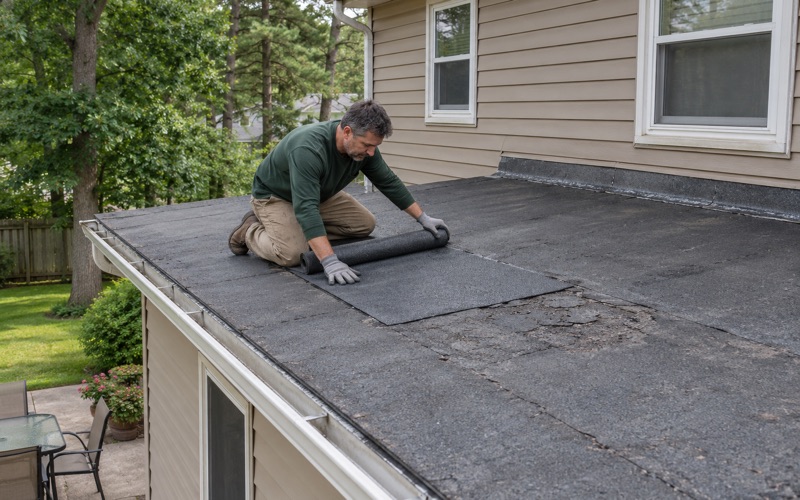
Our answer on repair comes before any talk of replacement. If a section can be fixed with matching shingles and new flashing, we say so. When replacement is the honest call, the written scope separates tear-off, decking, underlayment, flashing, ventilation and gutters into their own lines, so it can be set beside another estimate item by item.
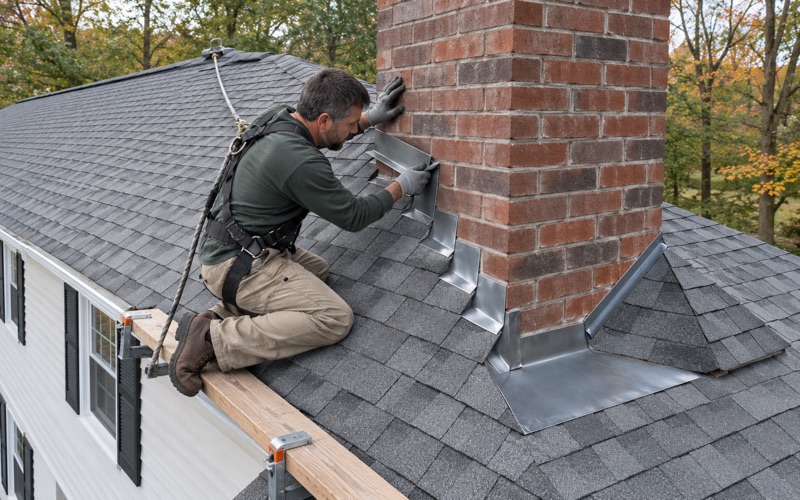
Rotten decking only shows once the old roof is off. When we find it, we photograph it and show you before replacing it, at the per-sheet price set in the contract. Step, counter and chimney flashing is replaced with the new roof rather than reused, and attic ventilation is checked so the new covering does not age from underneath.
Contracts, Schedule and Cleanup
Re-roofing a detached one- or two-family house is ordinary maintenance under N.J.A.C. 5:23-2.7, so no construction permit is needed for the covering itself. Our contracts follow New Jersey’s home improvement rules, including the three-business-day cancellation notice, and name the materials, such as architectural shingles rated to ASTM D7158 Class H.
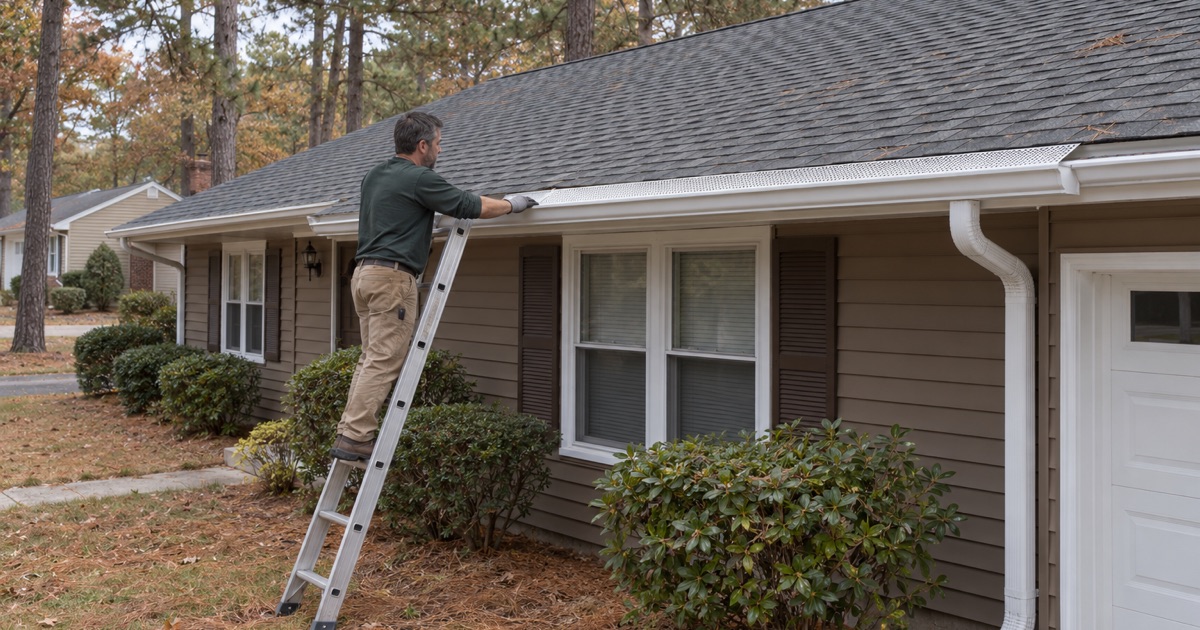
Gutters and leaders are sized and pitched as part of the roof plan rather than as an afterthought, and we keep them clear of the pine needles that clog them. Seamless aluminum gutters are measured and formed to the run of the house, so there are fewer joints to open up over time.
Pines and oaks that overhang the roof get looked at during the same visit, since a limb that scrapes shingles in every wind is part of the roof’s condition. At the end of each work day, the driveway, yard and gutters are cleaned and the lawn gets a magnet sweep for nails.
- 20+ Years in Business
- Free Written Estimates
- Attic Checked on Every Leak Call