Jackson Elite Roofing provides commercial roofing in Jackson, NJ, serving surrounding cities including Vista Center, Cedar Glen West, Leisure Knoll, Leisure Village West and Plumsted. With more than 20 years in roofing, we repair and replace the low-slope and metal roofs that cover the area’s stores, offices, small warehouses, mixed-use buildings and association clubhouses.
Commercial roofs fail differently from houses. Water does not run off quickly, so seams, drains and the flashing around rooftop equipment do most of the work, and a small opening can soak insulation across a large area before anyone sees a stain. Our inspections focus on those points and on how water actually leaves the roof.
Every commercial proposal we write lists tear-off, insulation, membrane, flashing, drainage and permit costs as separate lines. That lets owners, managers and boards compare our scope with any other bid item by item.
Commercial Roof Membranes
TPO and PVC Single-Ply Roofs
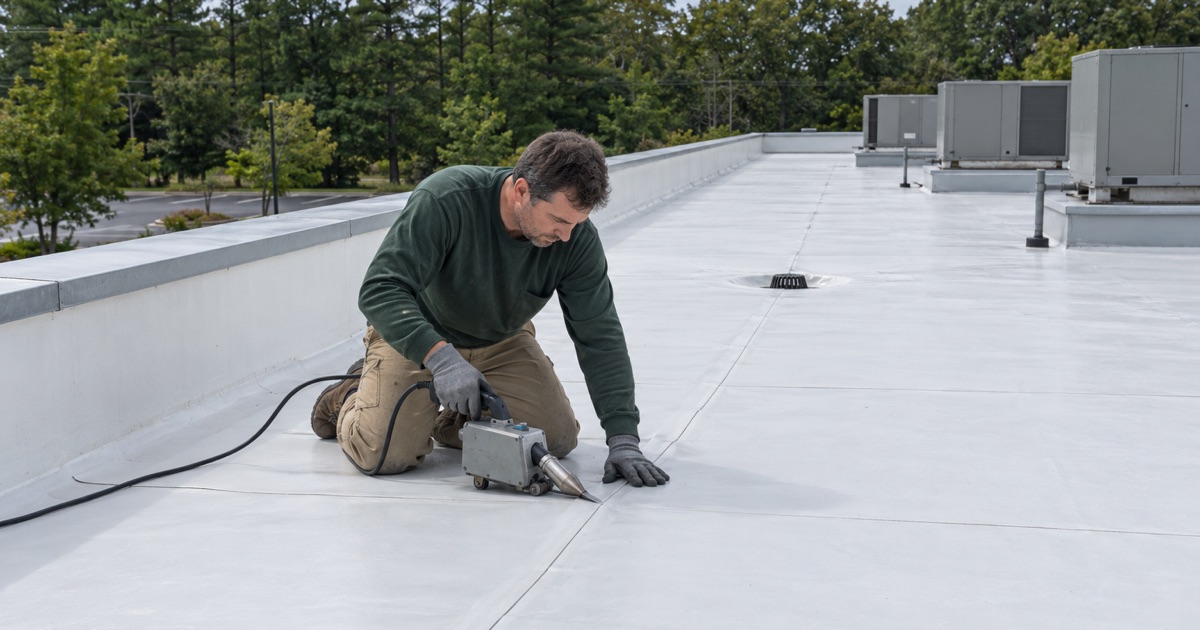
TPO and PVC are single-ply membranes delivered in wide rolls and joined with hot-air welded seams, which become as strong as the sheet itself when done correctly. Their light color reflects sun and keeps rooftop temperatures down, which helps buildings with large cooling loads. We test welded seams as we go, because a cold weld that looks fine on day one is the most common cause of early leaks on these roofs.
EPDM Rubber Roofs
EPDM is a durable synthetic rubber membrane with a long history on commercial buildings. It is usually installed in large sheets, adhered or mechanically fastened, with seams joined using tape or adhesive systems. EPDM tolerates temperature swings well, and older EPDM roofs can often be repaired or recovered when the field membrane is still sound but the seams and flashing have aged.
Torch-Down Modified Bitumen
Modified bitumen is an asphalt-based system reinforced with polyester or fiberglass and modified with SBS or APP polymers for flexibility and durability. It is installed in multiple plies, often torch-applied, giving a thick, tough surface that handles foot traffic around rooftop equipment. We follow strict fire-safety practices with torch-down, including keeping torches away from combustible edges and doing a fire watch after the work.
Drainage, Flashing and Rooftop Equipment
Drains, Scuppers and Ponding Water
Water left standing on a low-slope roof for days after rain speeds up membrane aging and finds every weak seam. We check interior drains, scuppers, collector boxes and gutters, and look for low spots where the deck has deflected or insulation has compressed. Where ponding is chronic, we can add tapered insulation or crickets during replacement to move water toward the drains.
Parapets, Edges and Curbs
Parapet walls, roof edges and equipment curbs are where commercial roofs leak most often. Membrane flashing has to be carried up the wall and terminated properly, and metal coping and edge trim must be secured so wind cannot peel the roof back from its edge. We rebuild deteriorated base flashing and counter flashing with a reglet or termination bar rather than relying on sealant alone.
Rooftop Units and Penetrations
HVAC units, exhaust fans, pipes and conduit all pass through the roof, and each penetration is a potential leak. Over time, service technicians walking to the units can damage the membrane, and pitch pans can dry out and crack. We repair and reflash penetrations, add walk pads along service routes and coordinate with your mechanical contractor when units need to be lifted for a replacement.
Metal and Steep-Slope Commercial Roofs
Metal Roofs on Commercial Buildings
Many small commercial and agricultural buildings have exposed-fastener or standing seam metal roofs. Exposed-fastener roofs leak as washers age and screws back out, while standing seam roofs tend to fail at trim and transitions. We replace fasteners, reseal laps, repair trim and replace damaged panels, and we will tell you when a restoration coating is a sensible next step.
Shingle Roofs on Offices and Clubhouses
Offices, clubhouses and mixed-use buildings often combine steep shingle sections with flat areas over additions or entrances. Those transitions are prone to leaks, because two different systems have to share water. We handle both systems on the same job, so one crew is responsible for the joint between them rather than two trades blaming each other.
Permits, Safety and Planning
Permits and Inspections
Unlike a detached house, a commercial roof replacement in New Jersey is permit work. We prepare the permit application, schedule the required inspections and keep the documentation for your records. Planning this up front prevents a project from stalling with the old roof half removed.
Safety and Working Around Occupants
Crews working at height follow OSHA fall protection requirements, using guardrails, warning lines or personal fall arrest systems as the roof requires. We set up staging and debris chutes away from entrances, protect walkways and coordinate noisy work around your business hours, so customers and staff can move safely while the job is underway.
Associations and Capital Planning
Condominium and 55+ associations often have several buildings and a clubhouse under one board. New Jersey requires planned real estate developments to prepare capital reserve studies, and roofs are typically among the largest items in them. Our inspection reports give boards photographs and condition notes they can use to plan replacements building by building, rather than reacting to one leak at a time.
Storm Damage and Insurance
After a windstorm, commercial roofs can lose edge metal, coping and sections of membrane, or take damage from flying debris. We photograph and document storm damage for the owner’s claim and can meet the insurance adjuster on site when asked. Temporary repairs are made quickly to protect the building and its contents while the claim proceeds.
- 20+ Years in Business
- Free Written Estimates
- Attic Checked on Every Leak Call