Jackson Elite Roofing handles emergency roof repair in Jackson, NJ, serving surrounding cities including Vista Center, Cedar Glen West, Leisure Knoll, Leisure Village West and Plumsted. When a storm tears off shingles or a limb comes through the roof, our first job is stopping more water from getting into your house, and our second is making sure the damage is documented for your claim.
In more than 20 years of roofing, we have learned that the decisions made in the first hours after storm damage matter as much as the repair itself. A secure tarp, good photographs and a clear record of what happened protect both the house and your insurance claim.
Once the emergency is under control, we come back for the permanent repair, quoted on a written, itemized scope. You decide on the permanent work with a clear head, not while water is dripping into the living room.
The First Hour After Roof Damage
Keep Everyone Safe First
If a tree or large limb has hit the house, get everyone out of the rooms under the impact and stay away from sagging ceilings. If power lines are tangled in the tree or touching the house, stay clear and call the utility before anything else. Do not climb onto a damaged roof during or right after a storm; wet, broken shingles and hidden holes make it far more dangerous than it looks from the ground.
Protect the Inside of the House
While you wait for us, catch dripping water in buckets, move furniture and electronics away from the leak and roll back rugs. If a ceiling is bulging with water, a small hole at its lowest point lets it drain into a bucket rather than collapsing. Turn off power to any room where water is reaching light fixtures or outlets.
Photograph Everything Before Cleanup
Take photographs and video of the roof from the ground, the yard, the tree or debris and every interior stain, before anything is moved. Keep receipts for buckets, tarps, emergency services and any hotel stay. Those records are what your insurer will ask for, and they are much harder to recreate after the cleanup.
Emergency Tarping and Temporary Repairs
Tarping a Damaged Roof Properly
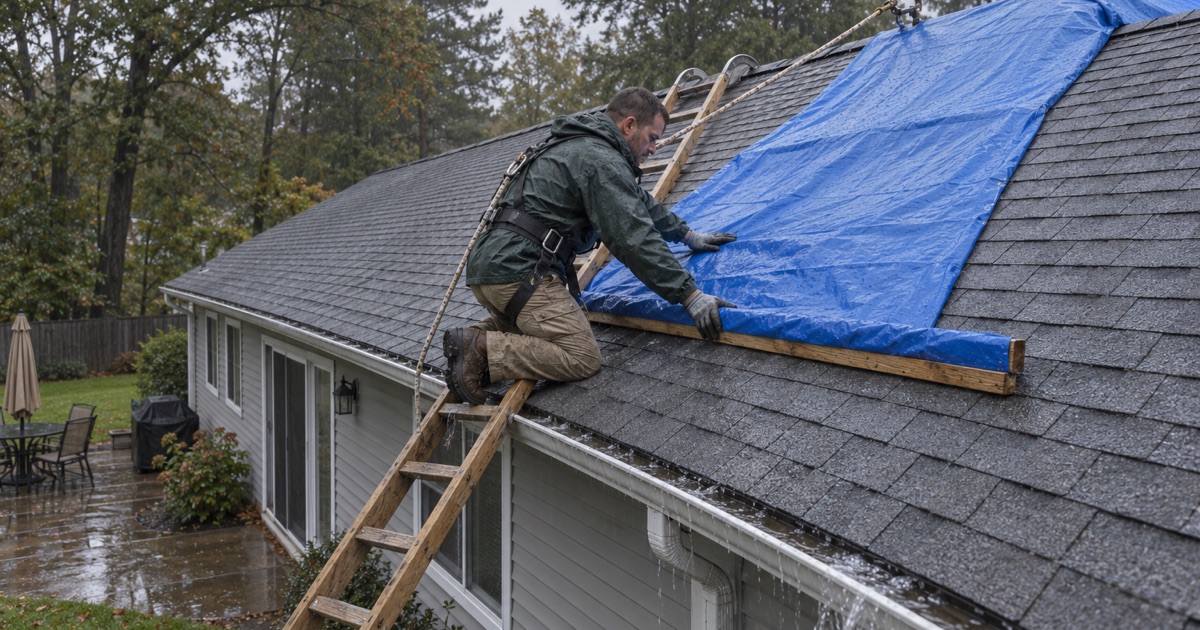
A tarp held down with a few bricks or loose boards blows off in the next gust and can tear more shingles on its way. We secure tarps with battens fastened through to the roof structure, run the top edge over the ridge where possible and lap it so water flows over rather than under. The result holds through wind and rain until the permanent repair is made.
Temporary Repairs for Small Openings
Not every emergency needs a full tarp. A few missing shingles, a lifted ridge cap or a cracked boot that is leaking badly can sometimes be sealed with a temporary patch the same day. We tell you clearly what is temporary and what is permanent, so a quick fix is never mistaken for the finished repair.
Trees and Limbs on the Roof
When a tree or heavy limb is resting on the roof, the weight has to come off before the roof can be tarped safely. We coordinate with a tree service, then tarp the opening once the load is removed and check the framing for cracked rafters or trusses. Jackson’s tall pines and oaks make this a regular part of our storm work, as the two EF-2 tornadoes that crossed the township on April 1, 2023 showed.
Storms, Claims and Insurance
Documenting Damage for Your Claim
We photograph and write up storm damage for your own insurance claim, recording what was damaged, how and where. We separate fresh storm damage from older wear, because a claim that mixes the two is easier for an insurer to question. When you ask, we meet your adjuster on site to show what we found.
Hurricane Deductibles and Named Storms
New Jersey lets insurers apply a separate, larger hurricane deductible only in narrow circumstances. Under DOBI Bulletin 11-16, it applies to a hurricane named by the National Weather Service with sustained winds of 74 mph or more measured in New Jersey. Most nor’easters, thunderstorms and tornadoes fall under your regular deductible, which is worth knowing before you file.
Storm Chasers and Your Rights
After a large storm, out-of-area crews often go door to door offering quick roofs paid by insurance. Read any contract before signing, and remember that New Jersey home improvement contracts carry a three-business-day cancellation right. Only a licensed public adjuster may negotiate your claim for a fee under N.J.S.A. 17:22B, so be wary of a roofer who offers to handle your settlement.
From Emergency to Permanent Repair
Repair or Replace After Storm Damage
Once the roof is dry and safe, we inspect the whole roof rather than just the damaged area. If the rest of the roof is sound, a targeted repair restores it. If the storm damage is widespread or the roof was already near the end of its life, we explain the difference between the storm damage and the roof’s age and give you a straight answer on whether replacement makes sense.
Checking the Attic and Decking
After a leak or impact, the attic tells us how far the water went and whether the decking or framing was damaged. Soaked insulation should be removed and replaced, and wet sheathing replaced rather than shingled over. We photograph and show you any damaged decking before it is replaced, so you can see exactly why it is part of the repair.
Scheduling the Permanent Work
The permanent repair is quoted on a written, itemized scope, so you and your insurer can see exactly what is being done. We schedule it as soon as the weather and your claim allow, and we clean the yard and driveway and run a magnet sweep for nails before we leave.
- 20+ Years in Business
- Free Written Estimates
- Attic Checked on Every Leak Call