Jackson Elite Roofing has spent more than 20 years on roofing in Florence and the rest of our service area, and on older houses the part of the job we plan most carefully is not the shingles. It is the painted wood that frames them: fascia, soffits, rake boards and porch trim. On a house built before 1978, disturbing that paint brings a federal rule into the job.
That rule shapes how a re-roof is scoped, who does which part, and how the site is cleaned each evening. We would rather explain it at the first visit than have an owner learn about it from a second estimate that reads very differently from the first. Our written scopes list tear-off, decking, underlayment, flashing, ventilation, gutters and trim as separate lines for exactly that reason.
Nothing on this page assumes your house has lead paint. Many older homes have been repainted, re-sided or wrapped in aluminum over the decades, and some never had lead on the exterior at all. The only way to know is to test, and we explain below where testing fits, what the rule actually covers, and what a lead-safe roof job looks like day to day.
Florence Township’s Older Houses and the 1978 Line
How much of the township predates 1978
The 1978 cutoff matters here more than in most towns. Census estimates for Florence Township count 5,076 housing units, and 2,482 of them were built before 1970. Of those, 1,569 date from 1939 or earlier, with 188 from the 1940s, 460 from the 1950s and 265 from the 1960s. Another 720 went up in the 1970s, a decade the census does not split at 1978.
Put together, close to half the township’s homes sit clearly on the older side of the line, and part of that 1970s group may join them. Owners occupy 4,000 of the 4,869 occupied homes, so most of these decisions land on the person living in the house rather than on a landlord or a management company.
Roebling’s early houses
The village of Roebling adds some of the oldest stock in the township. Its company houses were laid out from about 1905, which places every original one far inside the pre-1978 window. The Roebling Historic District was listed on the National Register in 1978 and counts 94 contributing buildings across 76 acres.
A century of ownership changes means each of those houses has its own paint history. Some trim has been stripped and repainted, some capped in aluminum, some replaced outright. We do not guess at what is under the current coat. We treat every painted roof edge on a house this age as unknown until a test says otherwise.
Why build era alone settles nothing
A construction date tells us the rule could apply; it does not tell us lead is present. A 1950s ranch might have had its fascia replaced with vinyl-wrapped boards in the 1990s, while a 1970s house might still carry its original painted trim. The date opens the question, and the answer comes from the house.
That is why our first visit to an older home includes a slow walk around the eaves and rakes, not just a look at the shingles. We note which edges are painted wood, which are capped, and which are newer replacement material, because that inventory decides how much of the job the rule can reach.
Looking for roofing closer to Mount Holly? See Roofing in Mount Holly.
What EPA’s Lead-Safe Rule Covers on a Roof Job
The rule and the 20 square foot threshold
EPA’s Renovation, Repair and Painting rule, found at 40 CFR 745, applies to paid renovation work on housing built before 1978. The rule defines renovation as any modification that disturbs painted surfaces, including removing building components. Outside the house, a job that disturbs 20 square feet or less of painted surface counts as minor repair and maintenance.
Above that threshold, the work must be done by a certified firm using lead-safe practices. Twenty square feet goes quickly on a roof edge: a single run of fascia board along one side of a typical house can approach it, and a full re-roof that touches every eave and rake passes it easily.
Which components the rule names
The rule’s own list of building components includes painted roofing, chimneys, flashing, gutters and downspouts among the exterior parts it reaches. That list is about painted surfaces. Asphalt shingles are not painted, and tearing them off is not, by itself, what brings the rule into play.
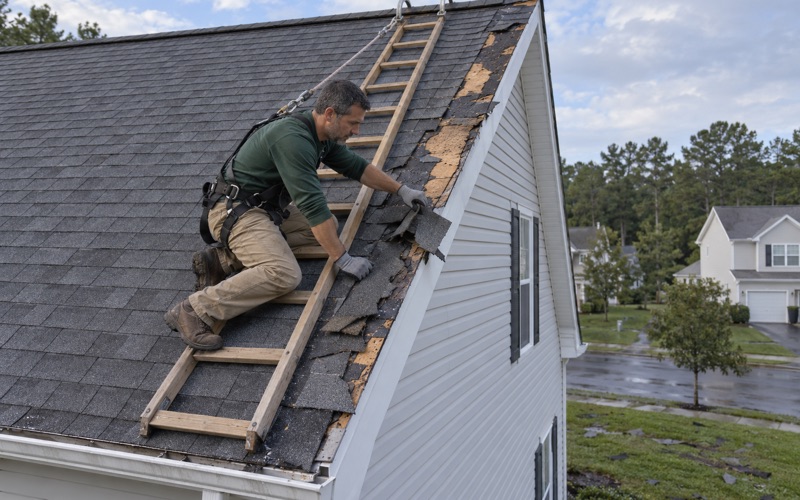
What does bring it in is the work around them. Pulling a painted gutter, prying off painted fascia to reach rotted rafter tails, or cutting into a painted cornice to set a drip edge are all disturbances of painted surface. On an older house those steps are often unavoidable, which is why we plan them as their own line on the scope.
Who enforces it in New Jersey
Fifteen states and one tribe run their own versions of the program under EPA authorization. New Jersey is not one of them and has not adopted a state program of its own, so EPA administers the federal rule here directly. For a Florence homeowner that means the federal requirements apply as written.
It also means the paperwork follows the federal pattern. Before work starts on target housing, the owner receives EPA’s Renovate Right pamphlet, which explains lead hazards and what to expect during the job. If a contractor plans to disturb painted trim on a pre-1978 house and never mentions that pamphlet, it is a fair question to ask why.
The Painted Parts of a Re-Roof: Fascia, Soffits, Rakes and Trim
Fascia and soffits
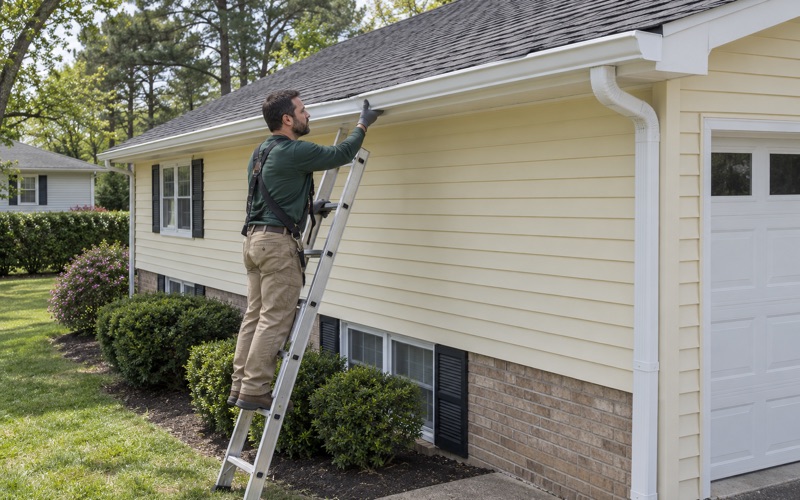
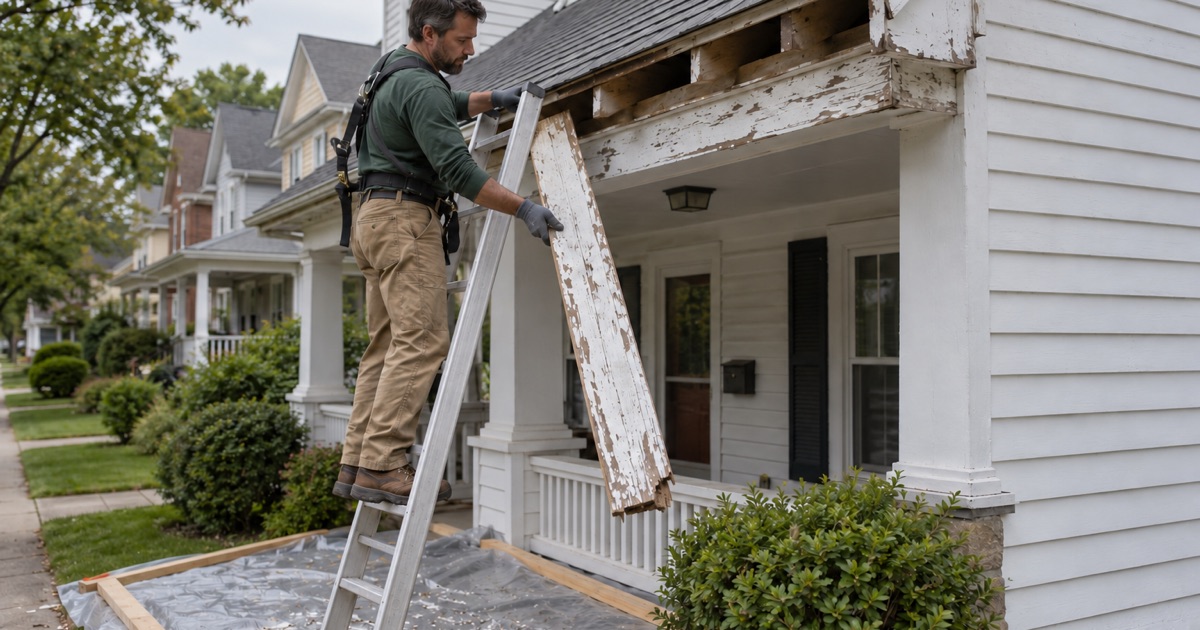
Fascia is the vertical board along the eave where the gutter hangs, and the soffit is the horizontal panel underneath. On many older houses both are painted wood, and both take a beating from water that backs up behind clogged gutters. When we find soft wood at the eave, fixing it means cutting out painted material.
Soffits also matter for ventilation, since they are where the intake air enters on a ridge vent system. We check attic ventilation on every replacement, and on an older house adding soffit intake can mean cutting new openings in painted panels. That cut is a disturbance under the rule, so it goes into the lead-safe portion of the plan.
Rakes, cornices and porch-roof trim
Rake boards run up the gable ends, and on older houses they often carry decorative moldings or a boxed cornice where the roof meets the wall. Installing new drip edge along a rake usually means working against that painted trim, and replacing a rotted rake board means removing it entirely.
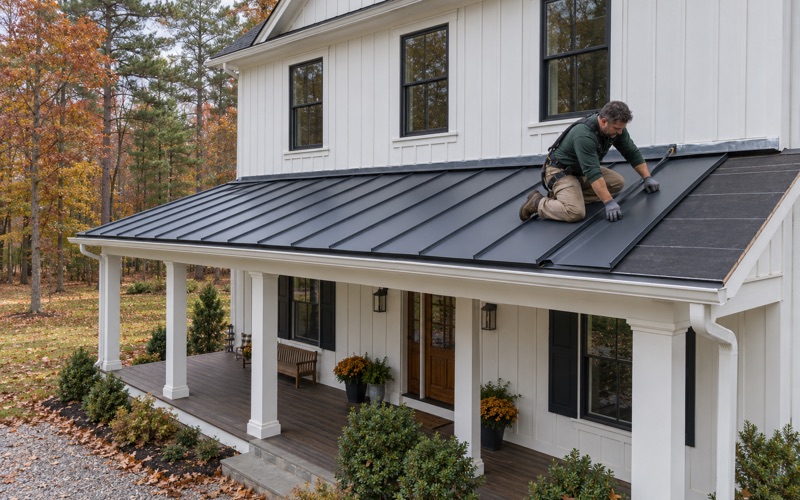
Porch roofs deserve their own attention. They are low, easy to overlook, and often trimmed with painted fascia, beadboard ceilings and turned details. A porch roof replaced along with the main roof brings all of that painted trim into the job, and it is often where the square footage adds up fastest.
Painted gutters and chimney flashing
Older gutters, especially half-round or built-in styles, are sometimes painted, and the rule names gutters and downspouts directly. We size and pitch new gutters and leaders with the roof, so removing old painted ones is part of the same plan. Seamless aluminum gutters come prefinished, which ends the repainting cycle.
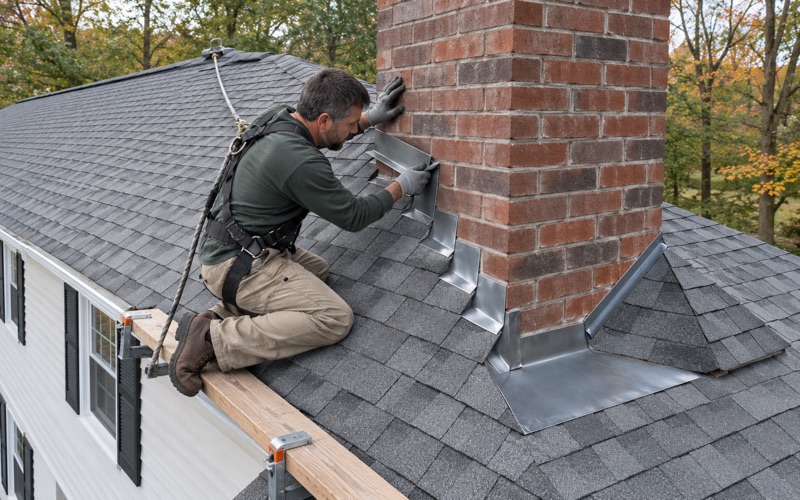
Chimneys and their flashing are on the rule’s list too. We replace step, counter and chimney flashing with the roof rather than reusing it, and on an older chimney the counter flashing may have been painted to match the brick or trim over the years. Removing it is treated like any other painted component.
Testing First, Then Containment and Cleanup
Testing before the trim comes off
The cleanest way to approach an older roof job is to test the painted surfaces before any trim is removed. A test that shows no lead in the paint takes those components outside the rule’s lead-safe requirements. A positive result, or a decision to skip testing and presume lead, means the painted work is planned and priced as lead-safe work.
We put that decision in front of the owner early, alongside our straight answer on whether the roof needs replacing at all. Sometimes a leak traced from the attic turns out to be a flashing repair that touches only a few square feet of paint, well under the threshold, and the larger question never comes up.
Containment on the ground and on the roof
Lead-safe practice on an exterior job starts with plastic sheeting on the ground below the work area, extended out from the wall, with nearby doors and windows closed. Painted boards are removed whole where possible rather than broken, and dry sanding, power planing or open-flame removal of painted surfaces is off the table.
The roof work itself does not change much, but its sequence does. Fascia and rake work is staged so the debris falls onto the sheeting, not into the yard or a garden bed, and the painted pieces are wrapped and kept separate from shingle debris. Tear-off, decking and underlayment then proceed the way they would on any house.
Daily cleanup and the final check
We already clean the driveway, yard and gutters at the end of every work day, including a magnet sweep for nails. On a lead-safe job that routine adds misting and folding the sheeting inward, bagging painted debris, and wiping down surfaces near the work area so nothing tracks into the house overnight.
At the end of the job, the work area is checked before the sheeting comes up for good. If the house is being sold, our written roof condition report can note which trim was replaced and how, which gives a buyer’s inspector a clearer record than a fresh coat of paint ever could.
- 20+ Years in Business
- Free Written Estimates
- Attic Checked on Every Leak Call