Jackson Elite Roofing has spent more than 20 years on roofing in Highland Park and across central New Jersey, and the question we hear most often here is not about shingles at all. It is whether a roof is ready to carry something else for the next quarter century. Our answer always starts with what the roof itself can do, before anyone talks about what goes on top of it.
When a leak or a worn slope brings us out, we climb into the attic as well as onto the roof, because water rarely enters where the stain appears. We tell you plainly whether a repair will hold before replacement is ever on the table. If a new roof is the right call, the written scope breaks tear-off, decking, underlayment, flashing, ventilation and gutters into separate lines so you can set our number beside anyone else’s.
That matters more than usual for owners weighing solar. A roof that will need replacing in eight years is a poor base for an array built to last three decades, and nobody wants to pay twice to pull panels off. The sections below walk through how solar actually works in this borough and what we check before anything gets bolted down.
Solar in Highland Park, from a landfill to community subscriptions
The array on Donaldson Street
Some of the borough’s best-known solar sits on no house at all. Since February 18, 2020, PSE&G has run a solar storage system on the former municipal landfill on Donaldson Street, combining 1,764 panels rated at 605 kilowatts with 2,000 kilowatt-hours of Tesla batteries. It is a utility project on public land, and it shows that solar here is not only a rooftop decision.
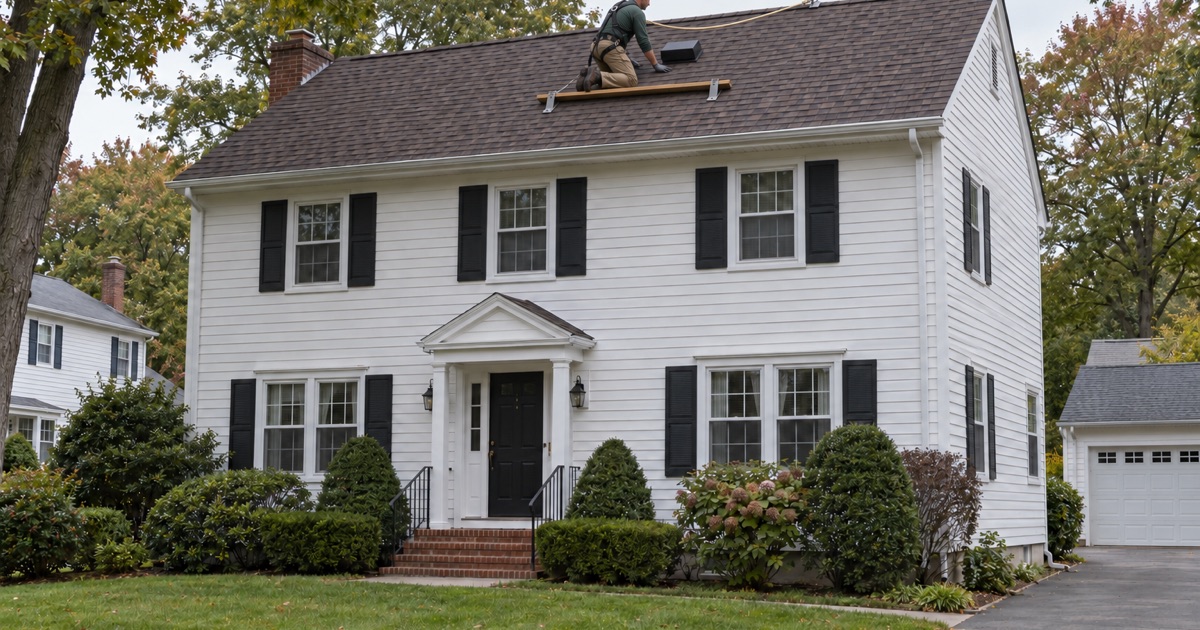
For a homeowner, that array changes nothing about the roof overhead. It does, however, make a useful point of comparison when neighbors ask whether panels belong on their house. Large ground arrays sit on flat, open land with no shingles under them, which is exactly the condition a pitched residential roof cannot offer.
Community solar with no panels on your roof
Highland Park also chose a model built for residents who cannot install panels themselves. On July 16, 2024 the Borough Council awarded a community solar contract to Solar Landscape, which said it would contract for approximately 1,800 residences at a 36.02 percent discount on electricity charges, at no cost to the borough. The panels serving it sit on warehouse rooftops in Cherry Hill, Bridgewater, Blackwood, Voorhees and North Bergen.
The borough describes the program as aimed at select low-to-moderate-income residents, with automatic enrollment and the choice to opt out. We are not part of that program and have nothing to do with enrollment. We mention it because it is the clearest example of a household getting solar benefits while its own roof stays exactly as it is.
What that means for the roof you already have
If your electricity savings come through a community subscription, your roof decisions stay ordinary. You can repair, replace or simply maintain it on whatever schedule the roof itself sets, with no array to schedule around. That freedom is worth knowing about before signing anything that puts hardware on top of your house.
When we inspect a roof for an owner in that position, the report covers the same things it would anywhere: shingle wear, flashing condition, ventilation and decking. There is no hidden solar cost waiting at the next re-roof, which keeps future estimates simpler and easier to compare.
Looking for roofing closer to Vista Center? See Roofing in Vista Center.
Putting panels on your own Highland Park roof
The hpsolar.org pilot and installer bids
For owners who do want panels at home, Sustainable Highland Park partnered with Sustainable Jersey and EnergySage on a pilot publicized through hpsolar.org. Residents could request bids from vetted installers through the EnergySage portal with no obligation to go ahead, and seven other communities took part. We do not know whether that pilot is still running, so check its status directly before relying on it.
Whichever route an owner takes, the installer and the roofer do different jobs. We do not sell, design, install or finance solar. Our part is telling you whether the surface those installers will mount to is sound enough, and for how long.
What an installer sees versus what a roofer sees
A solar bid focuses on orientation, shade and electrical capacity, and that is the right focus for the person selling the system. A roofer looks underneath at the decking, at how the flashing ties into walls and chimneys, and at whether the attic is venting heat or trapping it. Both views are needed before mounts go through shingles.
We would rather an owner hear an honest roof verdict before signing a solar contract than after. If our inspection finds a slope with only a few good years left, that is information worth having while the panel layout can still change.
Panels come off for every re-roof
The practical fact many owners miss is that panels must be removed whenever the roof under them is replaced. Racking gets unbolted, wiring is disconnected, and the whole array is set aside while the old roof comes off and the new one goes down. Then everything goes back up and is reconnected.
That is why we build panel removal and reinstall into the schedule from the first conversation rather than discovering it on the morning of the job. Coordinating with whoever handles the array keeps the house from sitting half-finished while crews wait on each other.
A roof inspection before any array goes up
Why the state program says inspect first
The NJ Clean Energy Program’s FAQs advise scheduling a roof inspection before installing solar to confirm the roof is structurally sound enough to support the system. The same guidance notes that roof replacements are not free when a solar system is in place. That advice comes from the state, not from us, and it matches what we see on the job.
An inspection costs far less than reversing a mistake. Finding soft decking or tired flashing before mounts are drilled lets you fix the roof once, on your own terms, instead of paying to pull an array back off a few seasons later.
Attic first, then the surface
Our inspection starts inside. In the attic we look for staining on the underside of the decking, daylight around penetrations, damp insulation and signs that heat is building up under the roof. Those clues tell us more about remaining life than the shingles alone.
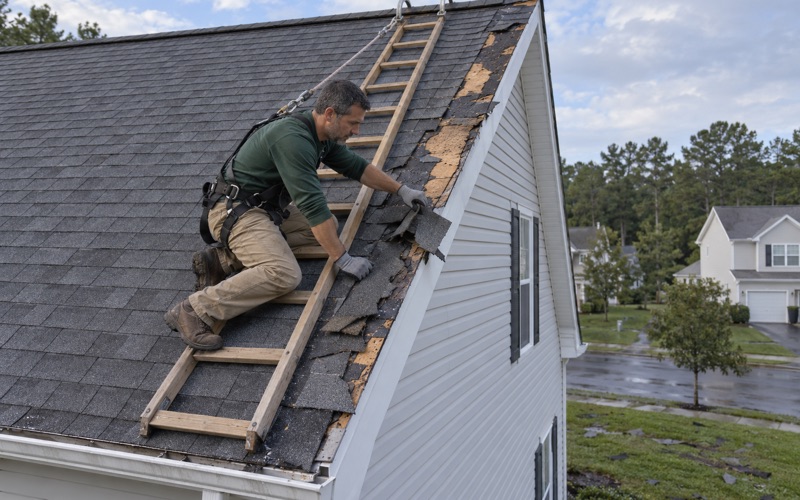
Outside, we check granule loss, curling or cracked tabs, lifted edges and the condition of drip edge at eaves and rakes. We also note any overhanging oaks or other trees whose limbs scrape the roof in wind, because that wear will continue under panels where nobody can see it.
Flashing, penetrations and ventilation
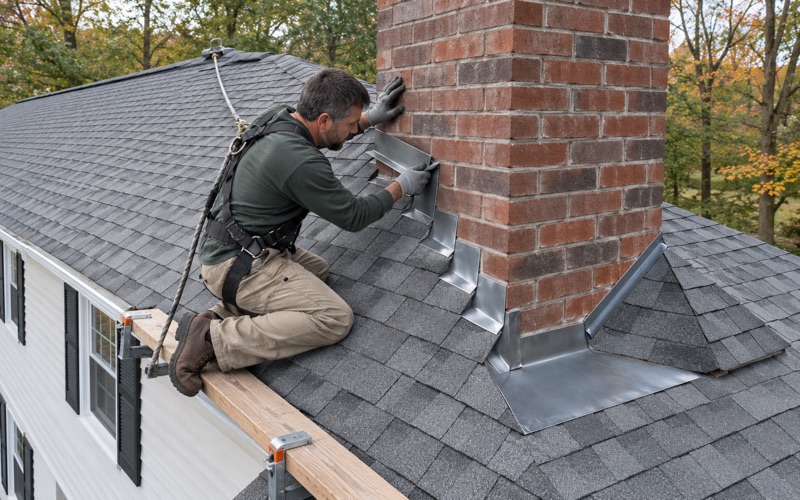
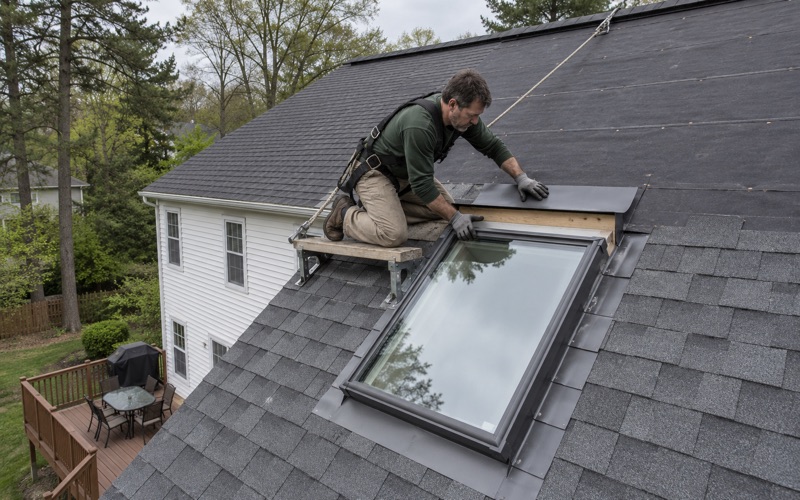
Step flashing along sidewalls, counter flashing at chimneys, and pipe boots around vents are where most roofs leak first. If those details are already marginal, mounting an array nearby only makes them harder to reach later. We point out each weak spot and say whether it can be repaired alone.
Ventilation matters just as much. A roof with poor ridge vent and soffit intake cooks its shingles from below, and panels shading the surface do not fix that. We check net free area on every replacement, and we flag it during a pre-solar inspection so the problem is solved before anything covers it.
Matching a new roof to 25 years of panels
The remaining-life question
The Clean Energy Program’s guidance is that, ideally, the roof’s lifespan and the panels’ 25 to 30 years line up so both can be replaced together. The program sets no specific roof-age cutoff, so the judgment comes down to what an inspection actually finds on your house.
We give that judgment in plain terms. A roof with most of its life left may only need flashing work and a few repairs before an array goes on. One nearing the end of its useful life usually makes more sense to replace first, so the new roof and the new panels start their clocks on the same day.
Choosing materials for a long run
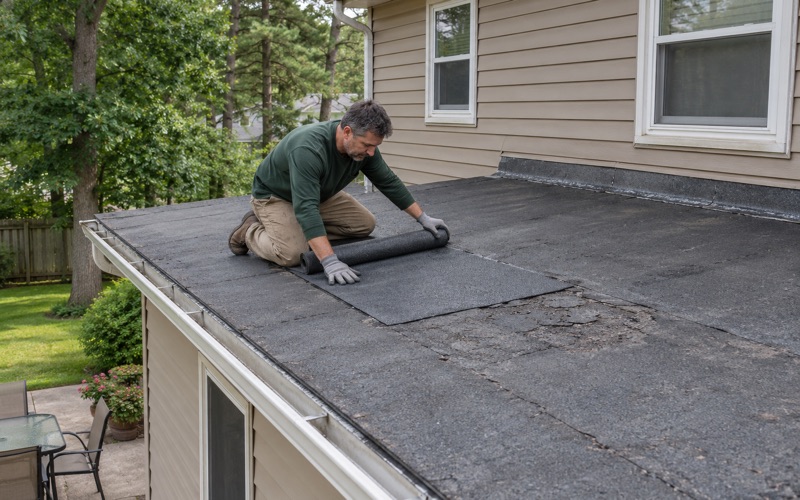
When a re-roof comes before solar, the materials should be chosen for a long service life. Architectural shingles such as GAF Timberline HDZ, Owens Corning Duration or CertainTeed Landmark are common choices, and we pair them with ASTM D1970 ice and water barrier at eaves and valleys plus a synthetic underlayment across the deck.
Flashing is replaced with the roof, never reused under new shingles, because a twenty-year-old piece of step flashing will not last another twenty-five under an array. Getting those details right at the start is far cheaper than chasing a leak through racking later.
Decking, photos and a clean site
Once the old roof is off, we sometimes find damaged decking that no inspection could see from above. When that happens we photograph it and show you before replacing anything, at the per-sheet price already written into the contract. Every contract follows New Jersey home improvement rules, including the three-day cancellation notice.
At the end of each work day we clean the driveway, yard and gutters, including a magnet sweep for roofing nails. On a house about to receive solar, that leaves installers a clean, finished surface to work from and leaves you a roof built to last as long as the array it carries.
- 20+ Years in Business
- Free Written Estimates
- Attic Checked on Every Leak Call