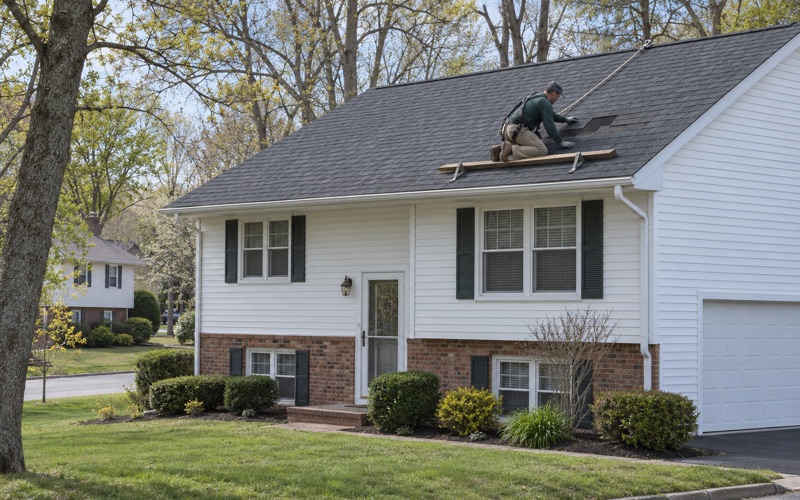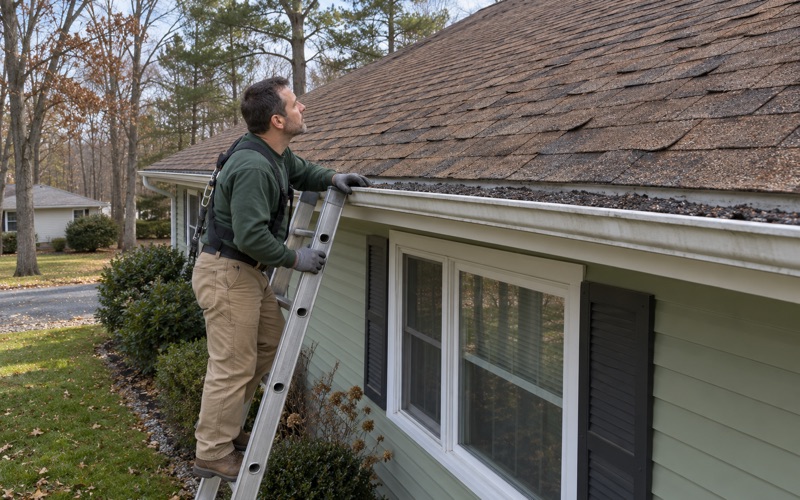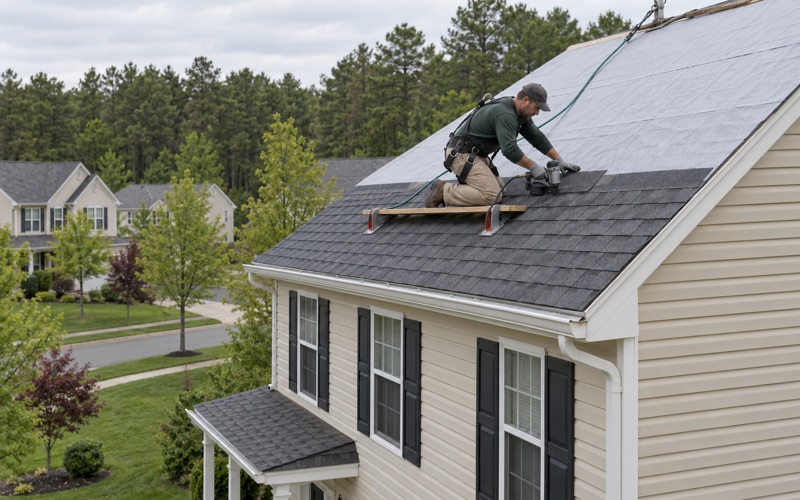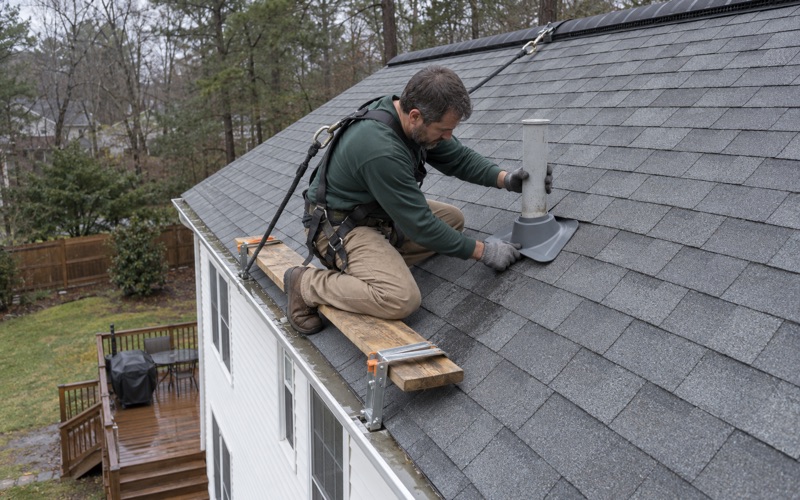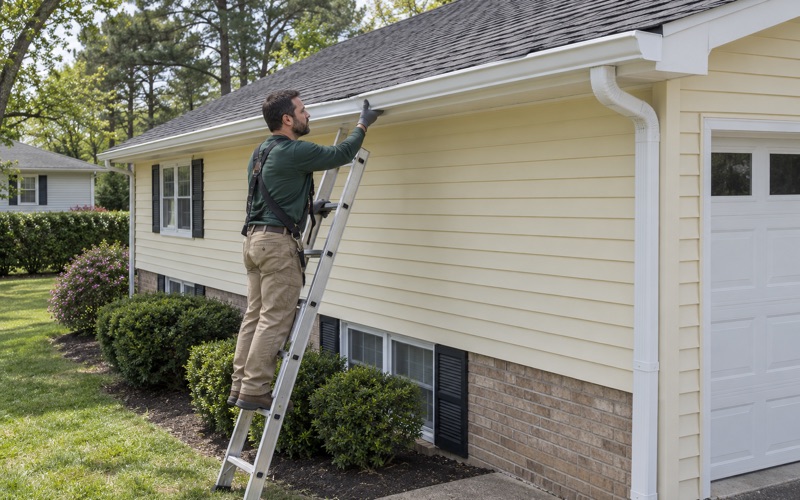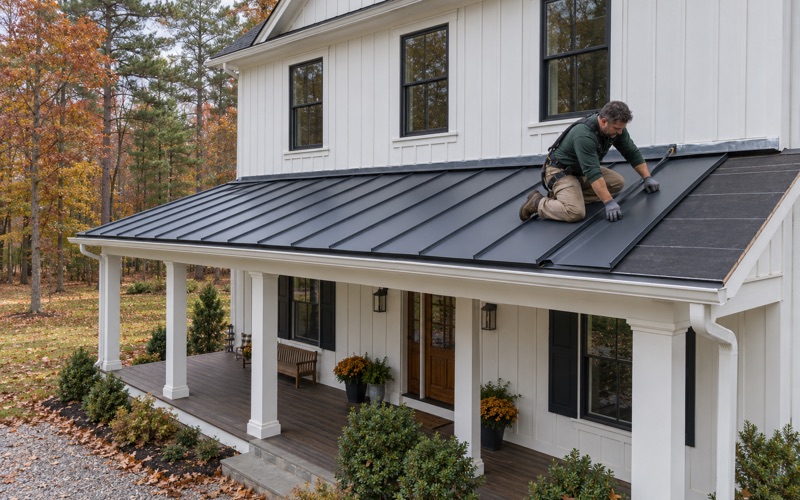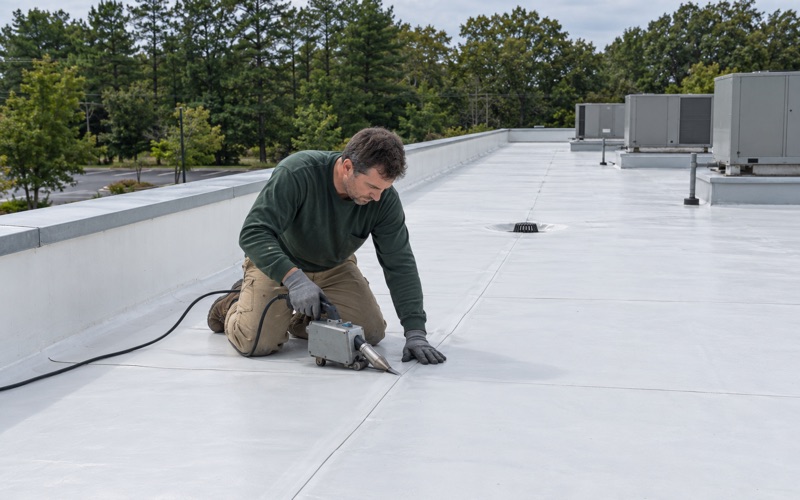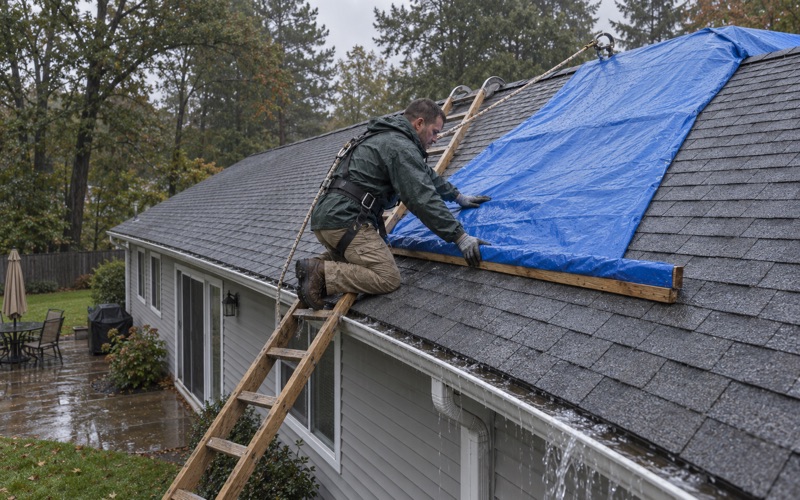
Jackson Elite Roofing has spent more than 20 years on roofing in Holiday City-Berkeley and the surrounding part of Ocean County, and most of that work starts with a single question from a homeowner: is this mine to fix? Here the answer is usually yes, and we plan every repair and replacement with that in mind.
When a stain shows up on a ceiling, we go into the attic as well as onto the shingles, because the spot where water drips is rarely the spot where it gets in. Once the entry point is found, you hear plainly whether the roof can be repaired. Replacement only comes up after that answer, not before it.
If a new roof is the right call, the estimate breaks tear-off, decking, underlayment, flashing, ventilation and gutters into their own lines. That lets you hold our number next to anyone else’s and compare the same items. Every contract follows New Jersey’s home improvement rules, including the three-day cancellation notice.
Who pays for a roof in Holiday City at Berkeley
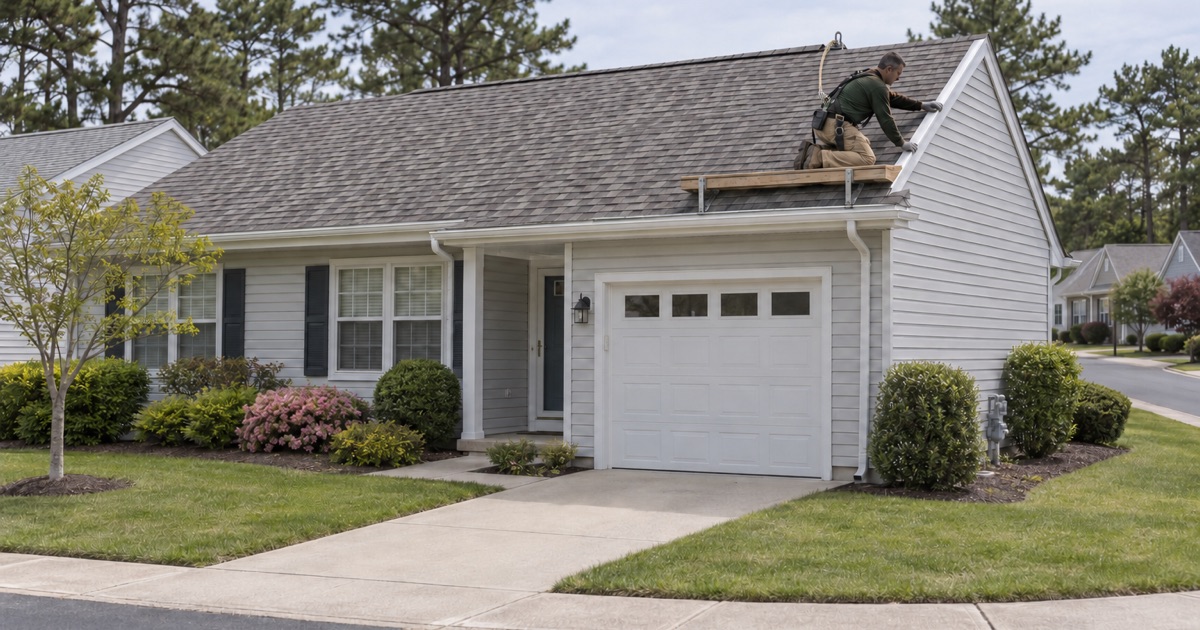
The owner holds the roof, not the Corporation
Many people moving into a planned community assume the association looks after the roof. In Holiday City at Berkeley the governing documents say otherwise. The Declaration of Covenants and Restrictions that Hovsons, Inc. recorded on December 23, 1969 puts exterior maintenance, and its cost, on the owner of each lot or living unit.
That changes how a roof decision gets made. There is no shared reserve to wait on and no board vote that schedules your replacement. You decide when the shingles have run their course, you choose the contractor, and you pay for the work. Our job is to make sure that decision rests on what the roof actually needs.
Roofs, gutters and downspouts in Article VI
Article VI, Section 1 of the declaration spells it out. The owner is solely responsible for exterior maintenance and its expenses, including paint, repair, replacement and care for roofs, gutters, down-spouts, exterior building surfaces and other exterior improvements. Gutters and downspouts are named right beside the roof, not left for someone else.
We treat them that way too. A roof that sheds water into a sagging or clogged gutter still sends that water against the fascia and the foundation. When we look at a roof in Holiday City-Berkeley, the gutters and leaders are part of the same inspection and the same written scope, because the covenant puts them in the same column of the owner’s responsibilities.
Fee simple title and what the Corporation owns
The Corporation’s by-laws describe an owner as someone holding fee simple title to a lot or living unit, recorded with the Ocean County Clerk. The Corporation itself holds title to the common properties and facilities. Your house and the roof on it sit on your side of that line.
That ownership split is why we ask to see the documents before writing an estimate in any 55-and-over or townhouse community. In some places the association holds the roof; here, the declaration we read gives it to the owner. Checking first keeps an estimate from being written to the wrong person or for the wrong scope.
Looking for roofing closer to Beachwood? See Beachwood Roofing.
The sixty-day notice when a roof is let go
How the Trustees give notice
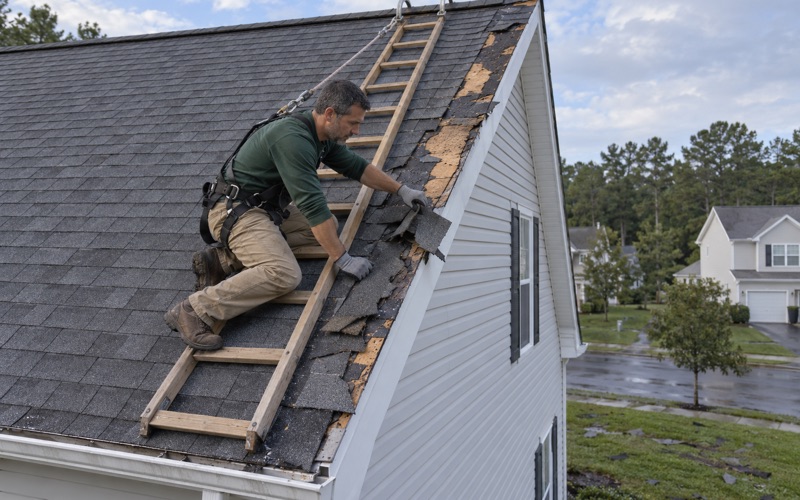
The declaration does not leave exterior upkeep entirely on the honor system. Under Article VI, if the Trustees determine an owner has failed to perform exterior maintenance, they give that owner sixty days’ written notice. A roof with curling tabs, missing shingles or a gutter hanging loose from the fascia is the kind of condition that can draw attention.
Sixty days is a workable window for most roofing problems if the call is made early. A repair can often be scheduled within it, and even a full replacement can be planned, contracted and finished. Waiting until the last week is what turns an ordinary repair into a rushed one, so we suggest calling as soon as a notice arrives.
When the Trustees do the work themselves
If the condition is not corrected within the sixty days, the declaration says the Trustees shall provide the maintenance to correct it. Article V backs this with a perpetual easement that includes the Trustees’ right to have any living unit maintained on its exterior as Article VI provides.
That is not the association paying for your roof. It is the association arranging work on your property because the owner did not, and the bill still comes back to the lot. Owners who would rather pick their own contractor, materials and schedule have every reason to act within the notice period instead of letting the Trustees step in.
How the cost lands on the assessment
Article VI, Section 2 says the cost of that maintenance is added to and becomes part of the annual maintenance assessment for the lot. It becomes a lien and an obligation of the owner. Article III already makes assessments, which are payable quarterly, a continuing lien and the owner’s personal obligation.
A lien on a lot follows the house into any sale, which matters to owners who may sell in the next few years. For homes heading to market, we can provide a written roof condition report the seller can hand to the buyer’s inspector. It gives both sides a plain account of the roof instead of a surprise at closing.
Ranch houses from the 1970s and 1980s
Nearly every home is detached
The Census figures for Holiday City-Berkeley describe a remarkably uniform housing stock. The ACS 2024 five-year estimates count 8,922 of 8,982 housing units as one-unit detached homes, and owners occupy 7,602 of 8,353 occupied units. The community’s homes are detached ranch-style houses on lots of their own.
For roofing, detached ownership means each house is its own project. There is no shared roof plane with a neighbor, no party wall flashing to coordinate, and no building-wide schedule. One ranch house can be re-roofed while the one next door keeps its original covering, and the owner’s own timing is the only timing that applies.
Roofs replaced one house at a time
The same Census estimates date 7,255 units, about 80.8 percent, to construction between 1970 and 1989. That makes most of the community’s houses more than three decades old. Some have likely been re-covered already, so the condition of what sits under the shingles varies from street to street and house to house.
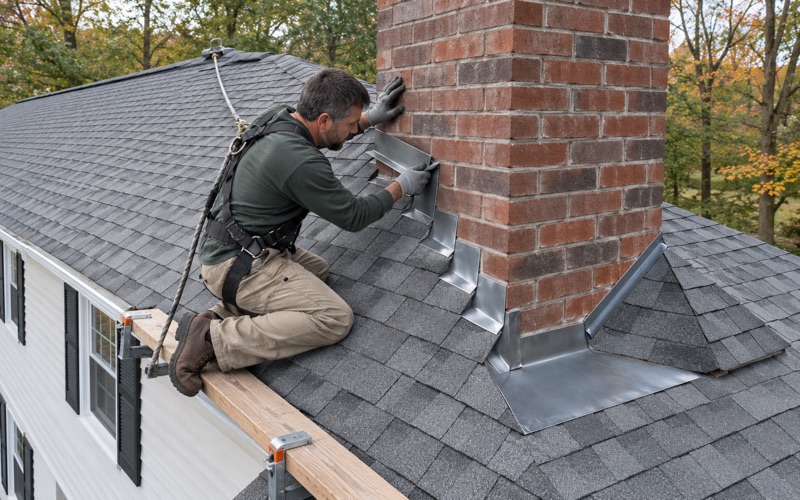
When the old roof comes off, we look closely at the decking. Any damaged sheets are photographed and shown to you before they are replaced, at a per-sheet price already written into the contract. Step, counter and chimney flashing is replaced along with the roof rather than reused, and attic ventilation is checked on every replacement, since a roof that cannot breathe wears out from underneath.
Gutters, leaders and the edge of the roof
Because the declaration names gutters and downspouts with the roof, we size and pitch them as part of the same job. A ranch roof delivers its water to long runs of eave, and a gutter that is undersized or pitched the wrong way overflows right where the fascia and foundation can least afford it.
Pine needles pack gutters and slow leaders, so we look at overhanging limbs along with the roof. A branch that rubs shingles in every wind is part of the roof’s condition. At the end of each work day the driveway, yard and gutters are cleaned, with a magnet sweep for roofing nails along walkways and the lawn.
Before exterior work starts in Holiday City-Berkeley
Reading the declaration before we price
Holiday City-Berkeley is a census-designated place within Berkeley Township, and it holds more than one Holiday City section, each with its own homeowners association. The covenant on this page comes from the Holiday City at Berkeley declaration specifically. We do not assume it applies to any other section inside the same Census boundary.
So our first step on any estimate is confirming which community a house belongs to and what its own documents say about the roof. Mailing addresses here read Toms River 08757, which does not settle the question by itself. Once we know who holds the roof, the estimate is written to the right person with the right scope.
Talking with the Shareowners Corporation on Jamaica Boulevard
The Holiday City at Berkeley Shareowners Corporation, Inc. keeps its office at 631 Jamaica Boulevard, Toms River. Its posted procedures say the Corporation must review the plan first whenever a resident proposes an improvement that requires a building permit, using a modification form and plot plan, and the Board signs an approval so the resident can get permits from Berkeley Township.
The declaration’s Article IX separately asks for written Trustee approval of plans for any exterior change or alteration, judged for harmony of exterior design. Neither document mentions re-roofing by name, and how the Corporation treats a like-for-like replacement is something we confirm with its office before work begins. Under the state construction code, re-covering a detached one-family house is ordinary maintenance under N.J.A.C. 5:23-2.7.
What a written scope looks like here
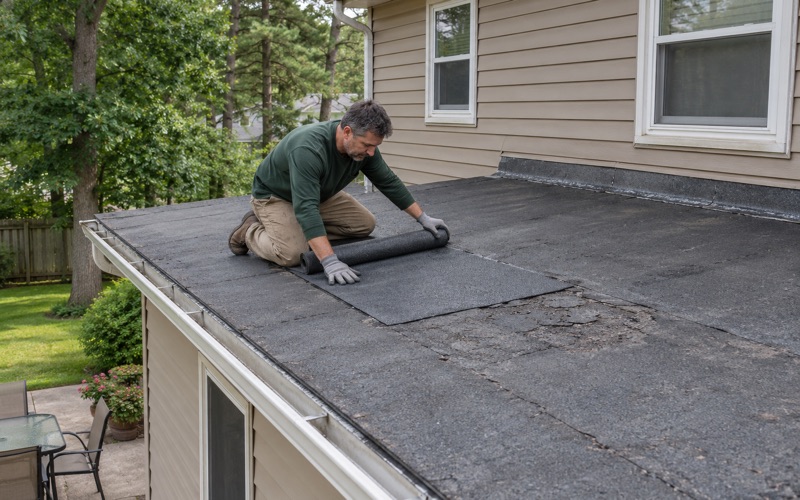
Our scopes for Holiday City at Berkeley homes list each piece of the job on its own line: tear-off, decking allowance, underlayment, drip edge, flashing, ridge and soffit ventilation, and gutters with leaders. If panels sit on the roof, the solar removal and reinstall are written into the schedule rather than found on the morning of the job.
When storm damage is part of the picture, we photograph it and write it up for your own insurance claim, and we can meet the adjuster on site if you ask. Holiday City-Berkeley falls in the National Weather Service Ocean forecast zone, issued from the Mount Holly office, so a wind advisory for that zone is a good reason to look up at the roof once it passes.
- 20+ Years in Business
- Free Written Estimates
- Attic Checked on Every Leak Call