Jackson Elite Roofing has handled roofing in Lakewood for more than 20 years, and a good share of the calls we take there come from houses that are only a few years old. A leak over a new bedroom or a row of shingles standing up after a windy week raises a different first question on a young house than on an old one: who answers for it?
On a recently built home, New Jersey’s statutory new-home warranty may already speak to that problem. So we start by sorting out what the roof is doing and why, then leave the owner with a clear written picture to take to whoever is responsible. Our leak inspections cover the attic as well as the shingles, because water rarely shows up indoors where it actually gets in.
Where the house is past its early coverage, or the cause sits outside it, we price the work the way we price any roof: repair first if a repair will hold, with replacement discussed only after that answer is given. The sections below cover how much of the township is new, what the state’s warranty rules say about roofs, and where the line between a warranty question and a roofing job falls.
How Much of Lakewood Has Been Built Since 2010
1,481 Homes Authorized in a Single Year
Lakewood is still building. The Census Bureau’s Building Permits Survey counts 1,481 housing units authorized in Lakewood township in 2024: 1,254 in one-unit buildings, 84 in two-unit buildings, three in a single three- or four-unit building and 140 in eight buildings of five or more units. For a roofer, that is a steady stream of new roofs going on every year.
The survey’s one-unit category includes attached single-family homes as well as detached houses, so the count does not say how many of those buildings stand alone. What it does say is that a large number of Lakewood owners live under roofs that have seen very little weather yet.
8,070 Homes Built Since 2010
The longer record says the same thing. The American Community Survey counts 7,460 homes in Lakewood built between 2010 and 2019 and another 610 built in 2020 or later, 8,070 in all. Across that decade the township’s population went from 92,843 to 135,158, and the Census Bureau estimated 141,985 residents in 2024.
Those numbers matter on a roof because age sets the starting assumption. On a 30-year-old house a leak usually points to worn material. On a house finished three years ago the shingles have barely started their service life, so a leak is more likely to trace back to how something was installed, flashed or detailed.
What a Young Roof Should Not Be Doing
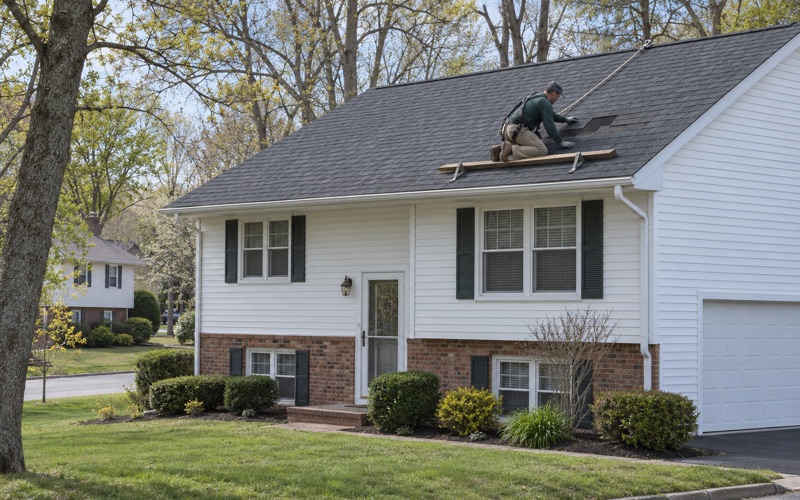
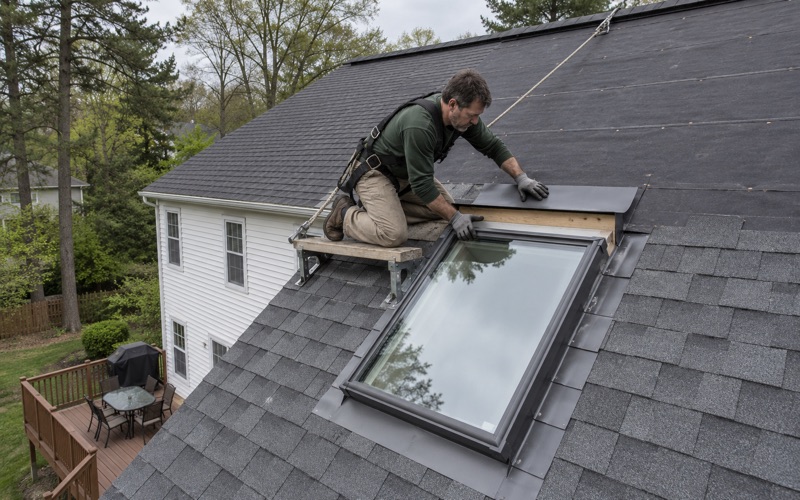
A new roof should shed normal rain without staining a ceiling, keep its shingles flat through ordinary wind and carry water off through gutters that do not drip at the seams. When one of those fails early, the cause is usually a specific detail: a missed piece of step flashing, a pipe boot set wrong, a valley cut short or nails placed high on the shingle.
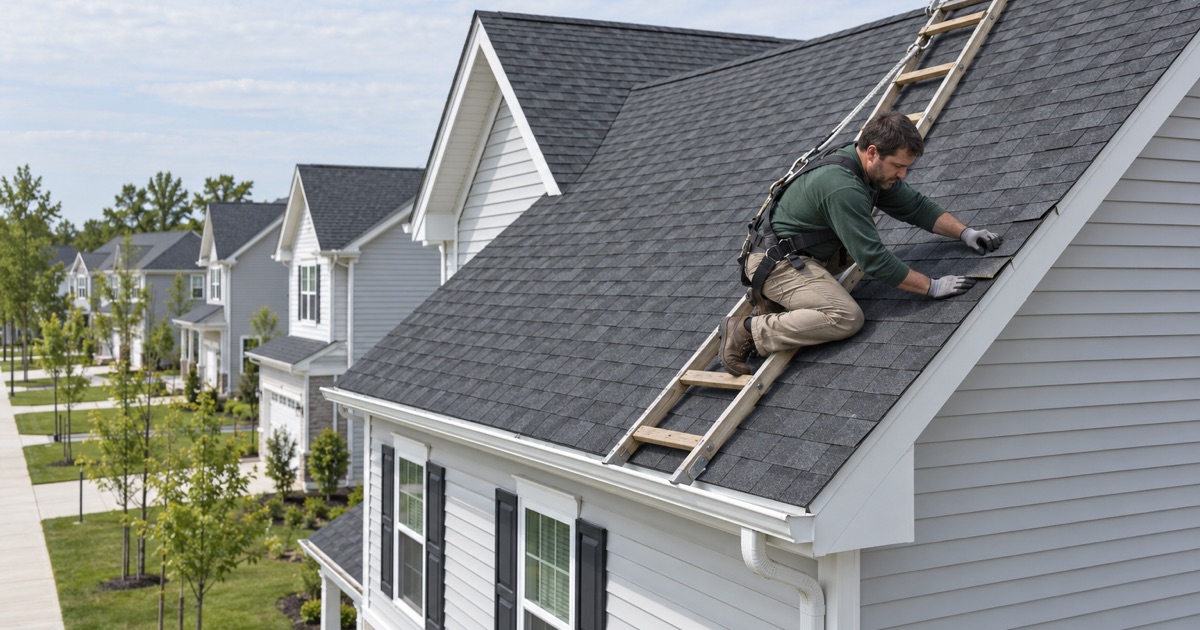
Finding that detail is the useful part. We go into the attic as well as onto the roof on every leak call, so the stain on the ceiling can be traced to the spot where water actually enters, which is often several feet uphill from where it drips.
Looking for roofing closer to New Egypt? See Roofing Services in New Egypt.
New Jersey’s New-Home Warranty: One, Two and Ten Years
The First Year and the Performance Standards
Under N.J.A.C. 5:25-3.2, each new home in New Jersey “shall be free from” certain defects for set periods measured from the warranty date. For one year, that covers defects under the performance standards, defects in appliances, fixtures and equipment, mechanical and electrical system defects, and major structural defects.
The roofing performance standards live in that first-year layer. They are written as plain statements of what counts as a deficiency, which is why the first year is the window an owner of a new Lakewood house should keep in mind whenever the roof misbehaves.
The Second Year: Mechanical and Electrical Systems
In the second year coverage narrows. The rule carries mechanical and electrical system defects, appliance, fixture and equipment defects only where a manufacturer’s warranty covers them, and major structural defects. The roofing performance standards are not on that list.
In practice, a shingle or flashing problem that shows up in month 14 sits in a different place than the same problem in month 10. The warranty date on the paperwork is worth finding before anyone climbs a ladder.
Ten Years for Major Structural Defects
The longest term in the rule is 10 years from the warranty date, and it applies to major structural defects only. The roof leaks and lifted shingles this page is about are handled under the first-year performance standards instead, so the 10-year term is not a general roof guarantee.
We are roofers, not warranty administrators, and we do not say which plan covers a particular house or how a claim moves. What we can do is describe what we find on the roof and in the attic in writing, with photographs, so the owner has something concrete to bring to the right party.
Leaks, Lifted Shingles and Gutters in the First Year
Roof and Flashing Leaks Under Normal Weather
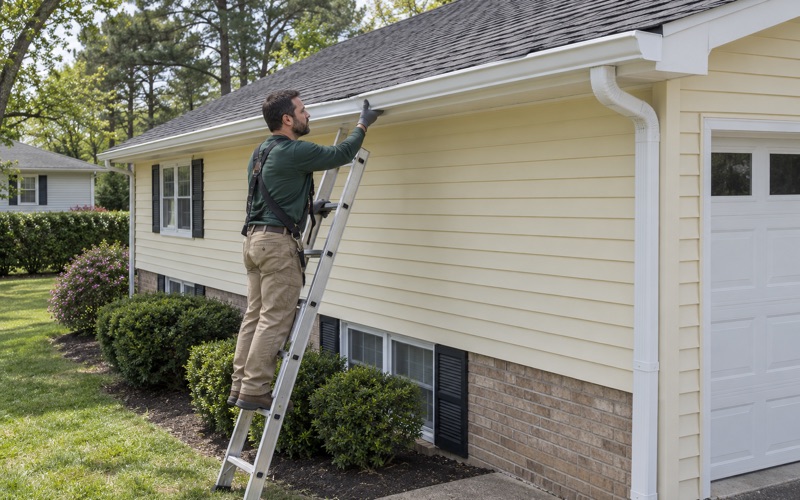
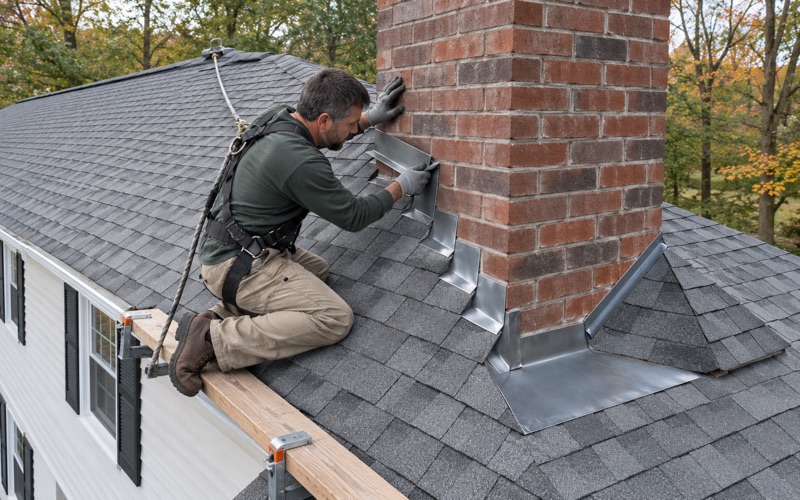
The roofing standard in N.J.A.C. 5:25-3.5(f)5 is direct: “Roof or flashing leaks that occur under normal weather conditions is a deficiency.” On a new house, flashing is where we look first: step flashing along sidewalls, counter flashing at chimneys, apron flashing at the base of a wall and kick-out flashing where a roof edge meets siding.
A leak in an ordinary rain that starts at one of those junctions on a first-year house is the case the standard describes. Our job at that point is to show where the water comes in and what is wrong with the detail, not to tear into a roof whose correction may already be the builder’s obligation.
When the Weather Was Not Normal
The same rule excludes leaks “where cause is determined to result from severe weather conditions such as ice and snow build-up.” Not every first-year leak belongs to the builder. Lakewood has seen severe wind: in February 2011 a microburst the National Weather Service put at 75 mph ripped roofs from homes and toppled trees in the township.
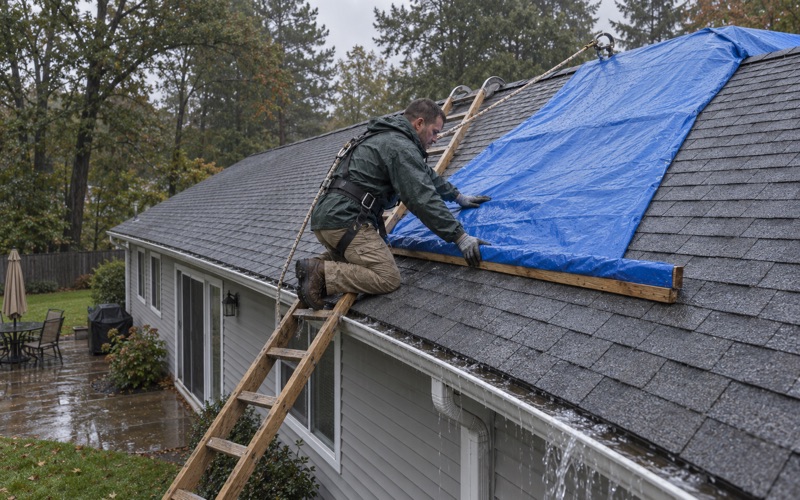
Damage from an event like that is a storm question, not a workmanship question. In that case we photograph the damage and write it up for the owner’s own insurance claim, and when asked, we meet the adjuster on site so the roof is looked at in person rather than from pictures alone.
Shingles That Lift or Curl
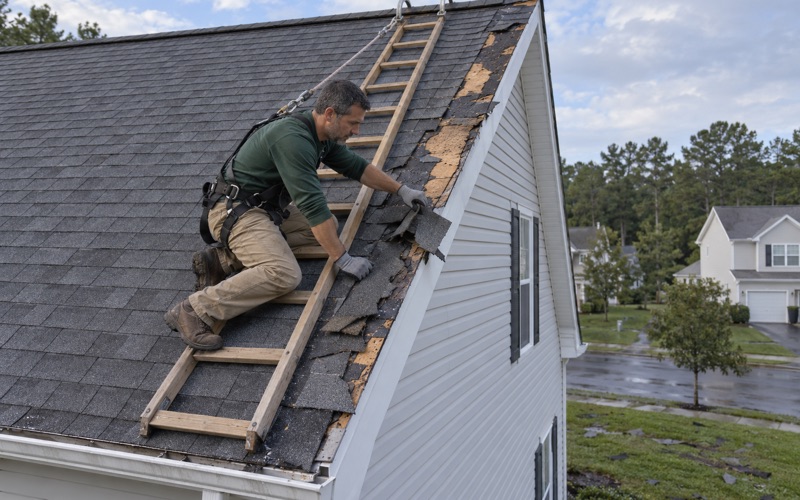
The standard also names “Roof shingles which lift or curl during the first year of warranty coverage.” Lifting on a new roof often traces to nails set above the manufacturer’s nailing line, shingles installed when the sealant strips never got warm enough to bond, or edge courses left loose along the rakes.
From the ground a lifted tab can look like a shadow. Up close we check whether the sealant has bonded, where the nails sit and whether the starter course is in place along the eaves and rakes, then note each finding with a photo so the owner can see it without going up.
Gutters and Downspouts That Leak
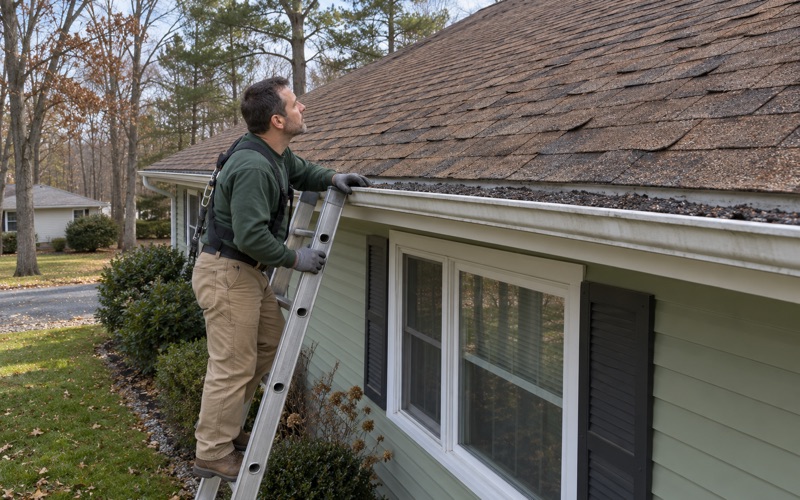
Under (f)7 of the same section, “Gutters and downspouts which leak is a deficiency.” On a new house that usually means a seam or end cap that was never sealed, a downspout outlet pulled loose, or a run pitched the wrong way so water sits and finds the joint.
We look at gutters with the roof because the two work together. A gutter that overflows at a corner can push water behind the fascia and show up indoors looking like a roof leak, which is one more reason we trace every stain before naming a cause.
When a New-House Roof Problem Becomes an Ordinary Roofing Job
After the Warranty Window
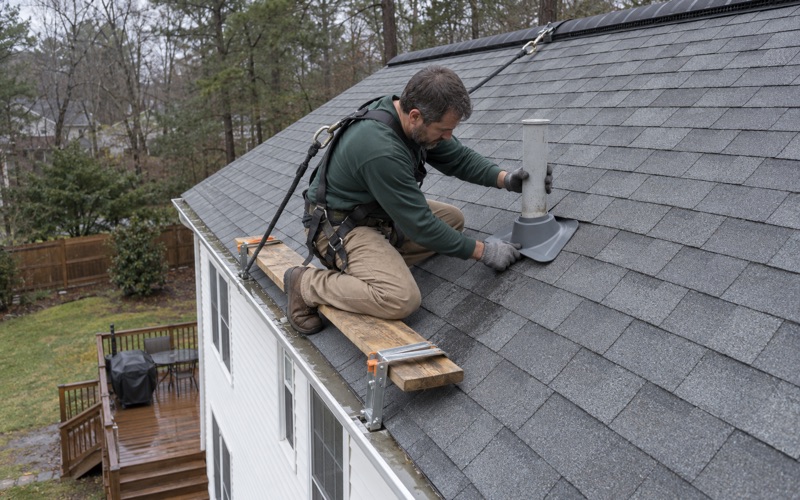
Once the first year has passed, or the cause sits outside the performance standards, a lifted shingle or a leaking boot becomes a straightforward repair. For a house finished in the last decade, that repair is usually small: reset flashing, a replaced pipe boot, or a few shingles resealed and renailed.
We tell owners plainly when a roof can be repaired, and we give that answer before replacement comes up at all. A roof with years of life left in the field does not need to come off because one detail failed.
Written Scopes, Line by Line
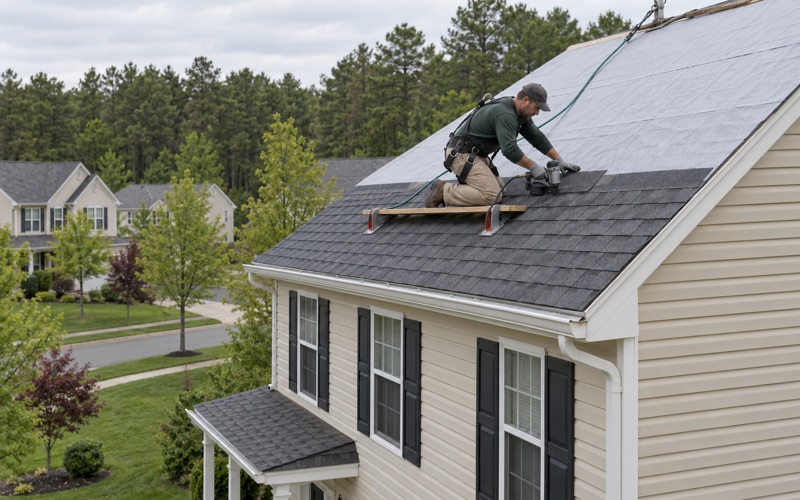
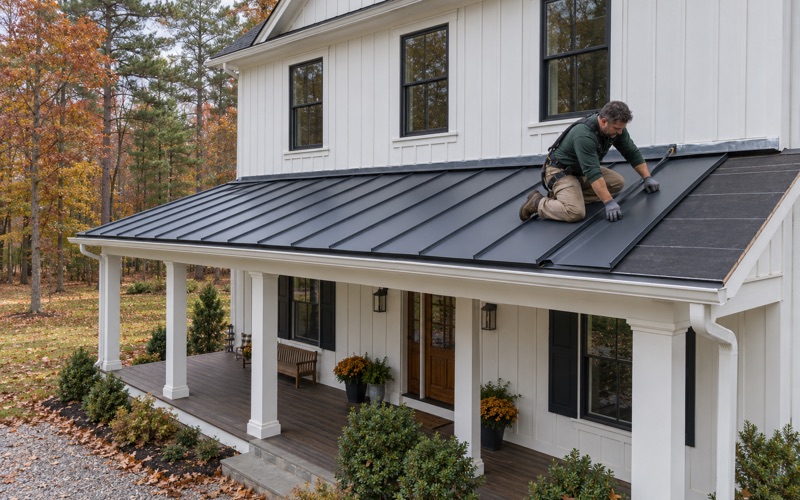
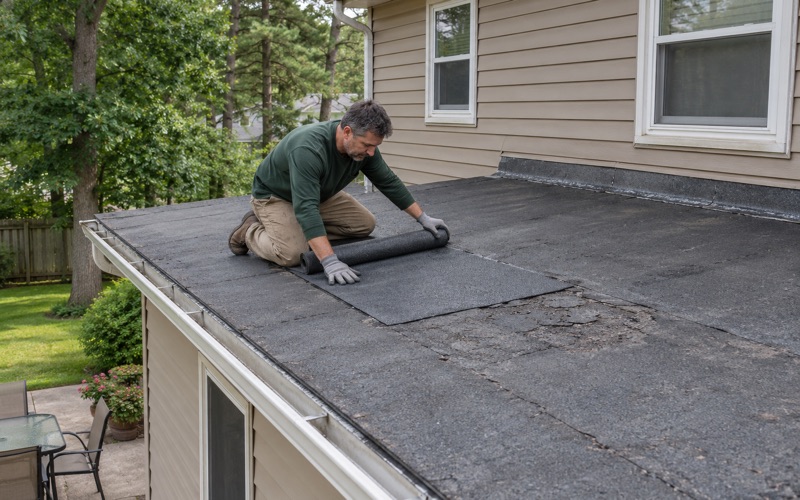
When a larger job is called for, our written scope breaks out tear-off, decking, underlayment, flashing, ventilation and gutters as separate lines, so a second estimate can be laid next to ours and compared item by item. Step, counter and chimney flashing is replaced with the new roof rather than bent back and reused.
Every contract is written to New Jersey’s home improvement rules and includes the three-day cancellation notice. If damaged decking turns up after the old roof is off, we photograph it and show the owner before a sheet is replaced, at a per-sheet price already set in the contract.
Ventilation on a Newer House
Newer homes are built tighter, which makes attic ventilation matter more, not less. We check intake at the soffits and exhaust at the ridge on every replacement, because a roof that cannot breathe ages from underneath long before its shingles show wear on top.
Each work day ends with the driveway, yard and gutters cleaned and a magnet sweep for roofing nails. On a street of newly finished houses, where neighbors are often still settling in, a clean site at the end of the day is part of the job.
- 20+ Years in Business
- Free Written Estimates
- Attic Checked on Every Leak Call