Jackson Elite Roofing brings more than 20 years of roofing in Millstone Township and the rest of western Monmouth County to houses that are bigger than most, with roofs to match. Every job starts with a straight answer on whether the roof can be repaired, given before replacement comes up at all. When it cannot, you get a written scope you can hold against any other bid.
Large houses change the arithmetic of a roof job. More planes mean more valleys, more flashing and more places for water to find a way in, and a lot with a detached garage or a workshop can put two or three roofs on one estimate. We price each structure separately, so you can see what the house costs and what each outbuilding adds.
Leak calls start in the attic as well as on the roof. On a sprawling house the stain on a ceiling can sit a long way from the opening that caused it, so we follow the water back to where it actually gets in before anything is priced. That habit keeps owners from paying for a section that was never the problem.
Big Houses on Millstone’s Multi-Acre Lots
What the census says about Millstone homes
Millstone is a township of large houses. The Census Bureau’s 2024 five-year American Community Survey counts 1,910 of the township’s 3,508 homes, 54.4 percent, with nine or more rooms, and only 225 with five rooms or fewer. The median home value in the same survey is $737,400, which says a good deal about what owners here are protecting.
Rooms measure living space, not roof area, so we never assume a size from a room count. Still, a house with nine or more rooms usually spreads across more footprint or more stories, and the roof over it tends to be large and broken into several sections. We measure every roof on site rather than estimating from a satellite image or a tax card.
The R-170 zone and the size of the lot
In the R-170 zone, one of several residential districts in the township, the minimum lot area is 170,000 square feet, roughly 3.9 acres. The township’s zoning schedule raises that to 4 acres for R-170 subdivisions approved after June 21, 2000. Lots that size tend to put the house well back from the road and leave room for more than one building.
For a roofing crew, that distance matters as much as the house itself. Materials, the dumpster and any lift have to travel a long driveway, and the work area is often out of sight from the street. We plan the layout of a Millstone job around the lot before the first bundle arrives, so nothing ends up parked on a lawn that cannot take the weight.
Clarksburg, Perrineville and the rest of the township
Millstone covers 37.18 square miles, with mail delivered through the Clarksburg and Perrineville post offices. We work the whole township, from the roads around the 1925 Clarksburg School, now the municipal offices, out to the properties near the Assunpink Wildlife Management Area. Distance from our base in Jackson is never a reason to shorten an inspection.
The township’s Historic Preservation Commission names no designated local historic district, and we found nothing on its page about review of roofs or exterior work. So far as that page shows, material choice rests with the owner, but we confirm before ordering anything. If your property has a history of its own, tell us early and we will plan around it.
Looking for roofing closer to Pine Ridge at Crestwood? See Roofing Services in Pine Ridge at Crestwood.
Nine Rooms and Up: Wings, Hips and Valleys
Why a large roof carries more weak points
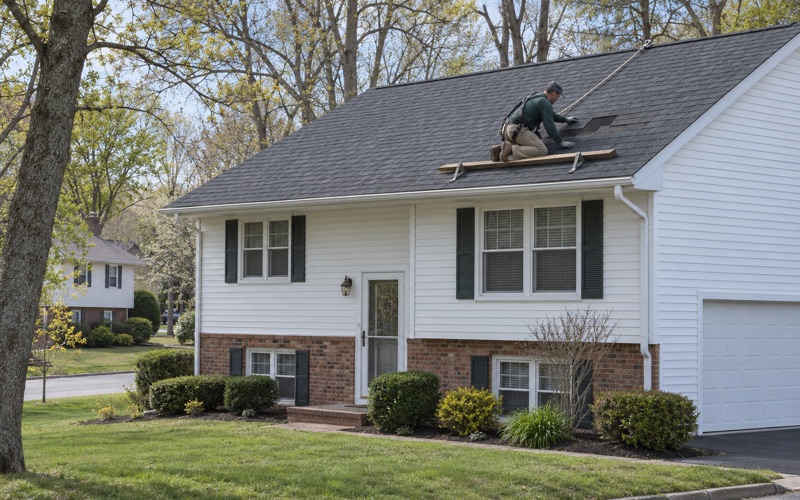
A simple gable roof has two planes and a ridge. A large house with wings, a garage connection and a few dormers can carry a dozen planes, and every place two of them meet is a seam water can work into. On a large roof the shingles themselves are rarely what fails first; the joints between sections are.
That is why we walk every plane and every transition on a roof this size, not only the one above the reported stain. Small problems at the far end of a wing get missed when a crew inspects only where the owner points, and they come back the next spring as a second leak call.
Valleys on a hip roof
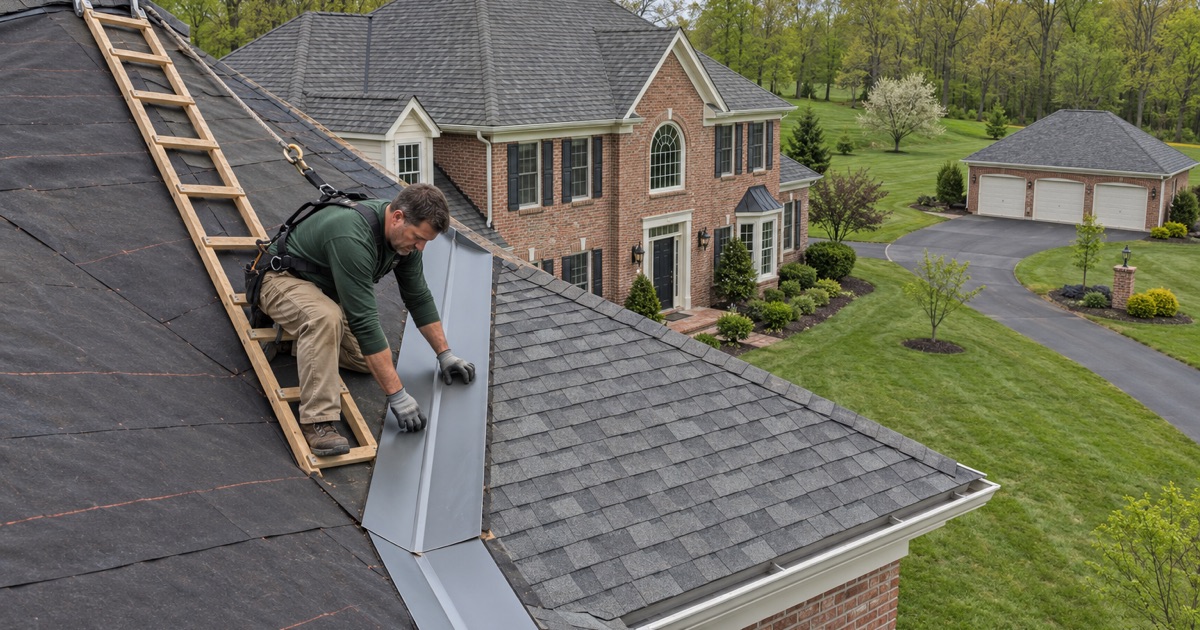
Hip roofs and cross-gabled additions create valleys, the channels where two slopes drain toward each other. A valley carries more water than any other part of the roof, so we line every one with ASTM D1970 self-adhering ice and water barrier before the shingles go down. Open metal, closed-cut or woven, the valley detail is chosen to suit the shingle.
Where a lower roof meets a sidewall, kick-out flashing at the eave turns water into the gutter instead of behind the siding. Large houses tend to have several of these spots, and a missing kick-out is one of the most common causes of rotted trim we find. We replace step, counter and kick-out flashing with the roof rather than bending old metal back into place.
Chimneys, skylights and penetrations
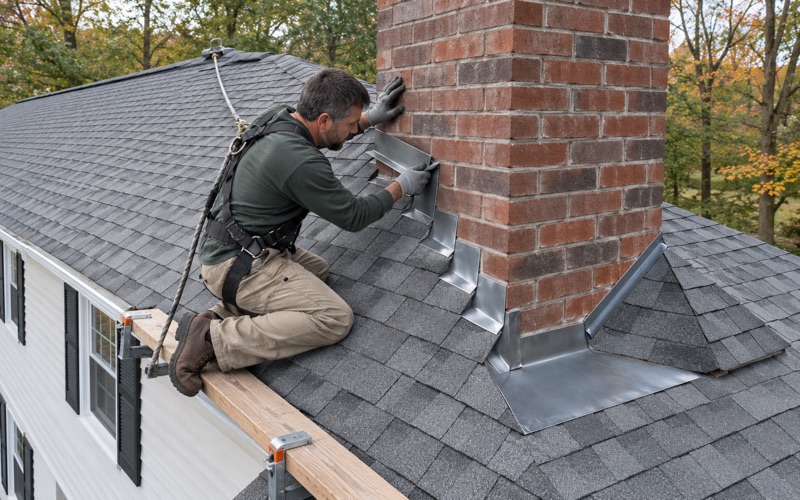
Bigger homes often carry more than one chimney, plus skylights over great rooms and a cluster of vent pipes from several bathrooms. Each is a hole in the roof, and each needs its own flashing. A chimney wider than 30 inches needs a cricket behind it under IRC R1003.20, and we build one where it is missing rather than relying on sealant.
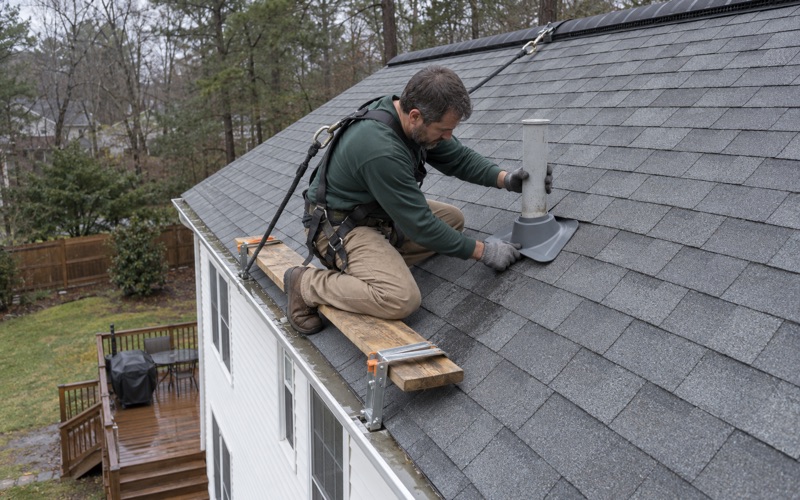
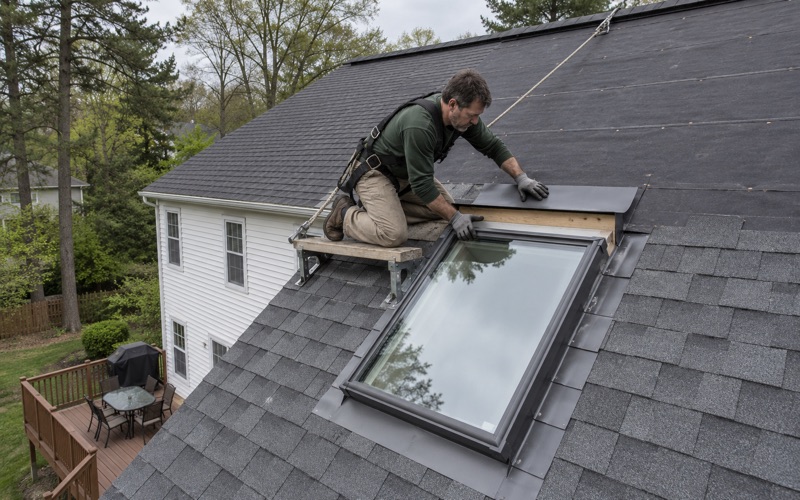
Pipe boots dry out and crack long before the shingles around them wear, so we replace them on every re-roof. Skylights get a decision of their own: a curb-mounted or deck-mounted unit nearing the end of its life is cheaper to swap while the roof is open than after new shingles are fastened around it.
Ventilation across a long attic
Attic ventilation gets checked on every replacement, and on a big house it is harder to get right. Separate wings can have separate attic spaces, and a ridge vent does little for a hip section with almost no ridge length. We size ridge vent against soffit intake by net free area, section by section, so the whole roof can breathe.
Detached Garages and Outbuildings on the Same Lot
Accessory buildings that grow with the lot
Millstone’s zoning lets accessory buildings grow with the property. Under Section 35-4-9.11 the allowance runs from 750 square feet on lots under one acre up to 1,200 square feet per building on lots of six acres or more. On a large property that can mean a detached garage, a workshop and a pool house, each with a roof of its own.
Those roofs often go years without anyone looking at them. A detached garage roof can leak for a long time before someone notices a stain on the ceiling of a space nobody heats. We inspect outbuildings when we inspect the house, and we tell you which ones need work now and which can wait.
Matching or separating the work
Some owners want every building on the lot re-roofed in the same shingle so the property reads as one. Others want the house done now and the garage next year. Either works, and our written scope lists each structure on its own lines, with tear-off, decking, underlayment, flashing, ventilation and gutters itemized, so the choice stays yours.
Permit questions can differ by building, too. Replacing the roof covering on a detached one- or two-family house is ordinary maintenance under N.J.A.C. 5:23-2.7 and needs no permit. Whether an accessory building’s re-roof falls under the same rule is a question for the township construction office, and we ask them before we schedule that work rather than guess.
Low-slope sections and additions
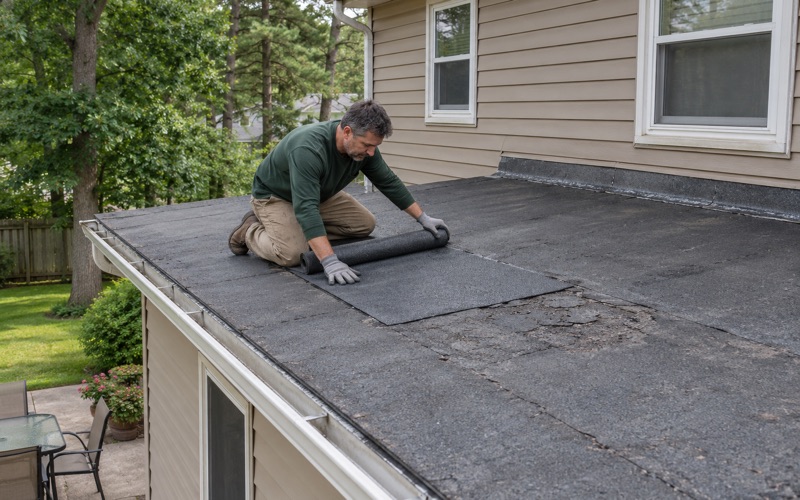
Garages with rooms above, breezeways and rear additions sometimes carry low-slope sections that shingles cannot handle. For those we use EPDM rubber membrane, TPO, or torch-down modified bitumen, depending on the pitch and what sits on top. The tie-in between a low-slope section and a steep main roof gets careful flashing, because that seam is where these roofs usually fail.
On some estates the garage or a rear wing suits standing seam metal better than shingles, especially where a shallow pitch sits close to the limit for asphalt. We lay out the options side by side in the scope, with the material, the underlayment and the flashing for each, so a mixed roof is a decision you make on paper first.
Staging a Large Re-Roof on a Deep Lot
Long driveways and setbacks
A house set well back on a multi-acre lot means a long run from the street to the work. We look at the driveway surface, any turnaround and the lawn areas that will not carry a loaded truck before deciding where the dumpster goes and how material reaches the roof. On some lots that means a smaller container swapped more often rather than one heavy load.
Every work day ends with the driveway, beds and gutters cleaned, including a magnet sweep for nails. On a big yard that sweep covers far more ground, and we run it across every path the crew used, not only the drip line around the house. Pets, children and riding mowers all share these lawns.
Scheduling a roof with many sections
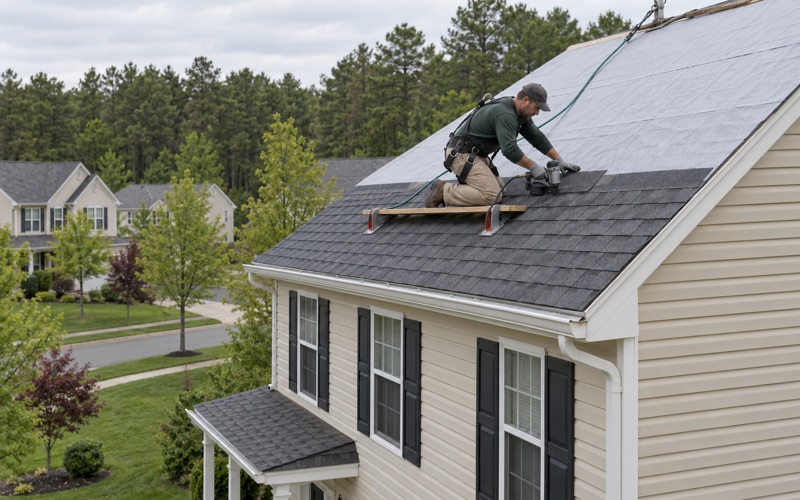
A large roof takes more than one day, so we plan the order of tear-off around the forecast and close each section before we leave it. We follow the National Weather Service forecast for its Western Monmouth zone, which covers Millstone, and we never strip more than the crew can dry in by evening.
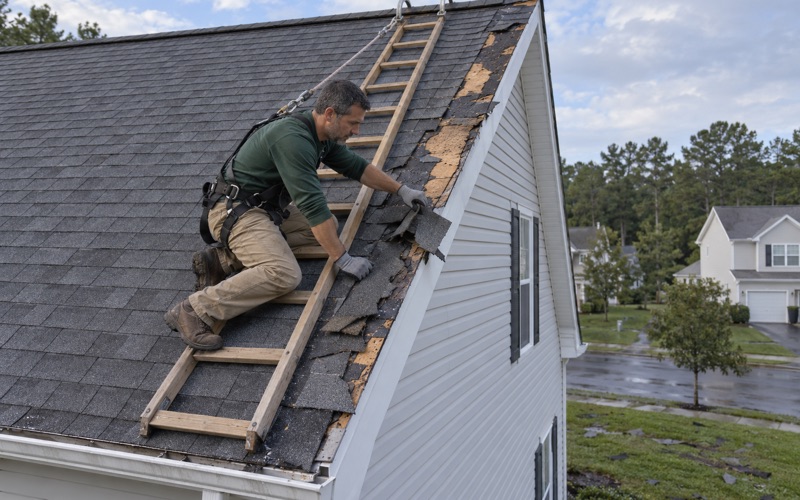
Decking damage on a big roof is rarely uniform. If we find rotted sheets once the old shingles are off, we photograph them and show you before replacing anything, at the per-sheet price written into the contract. You see what was found and what it costs, instead of a surprise total at the end.
Storms, trees and paperwork
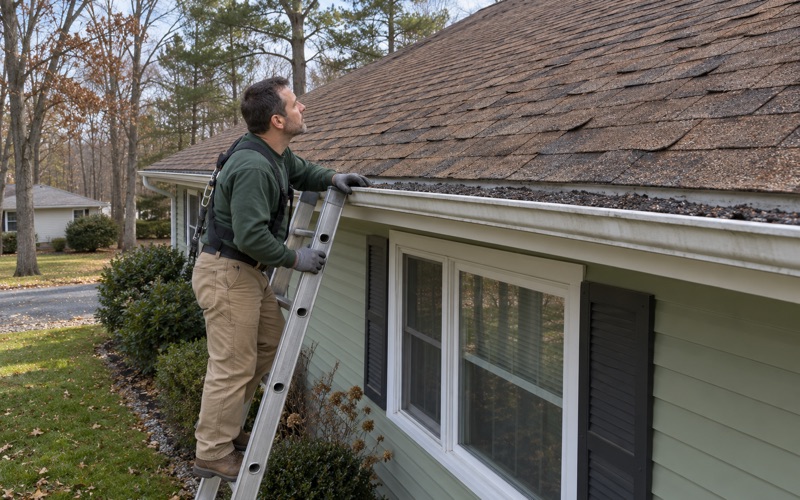
Large lots often keep mature trees close to the house. We look at overhanging limbs along with the roof, because a branch that scrapes shingles in every wind wears the roof as surely as weather does. After a storm, we photograph the damage and write it up for your own claim, and we will meet your adjuster on site if you ask.
Every contract follows New Jersey’s home improvement rules, including the three-day cancellation notice. If you are selling, we can also prepare a written roof condition report to hand to the buyer’s inspector, which on a house this size answers questions before they slow down a sale.
- 20+ Years in Business
- Free Written Estimates
- Attic Checked on Every Leak Call