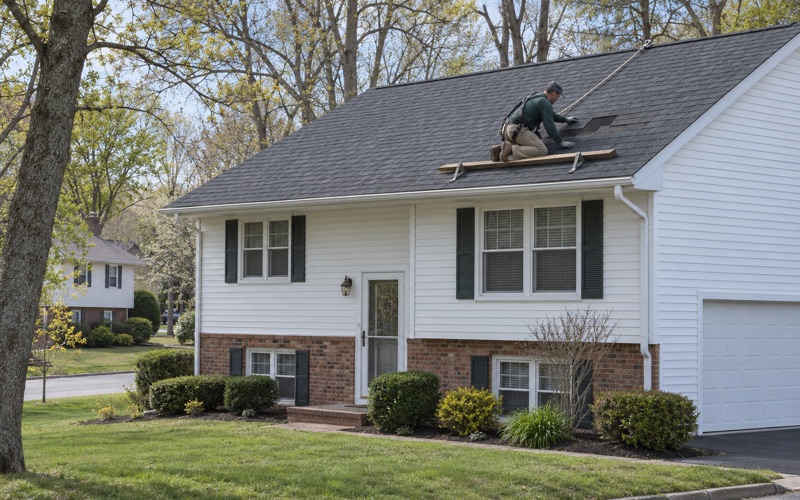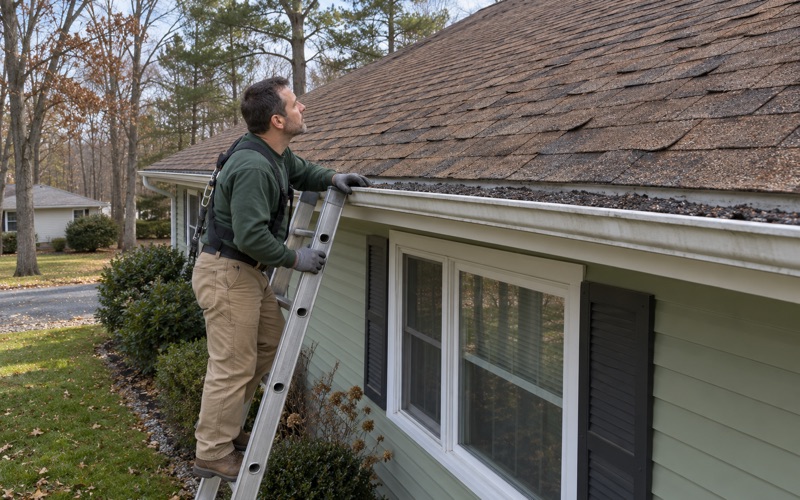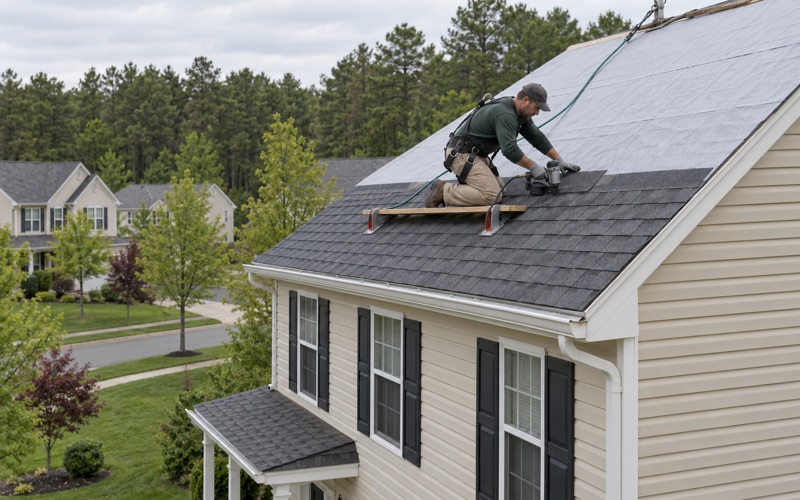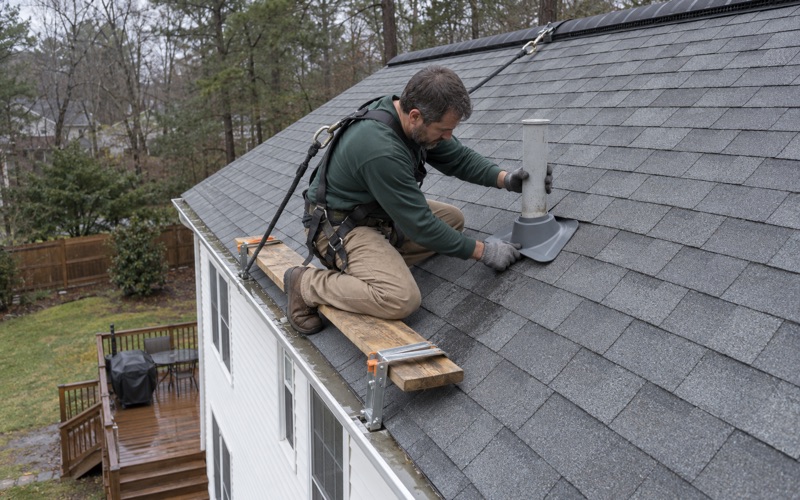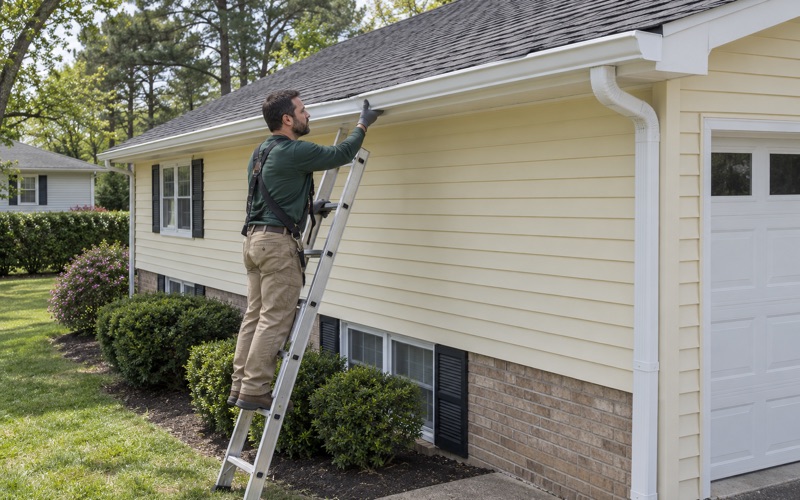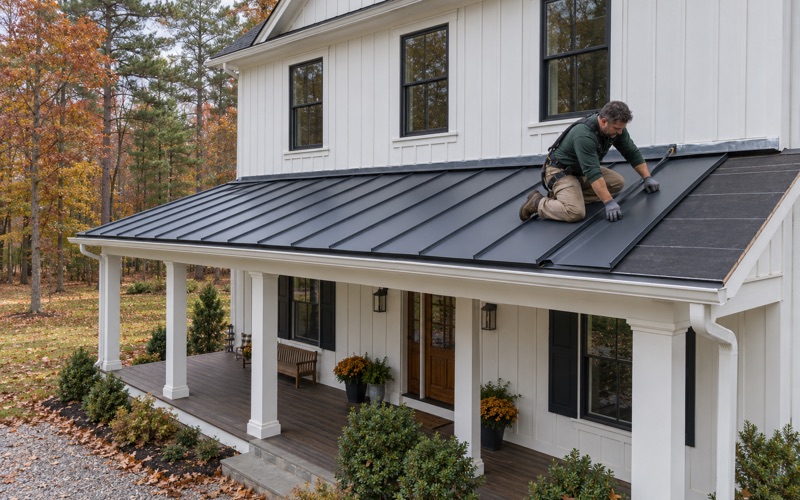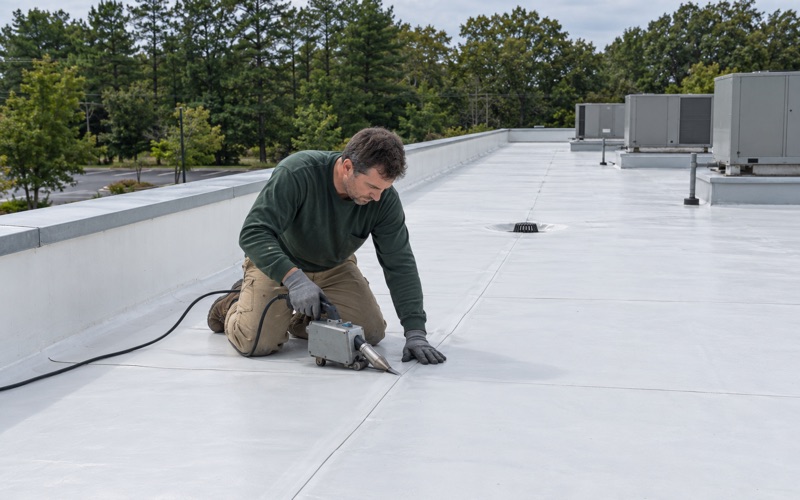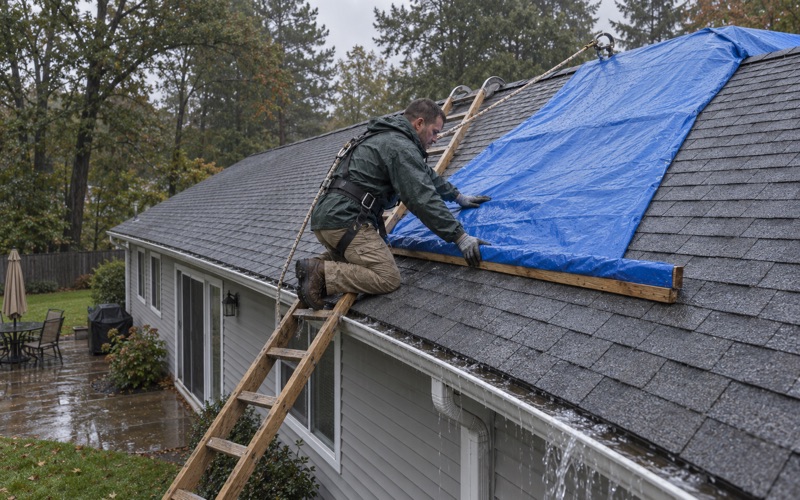
Jackson Elite Roofing approaches roofing in Mount Holly with more than 20 years in the trade and a particular kind of owner in mind: the landlord. When a building is rented, its roof answers to two parties at once, the tenants who live under it and the township office that signs off on each unit before a new tenant moves in. We plan every job with both of them in view.
A rental roof problem rarely arrives at a convenient moment. It shows up as a tenant’s phone call about a stain on the ceiling, or as a short gap between leases when everything has to be ready at once. Our answer in either case starts the same way: we look at the roof and the attic, tell the owner plainly whether a repair will hold, and put any price in writing line by line.
The sections below cover what renting out a building here involves, why a small apartment building is treated differently from a house when its roof is replaced, how to use the gap between tenants, and what we do when water is already coming through above someone’s bed. Each one is written for the owner who has to make the call.
Renting Out a Building in Mount Holly
A Town of Small Landlords
Mount Holly is the county seat of Burlington County, and a large share of its housing is rented. Census estimates count 1,347 rented homes out of 3,414 occupied ones, close to four in ten. The biggest single group of those renters, 462 households, lives in buildings of three or four units rather than in apartment complexes or rented single-family houses.
That points to a town where many landlords own one building, or a handful, and make the roof decisions themselves. We write for that owner. A roof on a three- or four-unit building is a bigger job than most homeowners face, yet the owner is often making the call without a property manager or a maintenance department behind them.
Licenses, Registration and the Certificate of Continued Occupancy
Renting in Mount Holly comes with paperwork. Rental licenses are mandatory, and landlords file a registration with the township’s Code Enforcement and Housing Department. The department also conducts mandatory health and safety checks at tenancy turnovers, and it issues a Certificate of Continued Occupancy, the document a unit needs before the next tenant takes it.
The township code behind that certificate dates to 1992 and ties it to a change of tenant, not just a sale. For a rental, the approval has to be renewed every two years or at the next change of occupancy, whichever comes first. An owner with several units goes through that cycle often, and the condition of the building is part of every round.
What the Maintenance Code Says About a Roof
The township code names the 2003 International Property Maintenance Code as its standard, and that code’s roof section, IPMC 304.7, is short and plain. It requires the roof and flashing to be sound, tight and free of defects that admit rain, and it goes on to cover drainage, gutters and downspouts. Its last line also bars discharging roof water in a way that creates a public nuisance.
We read that section as a practical checklist for an owner. Nothing we have read says how closely a roof is examined at any given turnover. What is clear is that the written standard for a rented unit includes a roof that keeps rain out, and a slow leak or a sagging gutter is easier to fix between tenants than during a lease.
Looking for roofing closer to Red Bank? See Roofing Services in Red Bank.
Three- and Four-Unit Buildings and Their Roofs
Not a One- or Two-Family House
Census figures put 506 housing units in Mount Holly in buildings of three or four units. To New Jersey’s construction code, those buildings are not detached one- or two-family dwellings, and that distinction matters more for a roof than most owners expect. It decides whether replacing the roof covering is ordinary maintenance or something that needs a construction permit.
The housing stock around them is old as well. Of the town’s 3,683 housing units, 1,089 were built in 1939 or earlier, and a house divided into three or four apartments over the decades can carry roof sections, dormers and additions from different eras. We walk the whole roof and every attic space before we write anything, because each part can need its own approach.
Re-Roofing a Small Apartment Building Is Permit Work
On a detached one- or two-family house in New Jersey, replacing the roof covering falls under the ordinary maintenance rule in N.J.A.C. 5:23-2.7 and needs no permit. That rule does not describe a three- or four-unit building. For those, a re-roof is construction-permit work, so the schedule has to include the application and the inspections that follow, not just the crew’s days on site.
We tell the owner this at the estimate, not on the morning work is supposed to start. The state’s rehabilitation subcode matters too: a roof already carrying two or more layers, or slate, wood shake or tile, comes off to the deck instead of being covered again. Knowing that early keeps both the price and the calendar honest.
A Scope Two Bids Can Be Compared Against
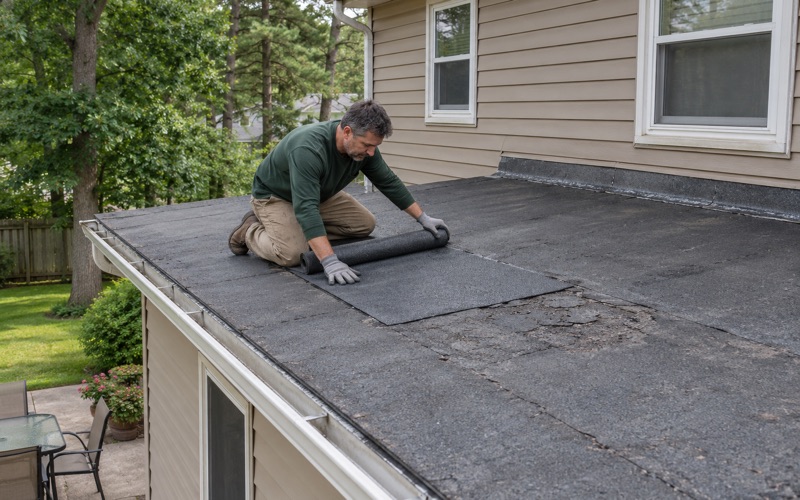
Owners of small rental buildings tend to collect several estimates, and they are hard to compare when each one is a single number. Our written scopes break the job into separate lines for tear-off, decking, underlayment, flashing, ventilation and gutters. Lay two bids side by side and it becomes obvious which one left out the flashing or assumed the old gutters would stay.
Decking is the line that surprises people. If boards or sheets are rotted once the old roof is off, we photograph them and show the owner before anything is replaced, at a per-sheet price already set in the contract. The contract itself follows New Jersey’s home improvement rules, including the three-day cancellation notice, so an owner knows exactly what was agreed.
Roofs at Tenant Turnover
Using the Gap Between Leases
An empty unit is the easiest time to work on the roof above it. Nobody has to move furniture away from a ceiling stain, nobody in that unit is home during the noise of a tear-off, and any interior damage from an old leak can be repaired before the next lease starts. If a turnover is coming, call us before the unit is cleaned and painted, not after.
Fresh paint over a ceiling that is still getting wet is money spent twice. We look at the roof and the attic above the vacant unit, tell the owner whether a repair will hold or the roof has reached the end of its life, and give that answer before anyone talks about replacement. Sometimes the honest answer is a repair that fits inside the vacancy.
Gutters, Downspouts and Roof Drainage
The maintenance code treats drainage as part of the roof. Gutters and downspouts have to be kept in good repair and free of obstructions, and roof water has to be carried away so it does not soak walls or interiors. On a building with several units, one clogged leader can push water against a foundation wall or down the face of the brick beside someone’s window.
We size and pitch gutters and leaders as part of the roof rather than as an afterthought, using seamless aluminum where the run allows, and we clear out the debris that sits in them. At the end of every work day the yard, the walks and the gutters are cleaned and swept with a magnet for nails, which matters when tenants walk those paths every day.
Flashing and Ventilation on an Older Building
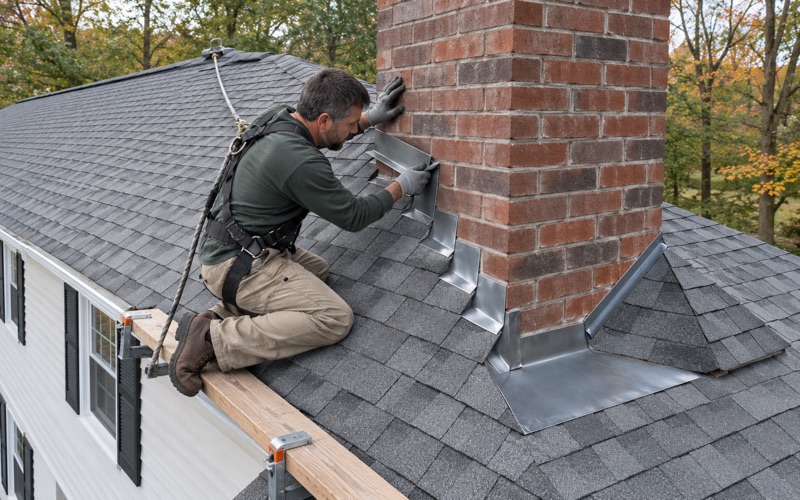
Where a roof meets a chimney, a dormer or a wall, the flashing is often where an old building leaks first. On a replacement we install new step, counter and chimney flashing rather than tucking the old metal back under new shingles. Reused flashing is a common reason a new roof starts leaking within a few seasons, and on a rental that means another tenant call.
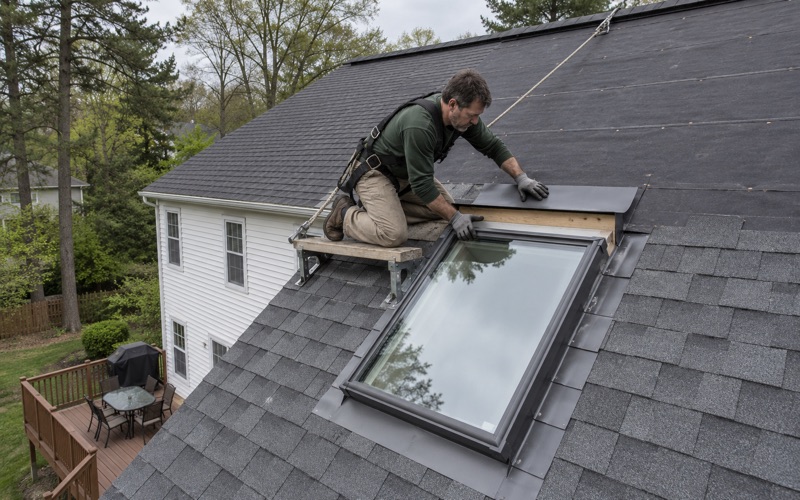
We also check attic ventilation on every replacement. A building split into apartments may have attic space chopped up by later walls, and a roof that cannot breathe ages from underneath, with heat and moisture working on the deck and shingles. Balancing soffit intake against a ridge vent is part of the scope, written as its own line.
A Leak Over an Occupied Unit
Tracing the Water From the Attic
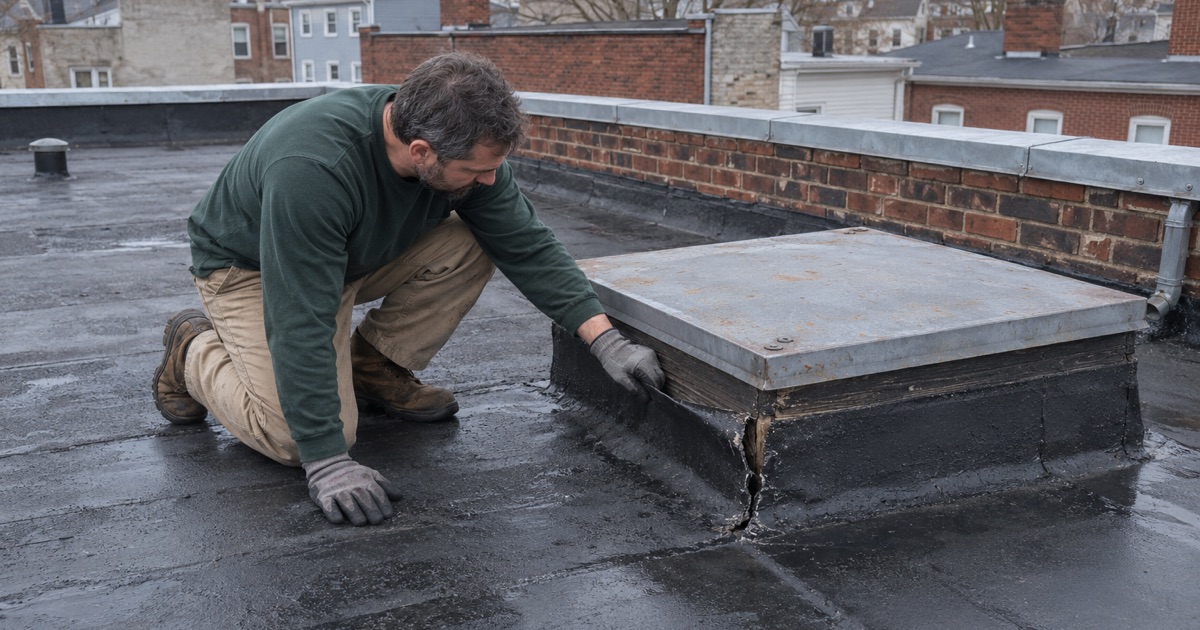
When a tenant reports water, the owner is dealing with two problems at once: a person whose home is getting wet and a building that is taking damage. We treat it as urgent. Every leak call includes a look in the attic as well as on the roof, because water often travels along a rafter or deck seam before it shows on a ceiling.
In a three- or four-unit building, the stain can show up several feet, or a whole room, away from the actual opening. Tracing the path before pricing anything keeps the owner from paying for a patch in the wrong spot. It also means the tenant who called sees the problem found and fixed, rather than a crew that came and went with the ceiling still dripping.
Stopping the Water, Then Fixing It
Some leaks can be closed for good on the first visit, and some need a temporary measure while materials or a permit are lined up. We tell the owner which kind it is and what the permanent repair will involve. On a rental, a temporary seal that holds is worth more than a promise of a full job weeks away.
A leak that comes back is also a turnover problem waiting to happen. Water that keeps reaching a ceiling leaves stains, damaged drywall and sometimes mold for the next tenant to find. Fixing the source while the current lease runs, and documenting what was done, gives the owner a cleaner unit and a clear record when that unit changes hands.
Storm Damage and Insurance on a Rental Building
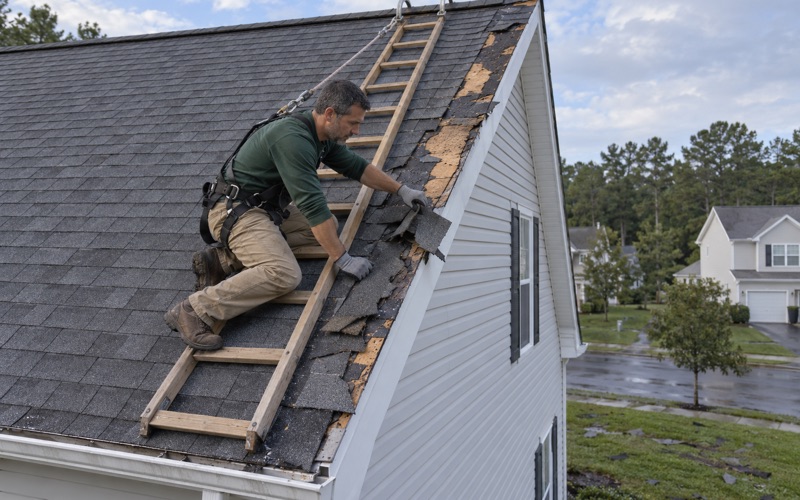
Wind can lift shingles across a whole slope in one storm, and on a building with several units the claim tends to be larger and the paperwork heavier. We photograph the damage and write it up so the owner has documentation for their own claim. When asked, our crew will meet the insurance adjuster on site and walk the roof with them.
Trees are part of that picture. A limb that scrapes the roof in every wind wears through shingles long before a storm brings it down, so we look at overhanging branches along with the roof itself. For an owner planning to sell a building rather than keep renting it, we can also provide a written roof condition report to hand to the buyer’s inspector.
- 20+ Years in Business
- Free Written Estimates
- Attic Checked on Every Leak Call