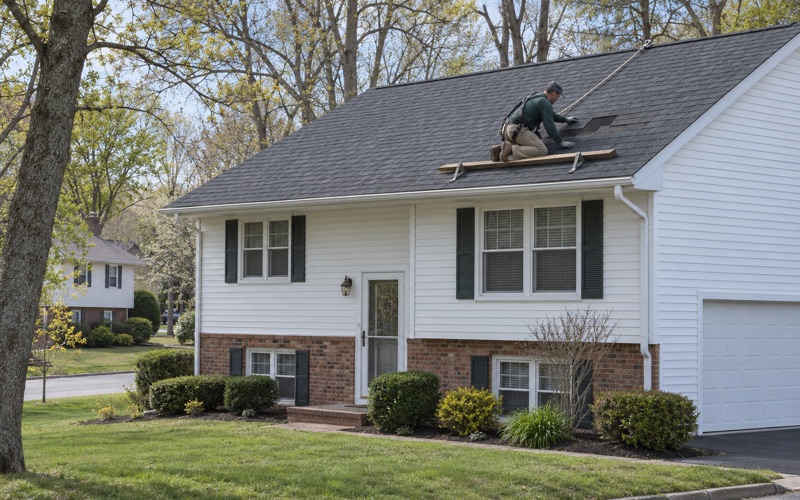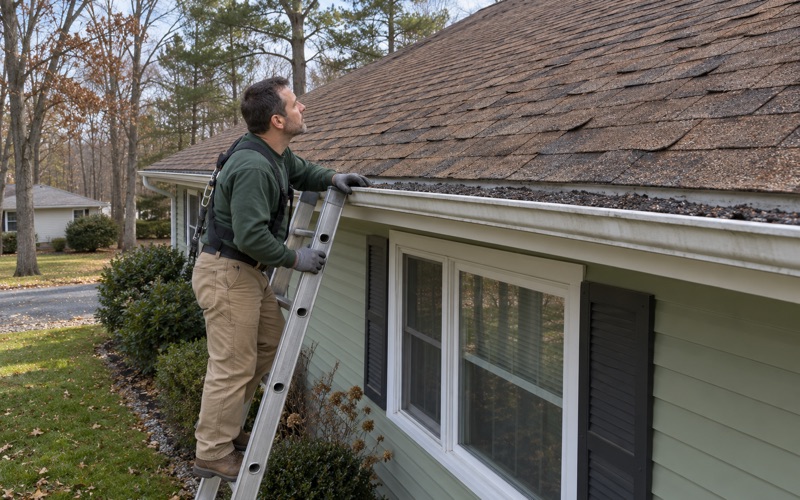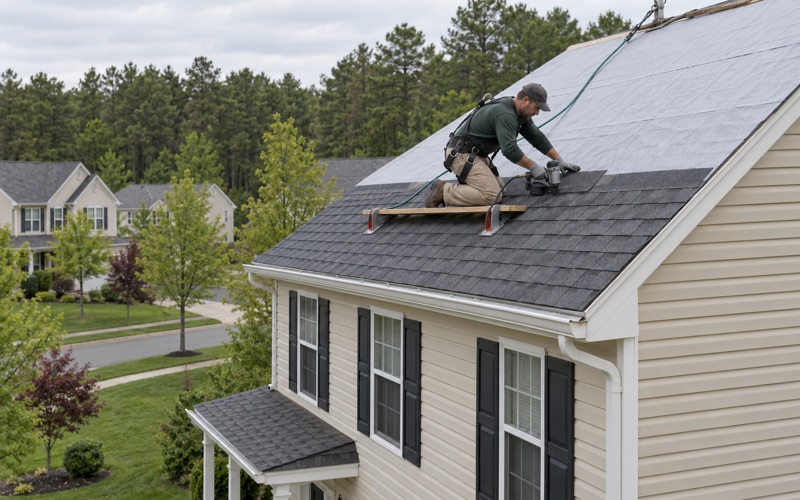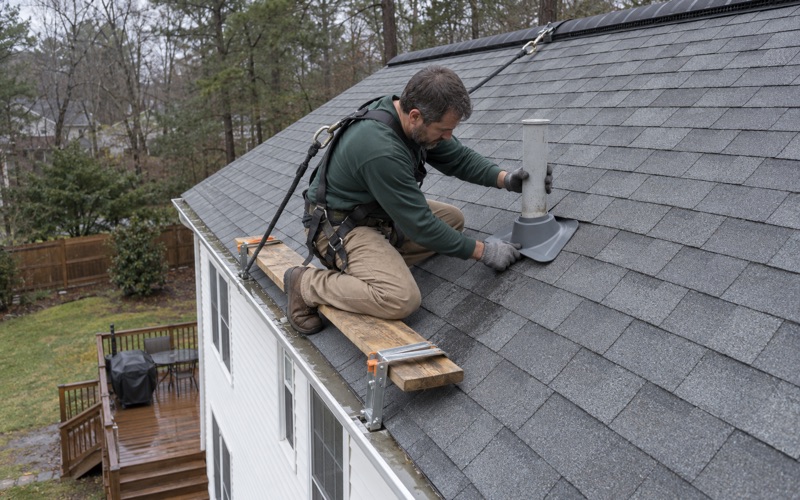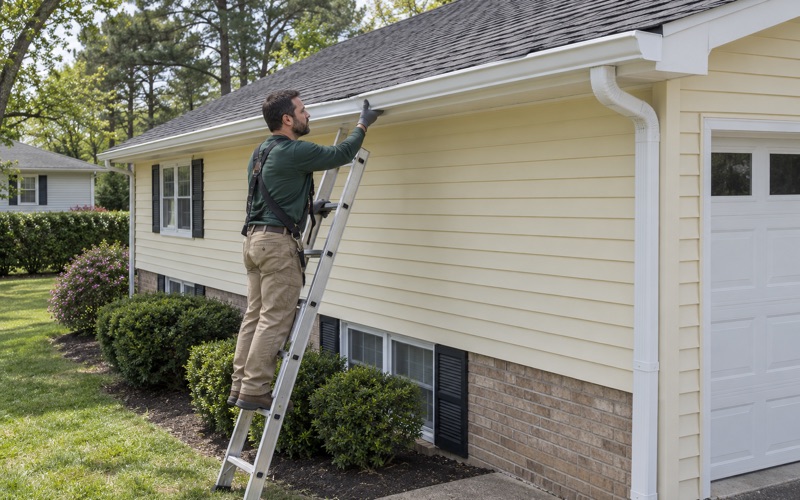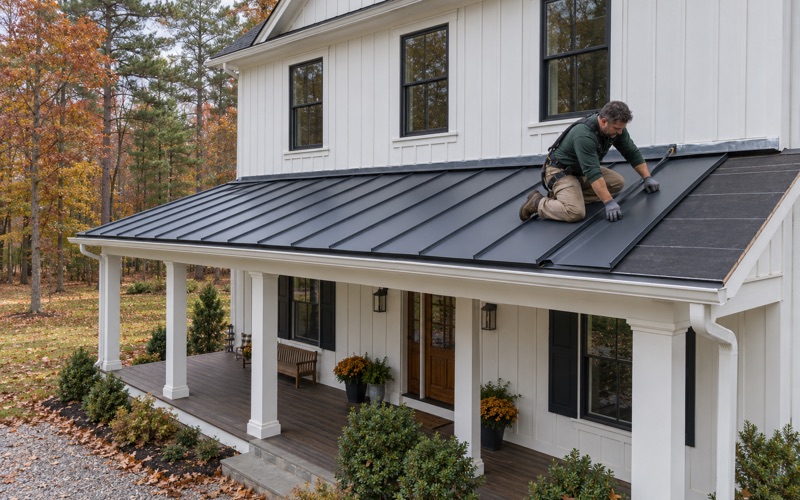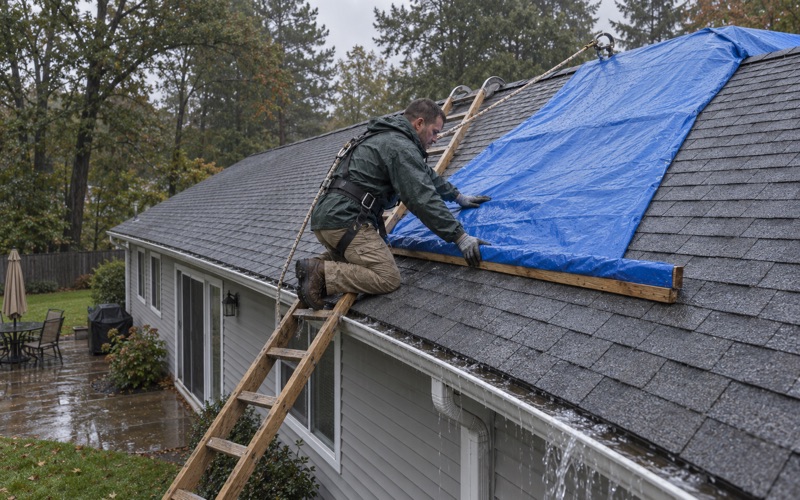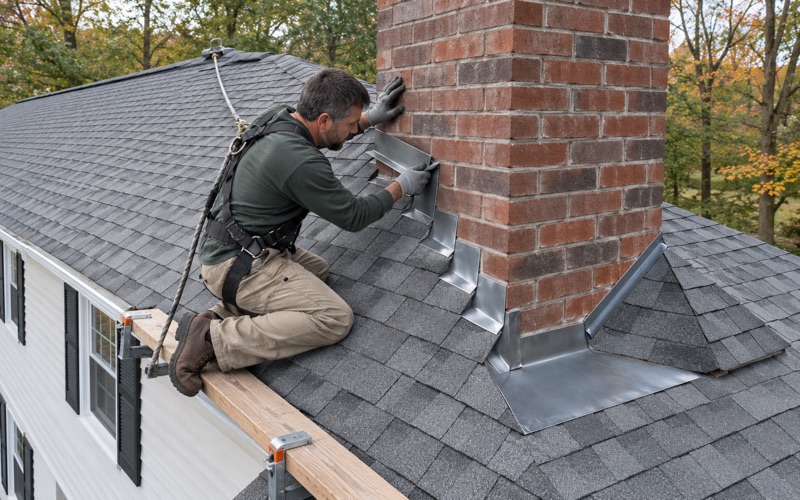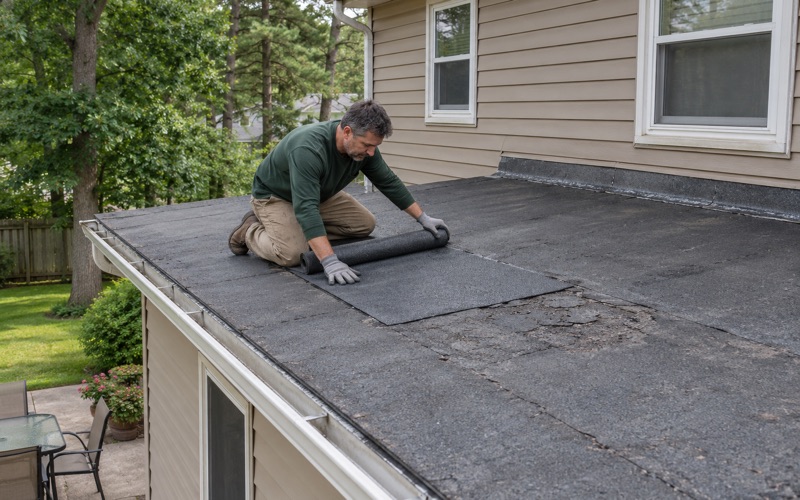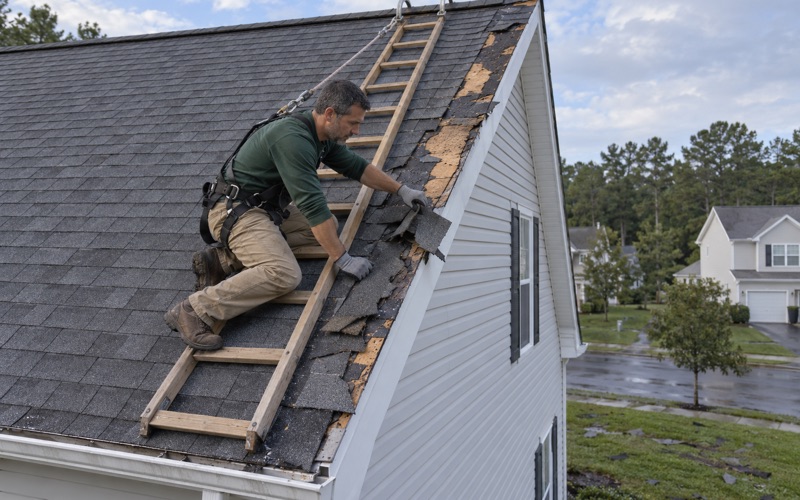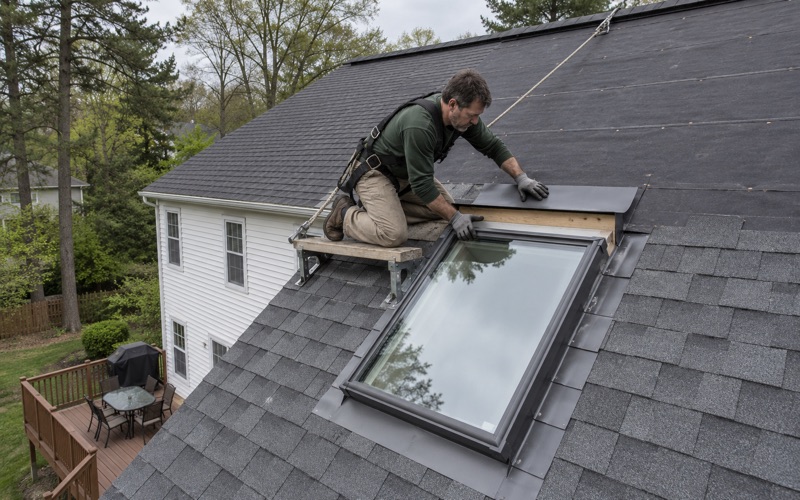
Jackson Elite Roofing has spent more than 20 years on roofing in New Egypt and across Ocean County, and a lot of that work starts with one question from the homeowner: where is this water coming from? A stain on a bedroom ceiling, a drip at a window head or a damp patch in the attic can each have more than one source. We find the source first, because the right repair and the right paperwork both depend on it.
Every leak call here includes a trip into the attic as well as a walk on the roof. Water rarely shows up indoors directly below the spot where it got in, so we follow it along rafters and sheathing back to the opening before anyone talks about price. Once we know, we tell you plainly whether the roof can be repaired, and only after that whether replacing it makes sense.
When a storm is behind the damage, we photograph what we find and write it up so you have a clear record for your own claim. If your adjuster wants to see the roof in person, our crew will meet them on site. What we do not do is decide coverage or argue a claim for you; that stays between you and your insurer.
New Egypt, Crosswicks Creek and the Storm of 1978
The night the creek set its record
New Egypt is a census-designated place within Plumsted Township, at the point where Ocean, Burlington and Monmouth counties meet. On the evening of August 31, 1978, a small, intense thunderstorm cell stalled over New Egypt, Wrightstown and Fort Dix for about six hours before moving east. New Egypt reported more than 8 inches of rain, McGuire Air Force Base took 7.40 inches that day, and the Fort Dix Fire Tower reported more than 9.
The U.S. Geological Survey later documented the storm in Water-Resources Investigations report 80-115. It noted that one inch of rain fell within a 20-minute period and that half-inch hailstones came down at about 4:30 p.m. The whole storm covered less than 35 square miles, which is why Trenton recorded only 0.37 inch the same evening.
What the water did in the village
Crosswicks Creek and Oakford Lake, which sits in the middle of town, both flooded. At the New Egypt crest-stage gage, the creek crested more than 3.9 feet above its previous highest stage, set on August 28, 1971. At Route 528 the creek reached 73.7 feet and carried about 4,500 cubic feet per second, against 1,940 in 1971.
USGS reported that 70 homes and 14 businesses were damaged, with losses over $2 million, and that people sprained their backs carrying household goods out of the floodway. The agency estimated that a flood of that size on Crosswicks Creek at New Egypt would be exceeded, on average, about once every 75 years.
Why a roofing company brings it up
The USGS report is about creek water, and it records no damage to roofs. We bring it up because it shows how much water a single stalled cell can drop on this village in one evening, and because after a storm like that, the questions homeowners ask us are rarely only about the roof.
Looking for roofing closer to Manchester? See Manchester Roofing.
Creek Water or Roof Water After a Cloudburst
Two ways water gets into the same house
In a heavy storm, one house can take water from two directions at once. Water can rise out of a creek or a lake, spread across the yard and come in at the foundation, the basement or the first floor. Rain can also come down through an opening in the roof and show up as a ceiling stain, a wet attic floor or a drip running inside an exterior wall.
Those are two different problems with two different fixes. A lifted shingle, a cracked pipe boot or open step flashing at a sidewall lets rain in from above, and a roof repair closes it. Water that rose from Crosswicks Creek has nothing to do with the roof, and no amount of roofing work would have kept it out.
Heavy rain finds weak spots, not new ones
An inch of rain in 20 minutes puts a great deal of water across a roof surface at once. On a sound roof it sheds. On a roof with a worn valley, a missing length of drip edge or flashing reused from an earlier job, that volume finds the gap far faster than a slow, steady rain would.
That is why we look at every detail around chimneys, walls and penetrations, not only the open field of shingles. When we replace a roof, step, counter and chimney flashing is replaced with it rather than bent back over new material, because flashing is where wind-driven rain most often gets in.
Reading the stain on the ceiling
A stain near an exterior wall on the top floor usually traces upward, toward the roof. A wet basement floor or a line of damage along the bottom of first-floor walls usually traces outward, toward the ground. Mixed cases do happen, which is exactly why we go into the attic before we draw any conclusion.
What New Jersey Homeowners Policies Say About Flood
The notice every insurer must send
New Jersey regulation N.J.A.C. 11:1-5.5 requires every homeowners insurer, the FAIR Plan included, to give customers a flood notice when a policy is first written and at least once a year after that. Its first line, as the Department of Banking and Insurance prints it, reads: “A homeowners insurance policy does not cover property damage from floods.”
The same notice tells customers that a separate flood insurance policy may be available for an additional premium. If you have never read that notice closely, your next renewal packet is a good time to find it and do so.
How the federal flood policy defines flood
The Standard Flood Insurance Policy written under the National Flood Insurance Program uses a specific definition. As FEMA’s FloodSmart site renders it, a flood is a temporary inundation of two or more acres of dry land or two or more adjoining properties, one of which is the policyholder’s, by inland or tidal overflow, rapid accumulation of rainfall or snowmelt, or mudflow.
Rain coming through a damaged roof into one house is not a creek flood. Which policy, if any, applies to a particular loss is a decision your insurer makes on the facts of that loss. We do not predict it, and under the New Jersey Public Adjusters’ Licensing Act, N.J.S.A. 17:22B, a roofing contractor may not negotiate your claim.
Where our written report helps
What we can give you is a clear record of the roof itself: dated photographs, the location of each opening we found, and a written description of the damage and the repair it needs. That separates the roof’s part of the story from anything that came up from the ground, so whoever reviews the claim is working from accurate information.
Checking a New Egypt Roof and Attic After a Heavy Storm
What to look at from the ground and indoors
Once the rain stops, walk around the outside of the house and look for shingles in the yard, bent metal at the eaves or flashing out of place. Inside, check ceilings on the top floor, the tops of closets and the walls around the chimney. Stay off a wet roof; even professional crews work under fall-protection rules that start at six feet.
If you can reach the attic safely, look at the underside of the roof deck with a flashlight. Dark, wet sheathing, drips on the insulation or daylight around a vent pipe are the things worth photographing, both for us and for your own records.
What we check on a storm call
We walk the roof and then go into the attic, working back from any wet spot to the place the water entered. We look at pipe boots, valleys, ridge vent, drip edge and every run of flashing, and we note any limb from an overhanging oak or pine that has been scraping the shingles in the wind.
Then you get a straight answer about whether a repair will close the leak or whether the roof has reached the point where replacement makes more sense. If it is a repair, we tell you what it fixes and what it leaves alone, so nothing about the next storm comes as a surprise.
Older village houses and newer ones
New Egypt’s housing runs from older village homes to brand-new construction. Census estimates count 111 homes built in 1939 or earlier and 135 built in 2020 or later, so the roof over one house may have been re-covered several times while the one next door is only a few seasons old. On older houses we often find more than one layer, and New Jersey’s re-roofing rule calls for a full tear-off once two or more layers are already on.
When a replacement does go ahead, our written scope lists tear-off, decking, underlayment, flashing, ventilation and gutters as separate lines, and the contract follows New Jersey’s home improvement rules, including the three-day cancellation notice. Any rotted decking found once the old roof is off is photographed and shown to you before it is replaced, at the per-sheet price already set in the contract.
- 20+ Years in Business
- Free Written Estimates
- Attic Checked on Every Leak Call