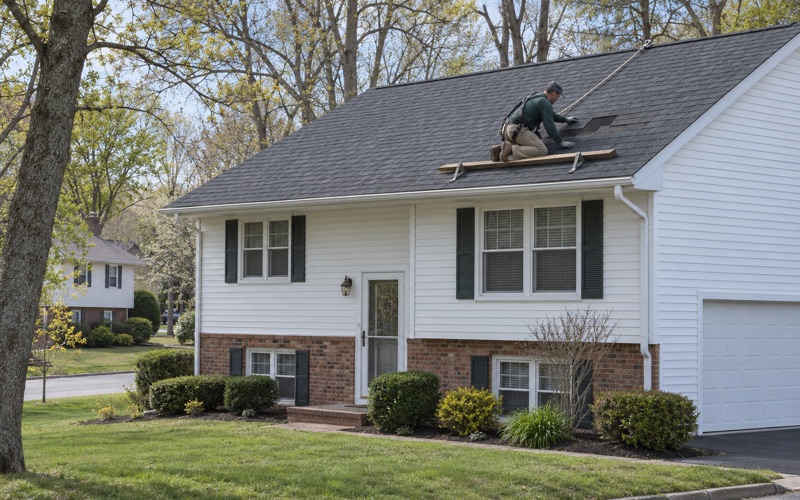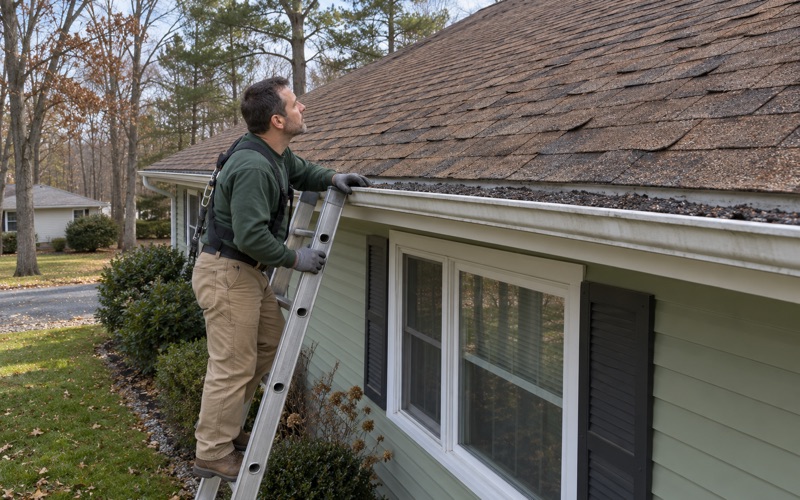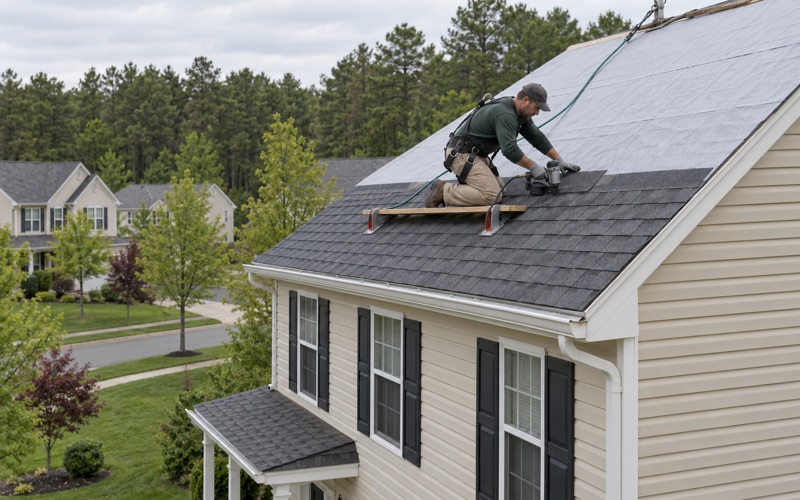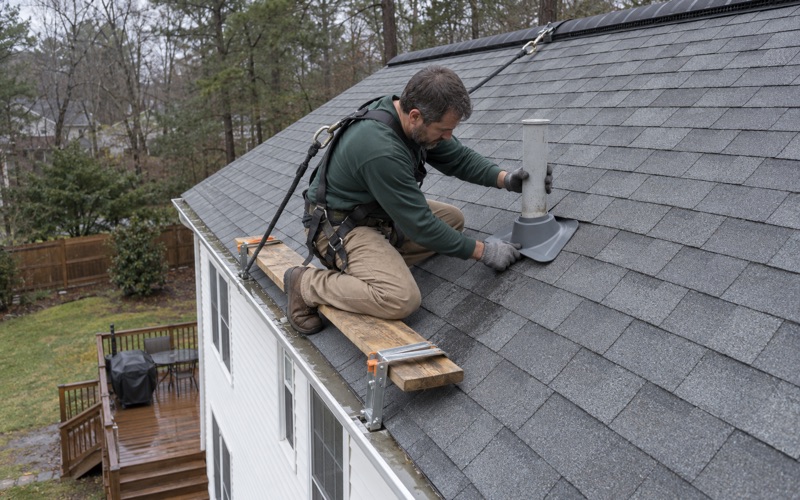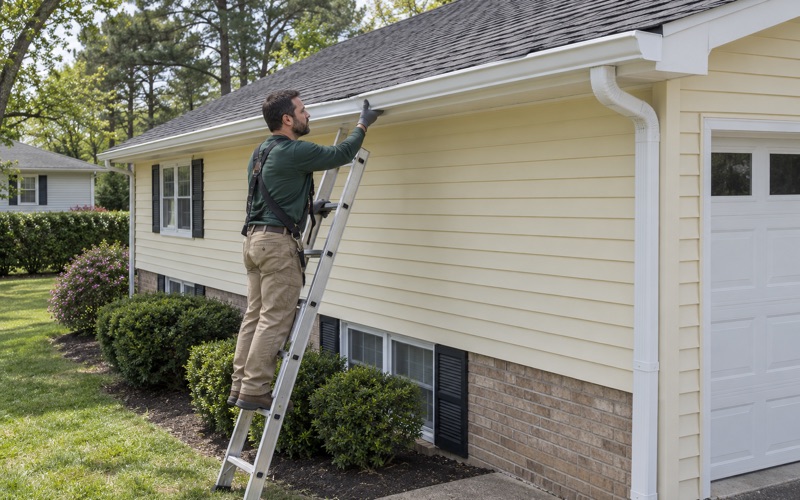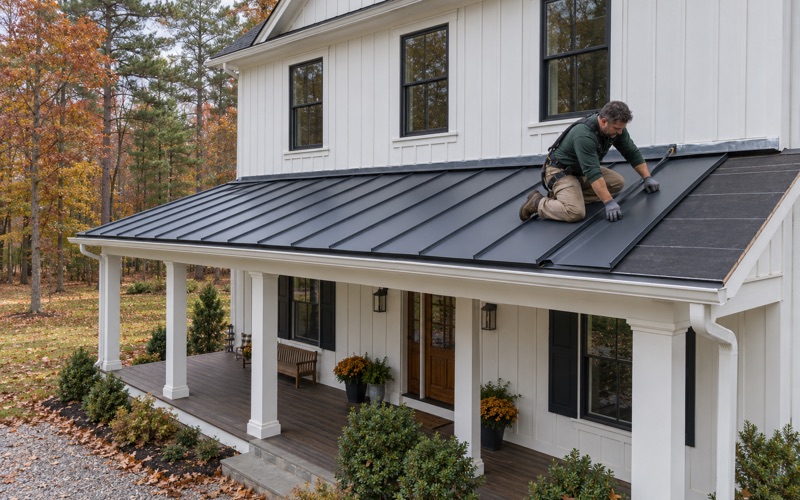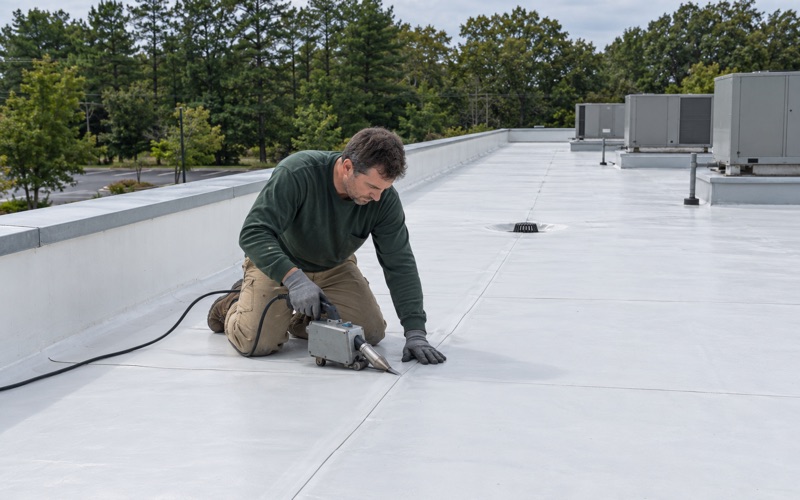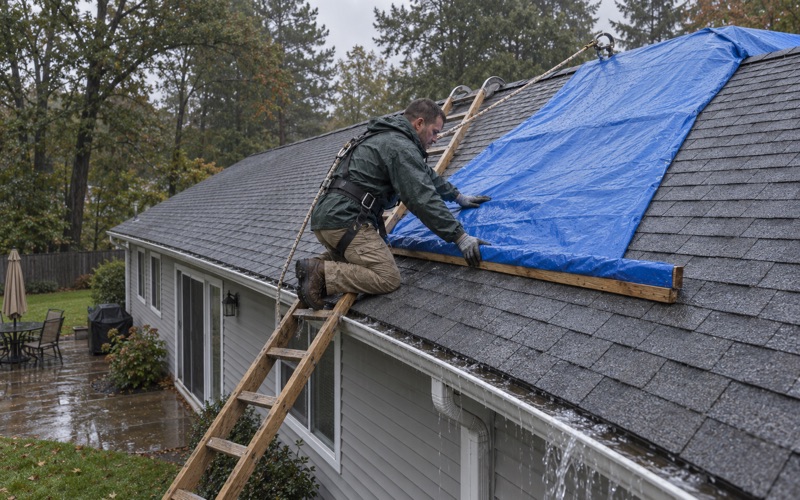
Jackson Elite Roofing has handled roofing in Plumsted and across this part of Ocean County for more than 20 years, and the work here rarely stops at one roof. A property might carry a farmhouse, a barn, an equipment shed and a run-in shelter, each aging at its own pace under its own kind of covering.
We start every call by sorting out which building actually has the problem and what it needs. A leak in the farmhouse kitchen gets traced from the attic side as well as the roof side, so we know where the water enters before we put a number on anything. Then you hear plainly whether a repair will hold or whether replacement is the honest answer.
The estimate that follows lists tear-off, decking, underlayment, flashing, ventilation and gutters as separate lines. That matters on a property with several roofs, because you can compare our figures against another contractor’s building by building and line by line, rather than weighing one lump sum against another. Every contract is written to New Jersey’s home improvement rules, including the three-day cancellation notice.
Ocean County’s preserved farms are mostly in Plumsted
Thirty-eight of forty-nine
The Garden State Preservation Trust’s table for Ocean County, covering May 1985 through fiscal year 2020, credits Plumsted with 38 preserved farms and 2,896 acres. The whole county preserved 49 farms and 3,256 acres with state money over the same span. No other township in the county comes close.
Those figures count only easements bought with state payment, so donations and transfers of development rights are left out. Even on that narrow measure, most of the county’s working agricultural land under easement lies inside this one township, which is why so many of our calls here involve more than a house.
Where the first easement was bought
Ocean County Planning records that the county bought its first farmland easement on the Hallock U-Pick farm in Plumsted in 1991. As of January 2026 the county reports 61 farms totaling 3,667 acres preserved, and its Agriculture Development Board holds some of its 2026 meetings at New Egypt Town Hall.
For a roofer, the history explains the landscape. Long lanes, open fields and clusters of farm buildings set well back from County Route 539 and County Route 528 are normal here, and getting a crew, a dumpster and a material delivery to the right building takes planning before the first bundle comes off the truck.
What a preserved farm means for its buildings
An easement keeps the land in agriculture, and agriculture keeps its buildings in service. Barns, pole barns and storage sheds on these properties are expected to keep working for decades, often under roofs that have been patched more than once by whoever was available at the time.
We walk every building you want looked at, not only the one that is leaking. Rusted fasteners on a metal barn, curled shingles on a shed and a failing pipe boot on the farmhouse can all be found in one visit, and you get a separate line for each so you can decide what happens now and what can wait.
Looking for roofing closer to Pine Lake Park? See Pine Lake Park Roofing.
A barn is not a house under the construction code
The commercial farm building track
New Jersey treats a commercial farm building, meaning a building on a farm producing $2,500 or more a year, under N.J.A.C. 5:23-3.2(d). It is not a dwelling. That distinction matters, because the ordinary-maintenance rule that lets a homeowner re-cover a detached house without a permit is written for one- and two-family dwellings.
So a full re-roof of a working barn falls outside that rule. Before we schedule any outbuilding replacement in Plumsted, we check with you how the building is used and what the code track looks like for it, so the paperwork question is settled at the estimate rather than discovered halfway through tear-off.
What stays exempt
Some farm structures sit outside the construction code entirely. Grain bins are one example, and so are small hoophouses with no foundation, 31 feet wide or less, covered with material 6 mil or thinner. A plastic-covered hoophouse is not really a roofing job at all. If you are unsure which category a structure falls into, we would rather say so and point you to the township than assume.
A pole barn, a hay barn or an equipment building with a real roof deck is different. Those are the buildings we look at closely, because the covering, the fasteners and the trim all have to suit how the building is used and how hard the wind hits it across an open field.
Partial re-roofs on outbuildings
Often only one slope or one section of a barn roof has failed. The state Department of Community Affairs, in a Fall 2018 newsletter, offered 25% of a roof within 12 months as a guideline for partial re-roofing of buildings that are not dwellings. It was described as guidance, not as a rule written into the code.
We will tell you plainly where your building sits against that guidance and suggest you confirm the answer with the township before work begins. What we will not do is guess on your behalf or promise an outcome on a farm building permit we have not seen. If the answer points toward replacing the whole roof anyway, we price that as its own option beside the partial repair.
Farmhouse roofs: ordinary maintenance on a detached home
The house follows a simpler rule
Most homes in Plumsted are detached: 2,761 of 3,486 housing units in the American Community Survey 2024 five-year estimates, and 2,675 of the 3,297 occupied homes are owner-occupied. Replacing the roof covering on a detached one- or two-family home is ordinary maintenance under N.J.A.C. 5:23-2.7 and needs no permit.
That means the farmhouse and the barn standing a few yards apart can sit on two separate tracks. We write them as two scopes, one per building, so the house work can go ahead on its own schedule even while the outbuilding question is still being answered. The same crew can handle both, but the paperwork never gets mixed.
Same inspection, different priorities
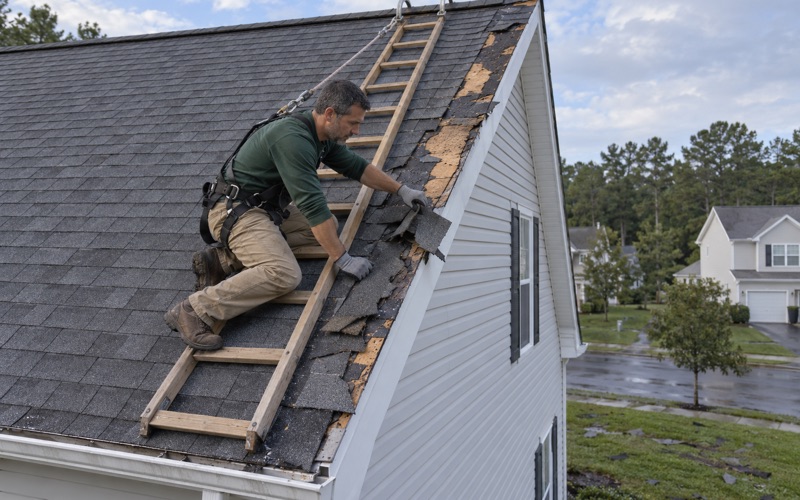
A farmhouse roof gets the same look we give any home. We check the attic for daylight, staining and damp insulation, look at the decking from below where we can, and confirm whether the existing layers can stay or whether the state’s rehabilitation subcode calls for a full tear-off before new material goes on.
When the old roof comes off and soft decking turns up, we photograph it and show you before any sheet is replaced. The per-sheet price is already written into the contract, so a few bad boards near the eave never turn into an open-ended charge you only learn about at the end.
Flashing and ventilation on older farmhouses
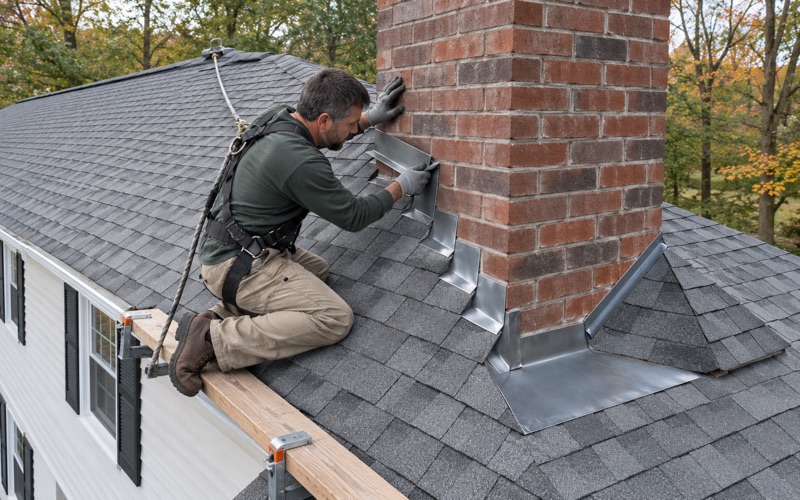
Many older farmhouses have chimneys, dormers and porch roofs tied in at awkward angles. We replace step flashing, counter flashing and chimney flashing with the roof rather than bending the old metal back into place, and chimneys wider than 30 inches get a cricket behind them to turn water aside.
Ventilation gets the same attention. An attic that cannot exhale moisture cooks shingles from below and sweats in winter, so every replacement includes a check of intake at the soffits and exhaust at the ridge, with the balance corrected as part of the job rather than left as it was found.
Roofing outbuildings and working around the season
Metal, shingle and low-slope coverings
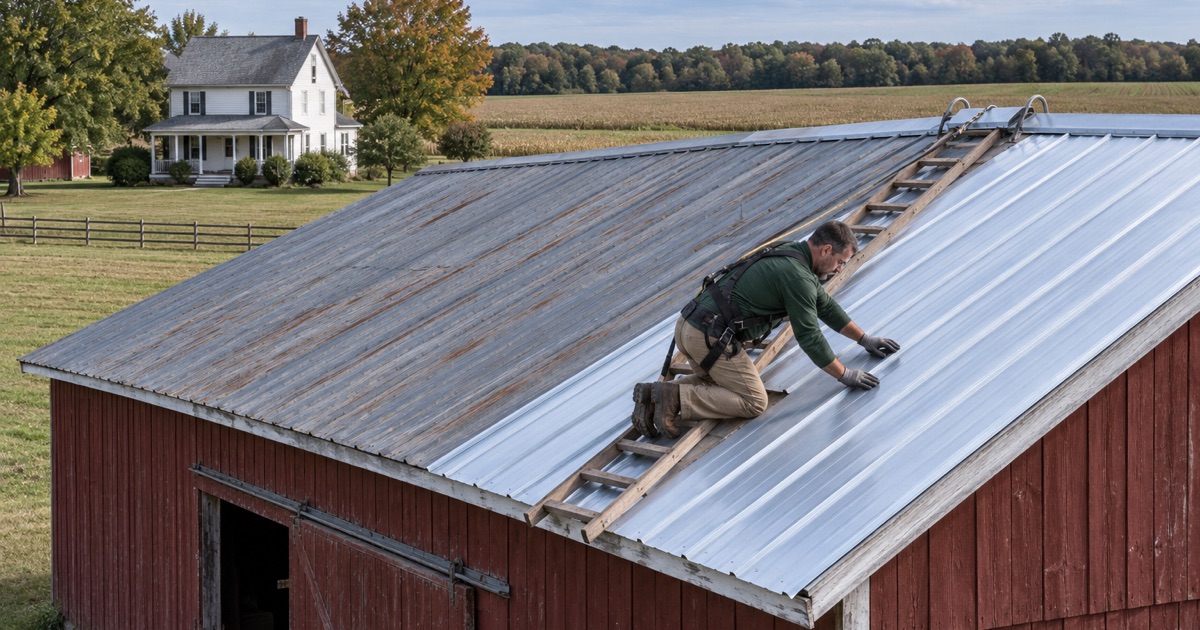
Farm buildings around New Egypt carry a mix of coverings. Exposed-fastener metal panels are common on pole barns and need their screws and washers checked, while standing seam metal hides its fasteners and suits buildings people want to stop thinking about. Some sheds and attached additions carry architectural shingles, which we can match to the house.
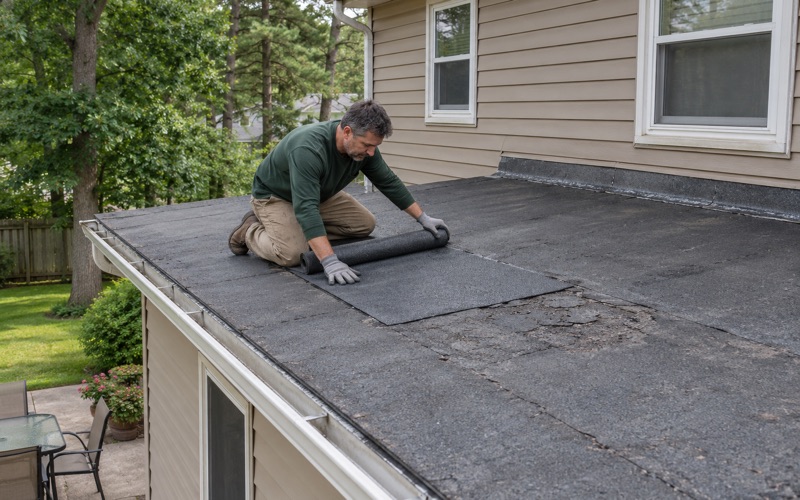
Low-slope sections, such as a lean-to over an equipment bay or a flat-roofed addition, need a membrane rather than shingles. EPDM rubber and TPO single-ply membranes both work here, and torch-down modified bitumen is another option where the slope and the building use allow it. Ponding water is the usual failure on these sections, so we check the drainage path before choosing a material.
Timing around a working farm
A barn full of hay or equipment cannot always be emptied on our schedule. Livestock barns get extra care, since animals do not tolerate falling debris or a surprise in the middle of feeding. We plan outbuilding work around your planting, harvest and livestock routine, and we talk through where the dumpster sits, which lane the delivery truck uses and what needs covering inside before any panels come off.
Plumsted falls in the National Weather Service’s Ocean forecast zone, handled by the Mount Holly office, and we watch that forecast closely on open roofs. A barn roof stripped across a wide span is exposed in a way a house roof is not, so we open only what we can dry in that day.
Trees, lanes and the end of each day
Farm properties often have old oaks and pines near the house and along the lanes. A limb that rubs shingles every time the wind picks up is part of the roof’s condition, so we look at the trees overhanging any building we are pricing and tell you which ones are doing damage.
When wind or a falling limb does reach a roof, we photograph the damage on every building involved and write it up for your own insurance claim. If you want us there when the adjuster walks the property, ask and we will meet them on site.
Nails in a field lane or a barnyard are a real hazard to tires, hooves and boots. At the end of every work day we clean the driveway, the yard and the gutters, and we run a magnet sweep over the ground around each building we worked on, not only the farmhouse drive.
- 20+ Years in Business
- Free Written Estimates
- Attic Checked on Every Leak Call