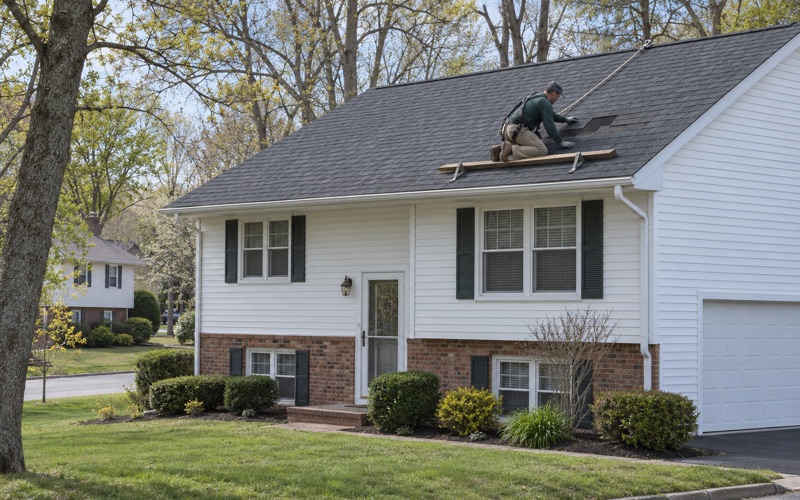
Jackson Elite Roofing approaches roofing in Point Pleasant with more than 20 years in the trade and one local fact always in view: here, a roof estimate written after a storm can carry weight well beyond the roof itself. For a home inside the mapped flood zone, the cost of restoring that roof may be counted toward a federal threshold that shapes how the entire house gets repaired.
That is why we treat the paperwork as part of the job, not an afterthought. Our written scopes break tear-off, decking, underlayment, flashing, ventilation and gutters into their own lines, so the owner, an insurance adjuster and anyone at the borough reviewing the file can see exactly what each dollar covers. Nothing gets bundled into a single number that nobody can check.
Before any of that, we tell you plainly whether the roof can be repaired at all. A patched section and a full replacement are very different figures, and in a flood-zone house that difference matters more than it would on higher ground. We trace every leak from inside the attic as well as from the shingles, so the price reflects where water actually entered rather than where the stain appeared.
Point Pleasant’s Flood Map and the 50 Percent Rule
A Borough Mapped Since 1972
Point Pleasant Borough entered the National Flood Insurance Program with its first flood insurance rate map on July 2, 1972, and the map in effect today took effect on June 20, 2018. The borough sits between the Manasquan River on the north and Beaver Dam Creek on the south, with the Point Pleasant Canal running through its middle, so water frames the town on several sides.
In January 2013, Mayor William Schroeder said 2,500 homes in the borough were in flood zones on FEMA’s new map. That figure was his statement at the time, not a count of damaged roofs or repaired houses, but it shows how many households have a stake in how flood-zone repairs are priced and reviewed. The current 2018 map is the one that governs a property today.
Community Rating System Class 7
The borough has belonged to FEMA’s Community Rating System since October 1, 1993, and currently holds Class 7, which carries a 15 percent discount on flood insurance premiums for eligible policies. Participation in that program is tied to how a community manages its floodplain, which is one more reason post-storm repair work here is worth documenting carefully and completely.
Point Pleasant Beach is a separate community with its own listing and its own class, so a homeowner should not assume the neighboring borough’s numbers apply here. The Class 7 rating and its 15 percent discount belong to Point Pleasant Borough alone, and the borough’s own records are the place to confirm how a specific property is mapped.
The Rule in Plain Terms
Federal regulation 44 CFR 59.1 defines substantial damage as damage of any origin where the cost of restoring a structure to its before-damaged condition would equal or exceed 50 percent of the market value of the structure before the damage occurred. Substantial improvement uses the same 50 percent test for reconstruction, rehabilitation, additions and other improvements.
In practice, the question is arithmetic with serious consequences. The value of a house before the storm is compared against the total cost of putting it back, and when the repair figure reaches half of that value, the house is treated as substantially damaged under the flood program. We do not make that determination or appraise a home’s value; that decision belongs to the borough, and our part is an honest repair price.
Looking for roofing closer to Robbinsville? See Roofing Services in Robbinsville.
Why the Roof Counts Toward Substantial Damage
Roofing, Gutters and Downspouts Are on FEMA’s List
FEMA’s Substantial Improvement/Substantial Damage Desk Reference, published as FEMA P-758 in May 2010, spells out the costs that must be included in a determination. Under structural elements and exterior finishes, section 4.4.1 names roofing, gutters and downspouts directly, alongside the other parts of the building envelope.
That means a roof restored after a storm is not set aside when the 50 percent count is made. If the same event also damaged walls, floors, interior finishes or mechanical systems, the roof’s cost is added to theirs, and together they are measured against the structure’s pre-damage market value. A roof alone is one input among several, never the whole picture.
What FEMA Allows to Be Left Out
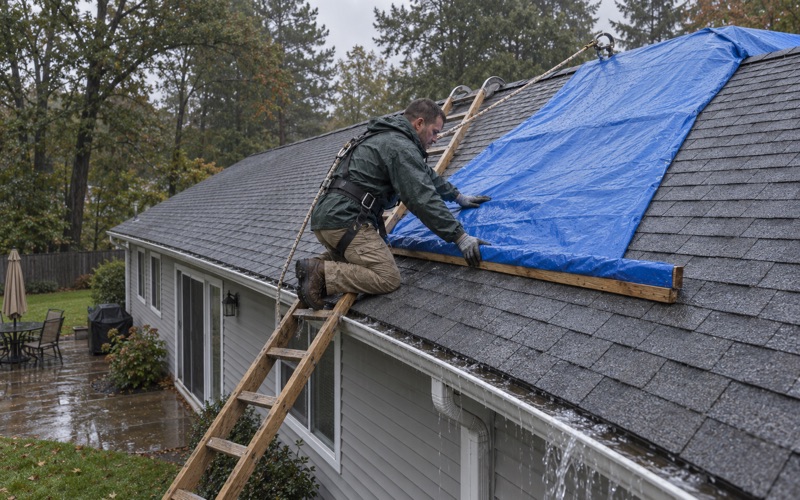
Section 4.4.2 of the same desk reference lists costs that may be excluded, including clean-up and trash removal, temporary stabilization, plans, surveys, permit fees, outside improvements and plug-in appliances. Emergency tarping to stop water right after a storm sits closer to temporary stabilization than to the permanent roof, which is one reason we price it on a separate line.
Keeping those items apart helps whoever reviews the file see which costs belong in the count and which do not. We list every item honestly and in full. The goal of an itemized estimate is an accurate picture of the repair, never a smaller number, and we will not split or trim a scope to change where a house lands.
Local Rules Can Be Stricter
The desk reference’s preface says that state or locally adopted requirements that are more restrictive take precedence over the federal minimum. We have not reviewed the borough’s own floodplain ordinance text, so we never tell a homeowner how Point Pleasant applies the test beyond the federal definition quoted above.
That is the honest limit of what a roofing contractor can say. Our role is to supply a clear, itemized price for restoring the roof and its drainage; how the borough reads that price under its own rules is a question for the borough. We would rather point you there than guess on your behalf.
What a Post-Storm Roof Estimate Should Separate
Tear-Off, Decking and Underlayment
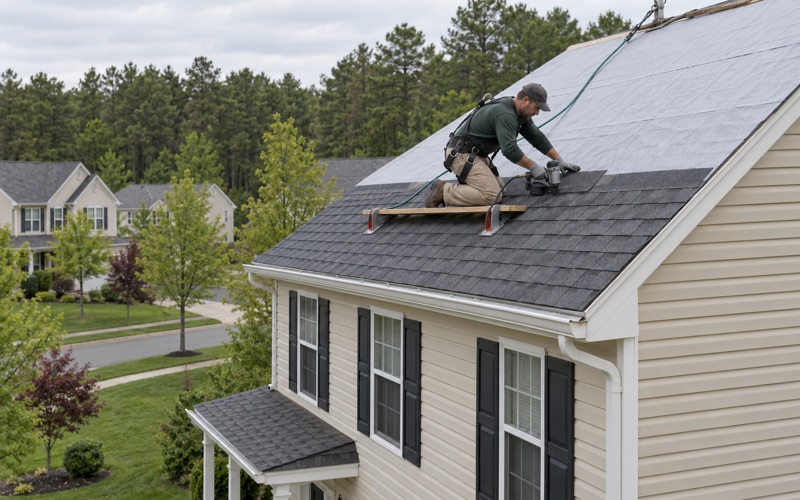
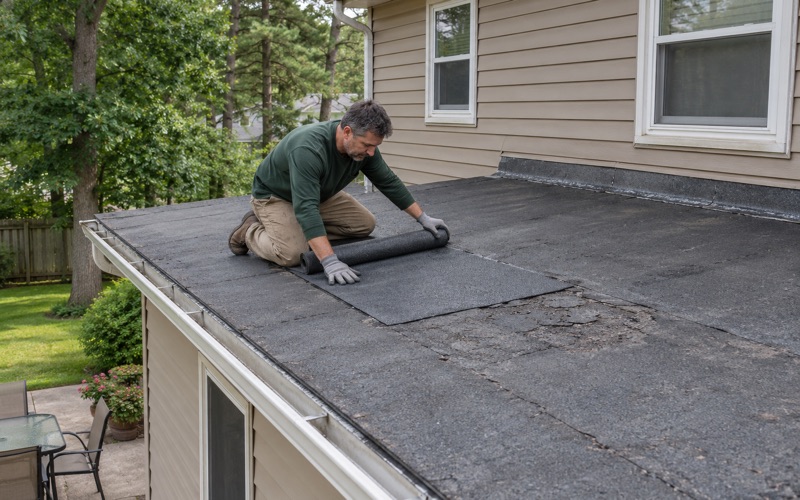
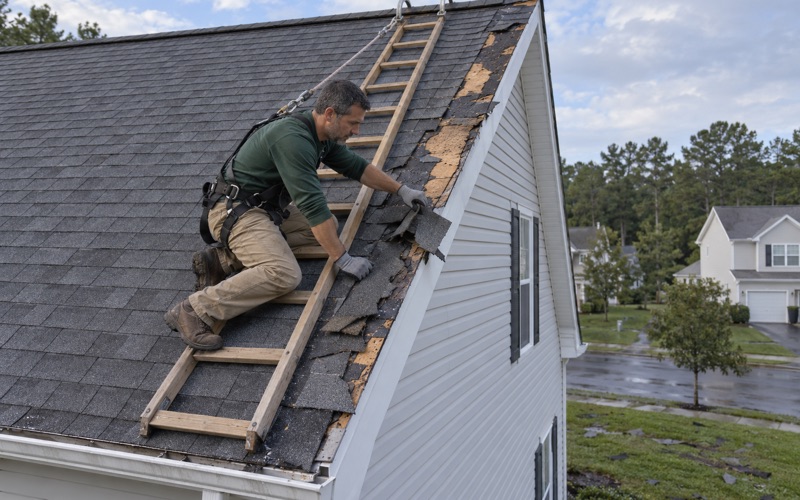
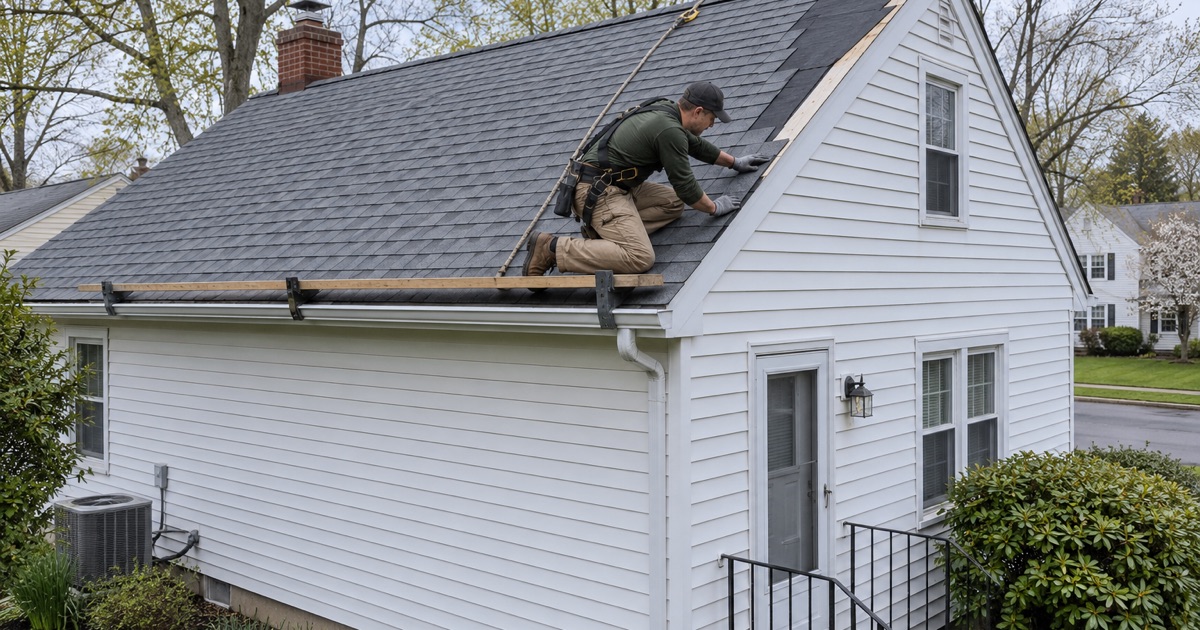
Storm repairs often start with the visible damage and grow once the old roof comes off. We list tear-off, decking, and underlayment such as an ASTM D1970 self-adhering ice and water barrier as distinct lines, so the full scope of the restoration is readable rather than buried inside a lump sum that hides what changed.
Damaged decking found under the old shingles is photographed and shown to you before it is replaced, at the per-sheet price written into the contract. That photo record does double duty. It keeps the cost of hidden damage predictable, and it gives anyone later reviewing the job a plain view of what the repair actually included.
Flashing and Ventilation
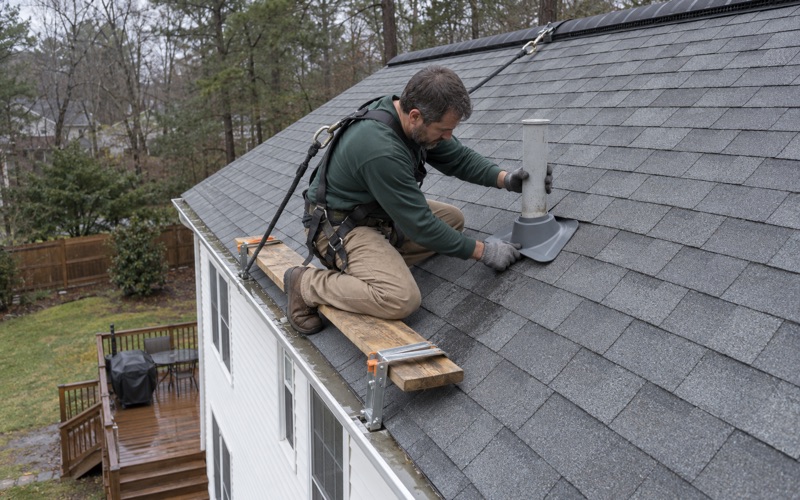
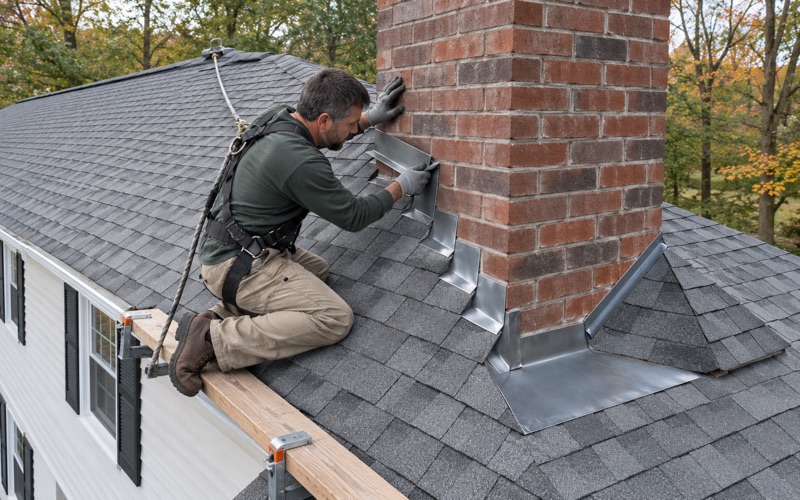
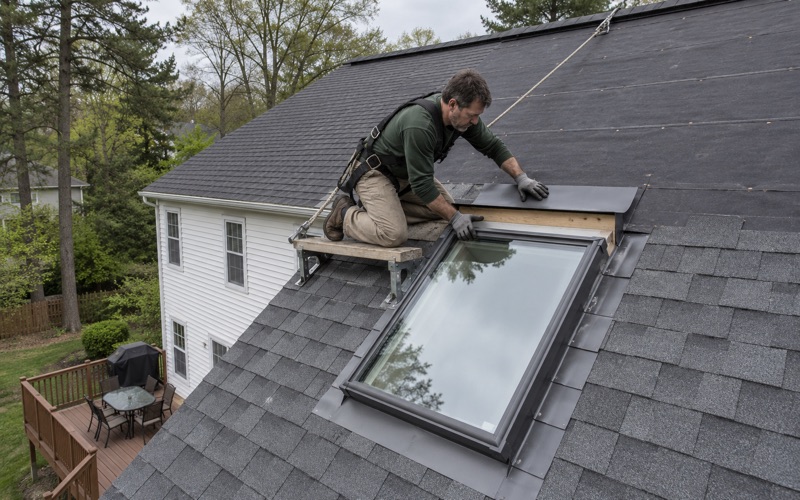
Step, counter and chimney flashing is replaced with the new roof instead of being reused under fresh shingles, and each type appears as its own line. Attic ventilation is checked on every replacement, with ridge vent and soffit intake balanced so the roof is not slowly aging from the underside after the storm repair is done.
Separating these items matters after a storm because flashing joints and vent openings are often where water got in to begin with. A homeowner comparing two estimates side by side can see whether both contractors planned to address them, or whether one quietly left them out to bring the total down.
Gutters and Downspouts
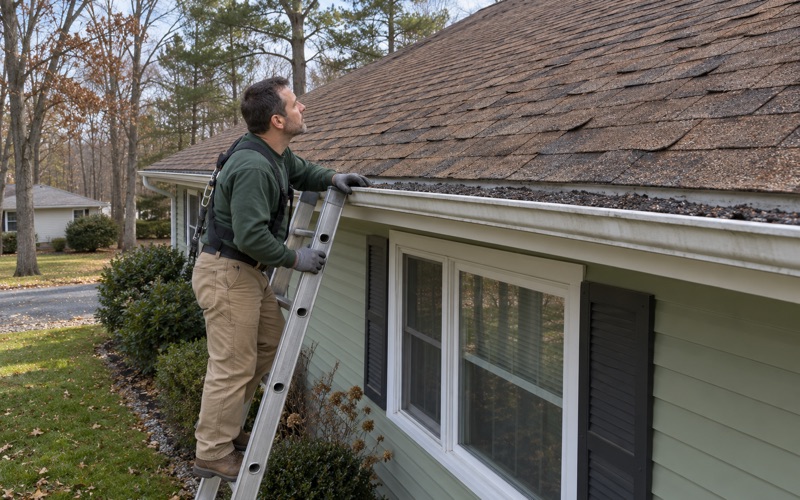
Because FEMA’s list names gutters and downspouts alongside the roof, we price them separately rather than folding them into the roofing total. Seamless aluminum gutters and leaders are sized and pitched with the roof, then kept clear of the pine needles that clog them and send water back toward the fascia.
A clean split between roofing and drainage lets a reviewer count each item correctly. It also lets you schedule gutter work on its own timeline if the roof itself is the more urgent repair, without reopening the whole estimate.
Working With the Borough and Your Insurer
Documenting the Damage
After a storm we photograph the damage and write it up for your own insurance claim, and we will meet the adjuster on site whenever you ask. The same photos and written scope can support any conversation you later have with the borough about how far the loss extended across the house.
Good records cut both ways. They show what the storm actually did, and they keep the repair from being described as larger or smaller than it really was. For a flood-zone house, that accuracy protects the owner far more than any rounding in either direction ever could.
Talk to the Borough Before a Big Repair
If your house is in the flood zone and the storm damage reaches beyond the roof, contact the borough before committing to a large repair. Replacing the roof covering on a detached one- or two-family house is ordinary maintenance under N.J.A.C. 5:23-2.7 and needs no construction permit, but the floodplain question is a separate one from the permit question.
We would rather you hear about the 50 percent rule from us before work starts than discover it partway through. A short call to the borough with an itemized estimate in hand is the simplest way to learn where your house stands, and we are glad to answer any questions about the roof lines on that estimate.
Contracts Written to New Jersey Rules
Every contract we write follows New Jersey’s home improvement rules, including the three-business-day cancellation notice. That window gives a homeowner who is still talking with the borough or an adjuster some room to pause before the work is locked in, which matters most when the repair is large.
At the end of each work day, we clean the driveway, yard and gutters and run a magnet sweep for roofing nails. A household already dealing with storm damage should not also be left stepping around debris while the roof goes back on.
- 20+ Years in Business
- Free Written Estimates
- Attic Checked on Every Leak Call