Jackson Elite Roofing has spent more than 20 years on roofing in Robbinsville and across central New Jersey, and the work in this township does not look like a run of suburban shingle jobs. A large share of the roof area here sits flat and wide over distribution buildings, where one leak can stop a dock door, soak a pallet row or start an argument about who pays. We approach those roofs the way we approach every roof: find where the water actually gets in before anyone prices anything.
That means a walk across the membrane and a look from underneath, at the deck, the joists and the racking where the stain first showed up. A drip that lands in aisle twelve rarely started above aisle twelve. On a low-slope roof, water can travel along a seam or a lap a surprising distance before it finds a fastener hole to fall through.
Before replacement enters the conversation, we tell the owner or the property manager plainly whether the roof can be repaired. When the honest answer is a new roof, the written scope breaks the job into separate lines, so anyone comparing bids can see where each number comes from instead of squinting at one lump sum.
Robbinsville’s Exit 7A Distribution District
Where the Big Roofs Are
Robbinsville sits where the New Jersey Turnpike meets I-195 at Exit 7A, and the township’s industrial district grew up around that interchange. The buildings there are large one-story distribution centers, the kind a truck can reach from the highway in minutes, and their roofs are measured in acres rather than in squares.
Amazon’s one-million-square-foot fulfillment center in the Matrix Business Park shipped its first customer order in July 2014. Along West Manor Way, the distribution buildings follow the same pattern: long walls of dock doors, tall clear heights and a roof that most of the people working inside never see.
A Building Like 147 West Manor Way
One listing gives a useful picture of the district’s scale. 147 West Manor Way is a 471,200-square-foot Class A building, built in 2006 and split into two leasable spaces of 223,200 and 248,000 square feet, with a 33-foot clear height and 42 dock-high doors listed for each space on a 46.35-acre lot.
The listing does not say what covers the building, and we do not guess. What it does show is the kind of structure that defines this end of Robbinsville: a single roof spanning two tenant spaces, more than one business operating under the same membrane, and one construction date behind all of it.
Why the Roof Matters More Here
On a house, a leak stains a ceiling. In a distribution building, water reaching the slab can shut a dock, wet inventory, make a floor slick under forklift traffic or reach electrical gear mounted high on the walls. The real cost of a small roof defect is set by whatever sits underneath it.
That is why we treat a warehouse leak call as a tracing job first. The aim is to locate the entry point on the roof, confirm it from inside the building, and fix the cause rather than smearing mastic on whatever spot happens to sit nearest the stain.
Looking for roofing closer to Bordentown Township? See Bordentown Township Roofing.
A 2006 Warehouse Roof at Twenty Years
What Twenty Years Means for a Low-Slope Roof
A distribution building put up in 2006 has been standing about 20 years. If its first low-slope roof is still in place, that roof has been through two decades of sun, freeze-thaw cycles and foot traffic from every mechanical contractor who has serviced a rooftop unit. The year built is not the roof date, though, so the first job on any building is finding out what is actually up there and when it went on.
Age alone does not condemn a roof. Some membranes at twenty years need only seam work and new flashing at the penetrations, while others are past saving. We say which one we are looking at, in writing, before a replacement is ever priced.
TPO, EPDM and Modified Bitumen
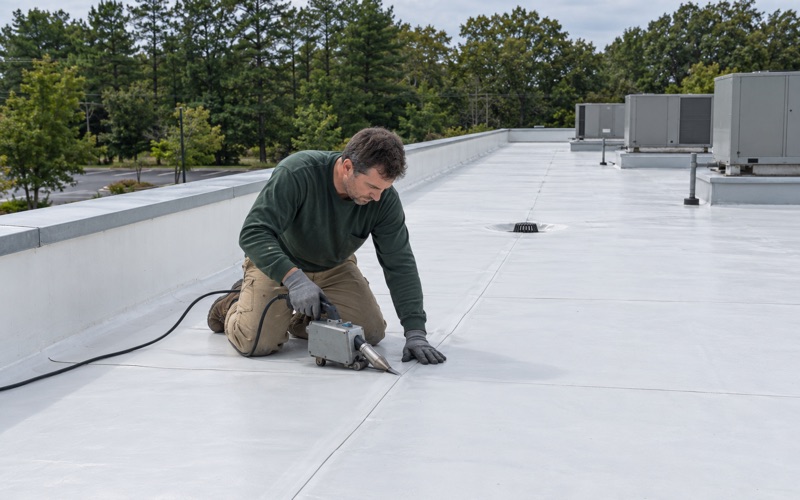
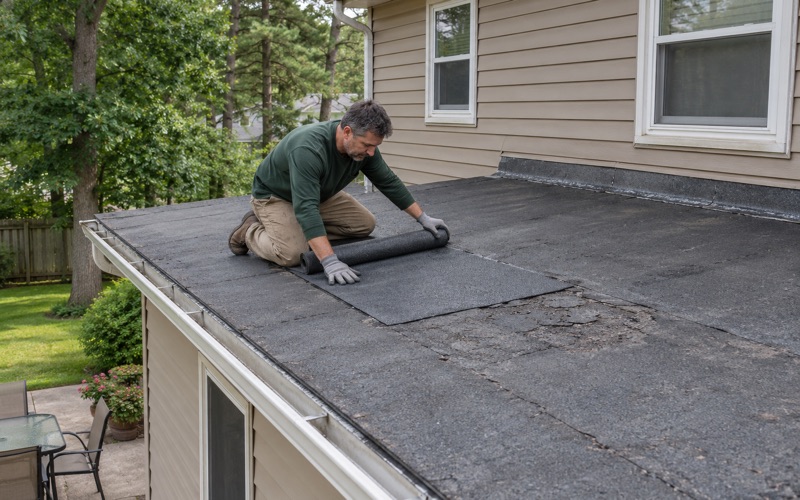
Low-slope commercial roofs in New Jersey are most often single-ply TPO or PVC, EPDM rubber, or a modified bitumen system in SBS or APP. Each fails in its own way. TPO and PVC depend on heat-welded seams, EPDM on adhesive or taped laps, and modified bitumen on torched or cold-applied seams over a base sheet.
Knowing the membrane tells us where to look first. A TPO roof that leaks at a seam needs a probe run along the welds, an EPDM roof may show laps lifting where the adhesive has let go, and a bitumen roof may show blisters or cracked base flashing at the parapet walls.
Drains, Scuppers and Ponding Water
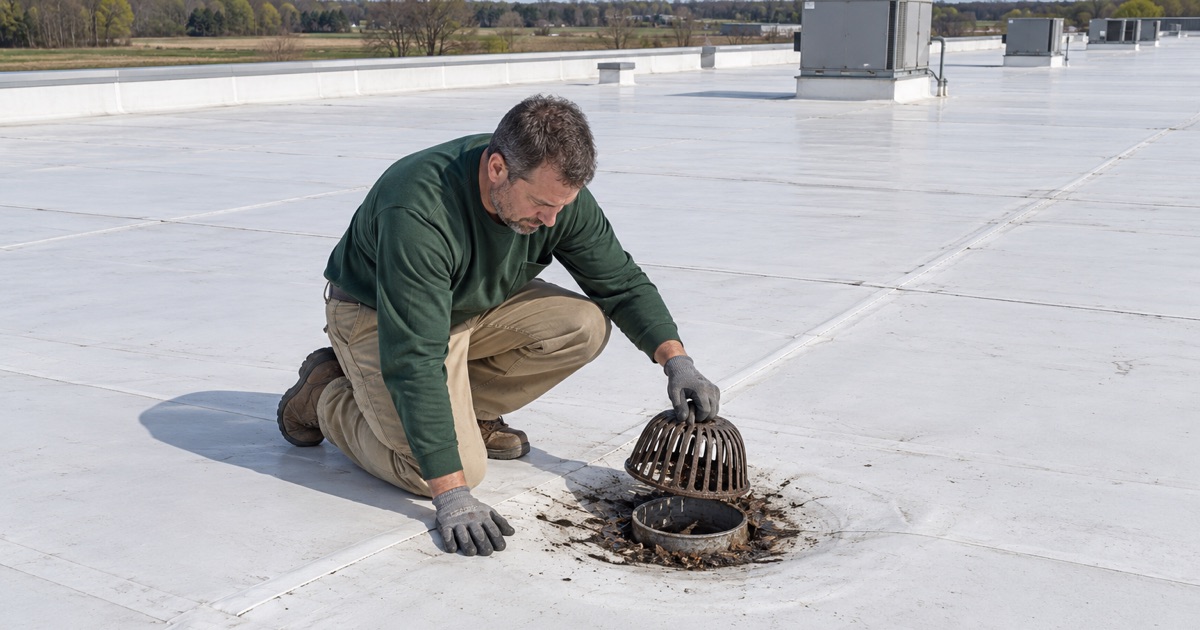
A big flat roof is only as good as its drainage. Interior drains, scuppers and the slope built into the insulation have to move rain across hundreds of feet of roof, and a single clogged drain basket can leave water standing for days after a storm passes.
Ponding speeds up membrane wear, adds load to the structure and finds every weak seam nearby. We check drain bowls, clamping rings and strainers on every visit, and we note where water sits after rain, because those low spots tell us where the next leak is most likely to appear.
Landlord, Tenant and the Lease When the Roof Leaks
The Lease Decides, Not the Calendar
In a multi-tenant building, the first question after a leak is often not how to fix it but who is supposed to. The answer lives in the lease. Some leases put the roof structure and membrane on the landlord and routine upkeep on the tenant, some pass roof costs through as a shared operating expense, and others draw the line somewhere in between.
We have not read the lease for any named building in Robbinsville, and we do not assume one. When a tenant or property manager calls, we ask who holds roof responsibility under their agreement before we write a scope, so the estimate reaches the party who will actually approve it.
Two Tenants Under One Membrane
A building split into two spaces still shares one roof, and water does not respect the demising wall. A leak showing up in one tenant’s space may start above the other’s, or at a drain that serves both. That is where a clear, documented diagnosis matters most.
We photograph the entry point, the path the water took and where it came out, and we tie each one to a location on the roof plan. A report like that lets the landlord and both tenants look at the same evidence rather than arguing from three different stains.
Writing a Scope Everyone Can Read
Commercial roof bids are hard to compare when each contractor folds everything into one figure. Our written scopes list tear-off, deck repair, insulation, membrane, flashing and drainage as separate lines, so a property manager can set two bids side by side and see exactly where they differ.
If decking turns out to be damaged once the old roof is open, we photograph it and show it to the owner before it is replaced, at a unit price fixed in the contract. Nobody should learn about a deck change for the first time from an invoice.
Working on a Roof Over a Running Warehouse
Leak Response While the Trucks Keep Moving
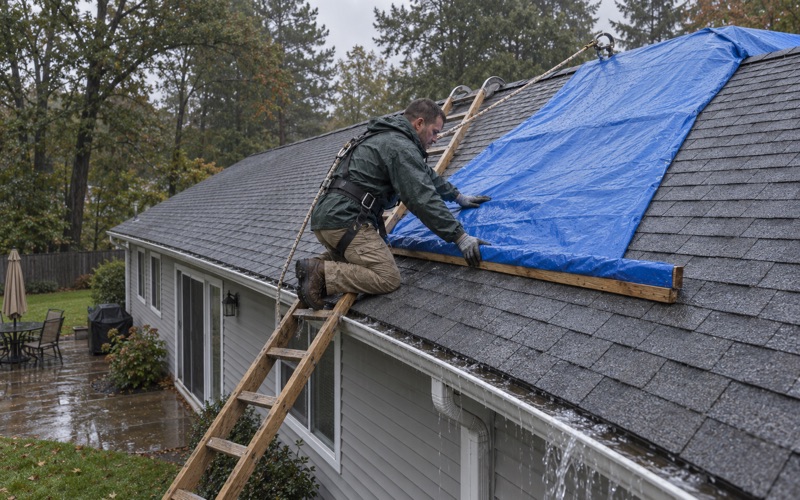
Distribution centers rarely close for a roof. When a leak call comes in, the first step is usually a temporary seal to stop the water, followed by a proper repair once the cause is confirmed. We coordinate with the facility so the crew knows which dock doors, aisles and staging areas are live.
Roof access matters too. We ask where the roof hatch or ladder is, who holds the key, and whether the site’s safety rules call for an escort, so the crew spends its time on the roof working instead of waiting at the guard shack.
At the end of each work day we clear the roof and the ground around it, including a magnet sweep for nails along the truck court and dock aprons, because a roofing nail in a trailer tire is a cost no one budgeted for. Loose membrane scraps and fasteners left on a flat roof end up in the drains.
Penetrations, Curbs and Rooftop Equipment
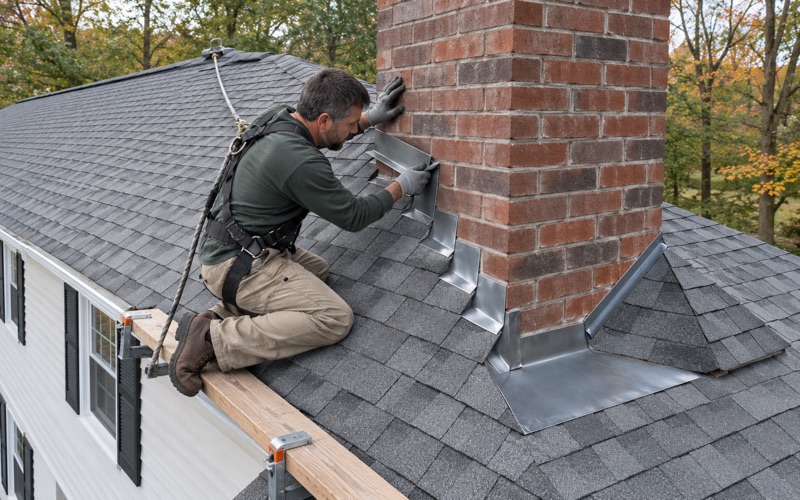
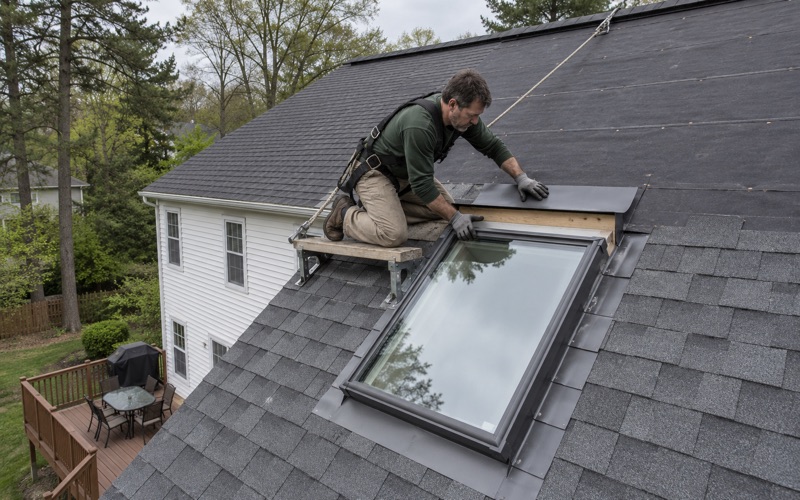
Every pipe, vent, rooftop unit and skylight curb is a break in the membrane, and a large roof can carry dozens of them. Flashings at those penetrations are where we find a big share of commercial leaks, especially where someone has cut in a new line and sealed it with a single bead of caulk.
When a roof is replaced, we replace the flashing at curbs, walls and penetrations along with it rather than reusing old metal under a new membrane. Tired flashing left on a fresh roof is usually the first thing to fail, and it fails right where the water is hardest to trace.
Planning Around Rooftop Solar
Patch reported in March 2017 that Amazon’s Robbinsville warehouse would get solar panels, though the article said nothing about where they would go. Other building owners are weighing solar too, and wherever panels are mounted on a roof, any later roof work becomes a different kind of job.
If a low-slope roof under an array needs work, the panel removal and reinstall belong in the schedule from the start. We plan that sequence before the crew mobilizes, so nobody learns on the first morning that the section needing repair sits under equipment that has to come off first.
- 20+ Years in Business
- Free Written Estimates
- Attic Checked on Every Leak Call