Jackson Elite Roofing brings more than 20 years in the trade to roofing in South Amboy, and the work here starts with a plain question: where is this roof carrying weight it was never built to hold? We answer it from both sides, going into the attic as well as onto the shingles, so a sag, a stain or a cracked rafter is traced to its real source before any price is written.
Most roofs that need attention are not finished. We tell an owner straight whether a repair will do the job before replacement is ever on the table, and when a new roof is the right call, the written scope lists tear-off, decking, underlayment, flashing, ventilation and gutters as separate lines. That way two estimates can be laid side by side and compared one item at a time.
This page is about one hazard in particular. The one roof failure on record in South Amboy that our research turned up came from snow, not water or wind damage, and the way that snow piled onto a single part of the building is the same pattern a homeowner should look for after every heavy storm.
What the January 2016 Blizzard Left Behind
Snow totals across Middlesex County
The blizzard of January 23-24, 2016 was a major storm for central New Jersey. The Office of the New Jersey State Climatologist put the Middlesex County range for that storm at 16.0 to 28.1 inches, and New Brunswick recorded 26.9 inches, more than the 22.6 inches it measured in the 1996 storm.
We found no published total for South Amboy itself, so we will not quote one here. The nearest reading came from a trained spotter in neighboring Perth Amboy, who reported 20.0 inches by 6:00 p.m. on January 23. Every station in the county logged at least 16 inches, which is a serious load for any roof to carry for days.
The Roller Magic roof three days later
On January 26, 2016, South Amboy police took a call from someone at the Roller Magic skating rink about noises coming from the building. Emergency crews found a large amount of snow piled up on one section of the roof, along with multiple broken support beams that were still deteriorating.
The building was evacuated, and gas and electric service were shut off at the street. One section of the interior ceiling came down before crews left the scene. Nobody was hurt, and police later said an architect and engineers had deemed the building not structurally sound.
What the report does and does not tell us
The newspaper account names no cause, no roof type and no building age, and we are not going to fill those gaps with guesses. What it does say is specific: the snow was concentrated on one section of the roof, not spread evenly across all of it.
That detail is why the event matters to a homeowner. A roof can carry a storm’s average load and still give way where the snow stacks up deeper than everywhere else. Reading the rink as a drift problem is our inference from that wording rather than an engineering finding, but the pattern it describes is one roofers see every snowy winter.
Looking for roofing closer to Highland Park? See Roofing Services in Highland Park.
How Drifting Snow Loads One Section of a Roof
Wind moves snow after it falls
Snow rarely stays where it first lands. During and after a storm, wind lifts loose snow off open roof areas and drops it wherever the airflow slows down, which is usually in the shelter of something taller. The result is a drift that can sit far deeper than the snow on the rest of the roof.
Drifted snow also packs tighter than fresh powder as it settles, and wet snow or rain on top of it adds more weight again. Load climbs with depth and density together, so a drift wedged against a wall can put far more weight on that strip of framing than the open field of the same roof a few feet away.
Lower roofs below a taller wall
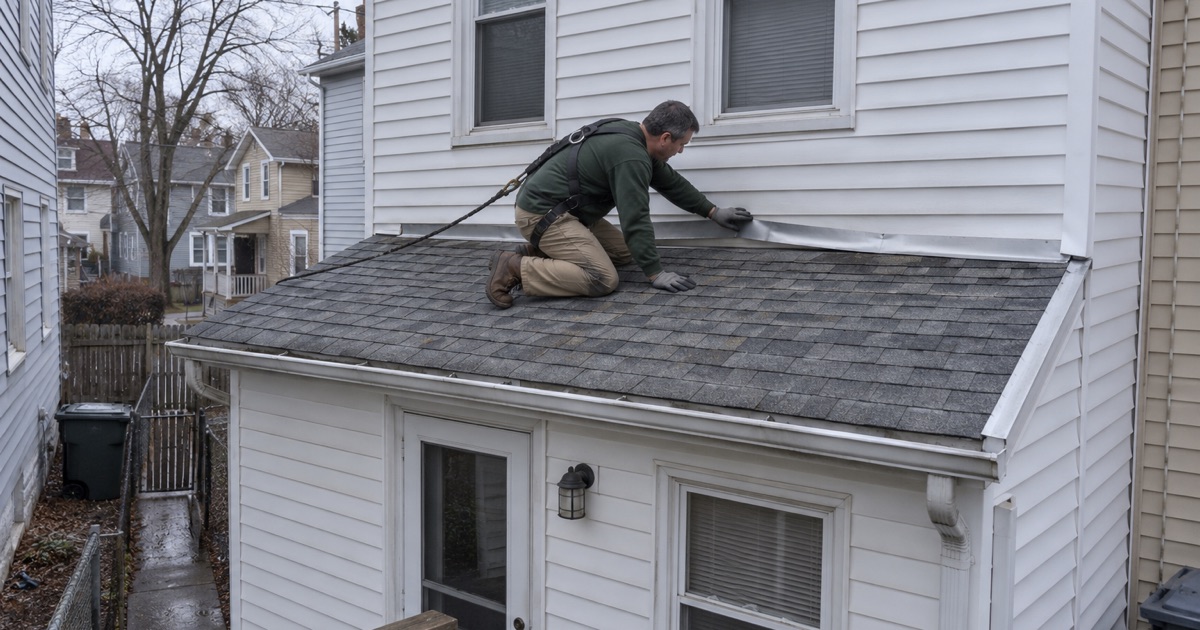
The classic drift spot is a lower roof that meets a taller wall. Think of a one-story kitchen or family room addition built onto a two-story house, a garage roof below a second floor, or a rear shed roof tucked under the main eave. Snow blows off the upper roof and settles on the lower one in a wedge against the wall.
Snow that slides off the upper roof lands on that same lower roof all at once, on top of whatever has already drifted there. Additions are often framed years after the main house, sometimes by different builders, so the lower roof that collects the most snow is not always the one framed with the most margin to carry it.
Valleys and roof-to-wall corners
Valleys collect drifts too, because two slopes funnel snow into one channel and the wind keeps filling it. Inside corners where a dormer, chimney or sidewall meets the roof plane behave the same way, holding snow for days after the open slopes have cleared.
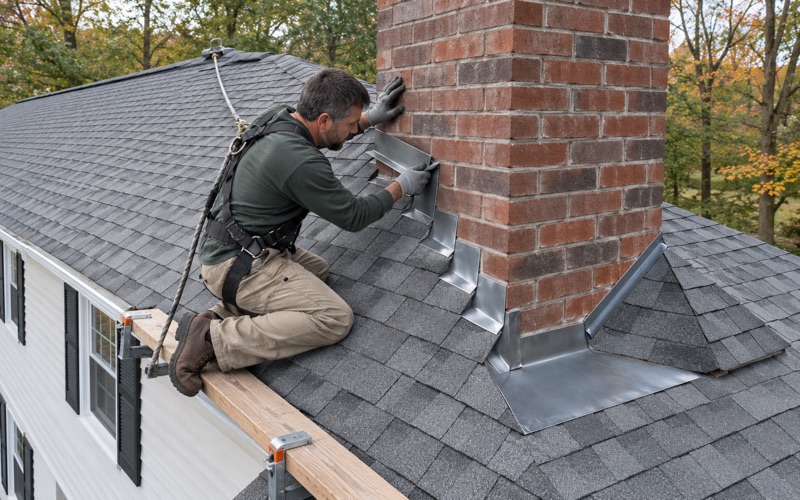
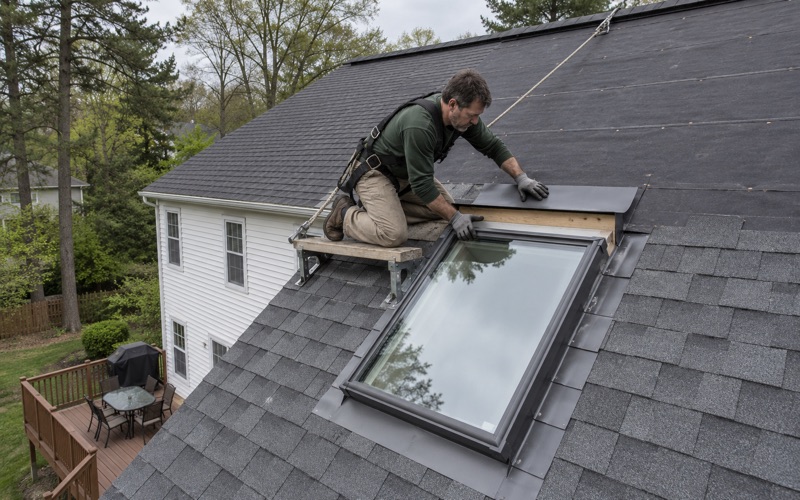
Those same spots are where a roof’s flashing lives. When a drift sits there and melts slowly, meltwater can work its way under shingles at the step flashing, the counter flashing and the valley lining. A leak that appears a week after a storm often traces back to one of these corners, and we replace step, counter and chimney flashing with a new roof rather than reusing the old metal.
Porch Roofs and Lower Roofs on South Amboy Houses
Older houses and their additions
Of the 4,493 housing units counted in the Census Bureau’s American Community Survey, 1,726 were built in 1939 or earlier. Houses that old have often been added onto more than once, and every addition is a chance for a lower roof to meet a taller wall.
One-unit detached houses account for 2,024 of those units, alongside 710 attached single-family homes and 501 two-unit buildings. Older detached and two-family homes often carry front porches, rear additions and enclosed back rooms, and each of those can mean a lower roof sitting in the shelter of a taller wall, right where drifts form.
Porch roofs
A porch roof is usually shallow in pitch and lighter in framing than the main house, because it was built to keep rain off a doorway rather than to hold a winter’s snow. Snow that slides off the main roof drops straight onto it, and drifts build against the house wall where the porch roof ties in.
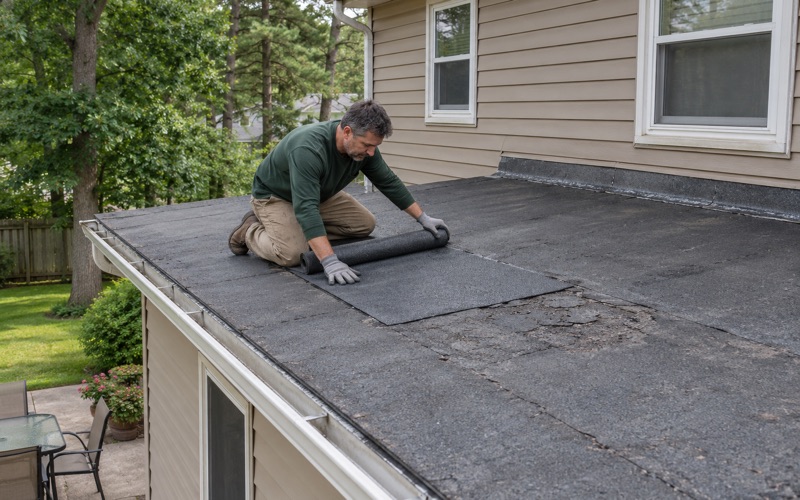
After heavy snow we look for a dip along the porch beam, rafters pulling away from the ledger at the house wall, and cracked or shifting posts. Low-slope porch roofs covered in modified bitumen or EPDM membrane also get a close look at the wall flashing, where standing meltwater finds any gap it can.
Attached homes and shared roof lines
On attached homes, a taller building next door can act just like a taller wall, gathering a drift on the lower roof beside it. That drift may straddle two owners’ sections, and the damage it causes rarely respects a property line.
In townhouse settings we check who is responsible for the roof against the association’s documents before any estimate is written. One owner seldom controls the whole roof line, and a repair that stops at the wrong seam leaves the drift spot unfixed for the next storm.
Checking a Roof and Gutters After Heavy Snow
From the yard and from inside the house
Most of a post-storm check can be done without a ladder. From the yard, look along the ridge and the eaves for a dip or a bow, and note where snow is piled deepest on a lower roof or porch. Inside, watch for new cracks in ceiling drywall, doors that suddenly stick, or a ceiling that has started to sag.
The Roller Magic call began with someone hearing noises from the building. Creaking, popping or cracking sounds from overhead during or after a heavy snow are a reason to leave that room, keep people out of it, and get the roof looked at the same day.
In the attic
In the attic, check the rafters and decking under the lower roofs and the valleys first, since those are the drift spots. A fresh crack in a rafter, a bowed or split board, or nails pushed out of the decking all point to framing that has been asked to carry too much.
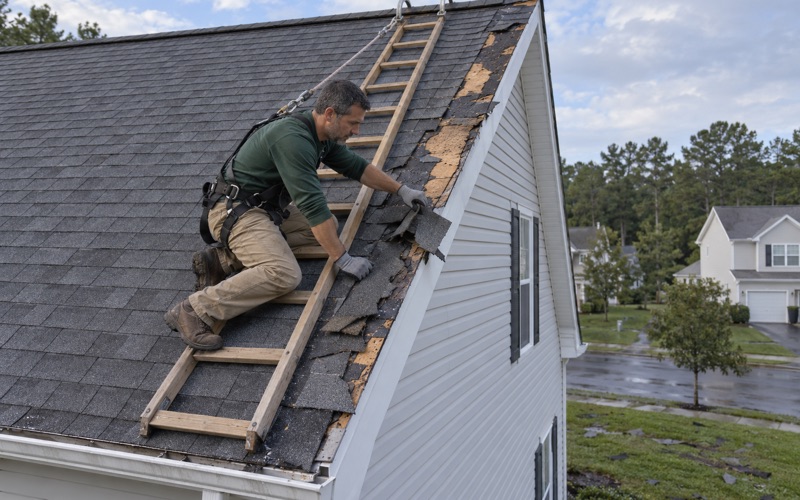
When we replace a roof and find damaged decking once the old shingles are off, we photograph it and show the owner before any sheet is replaced. The per-sheet price is set in the contract beforehand, so a bad section under a drift spot does not turn into an open-ended bill.
Gutters, ice and meltwater
Gutters take a beating in a snowy winter. Snow sliding off a roof can bend hangers and pull a gutter away from the fascia, and meltwater that refreezes at a cold eave builds ice that pushes water back up under the shingles. We size and pitch gutters and leaders along with the roof, so the eave can actually drain once the thaw starts.
On a replacement, a self-adhering ice and water barrier meeting ASTM D1970 goes along the eaves and into the valleys. We check attic ventilation on every replacement as well, because a warm attic melts snow from below and feeds the ice that forms at the edge.
Staying off a loaded roof
We do not clear snow from roofs, and we would never ask an owner to climb onto one. A roof carrying a heavy drift is slick and already under strain, and adding a person’s weight to the worst spot is the wrong direction to go.
Once the snow is gone, the damage is far easier to read, and that is the time to call. We photograph storm damage and write it up for the owner’s own insurance claim, and our crew will meet the adjuster on site when asked, so the report covers the drift spots as well as the open slopes.
- 20+ Years in Business
- Free Written Estimates
- Attic Checked on Every Leak Call