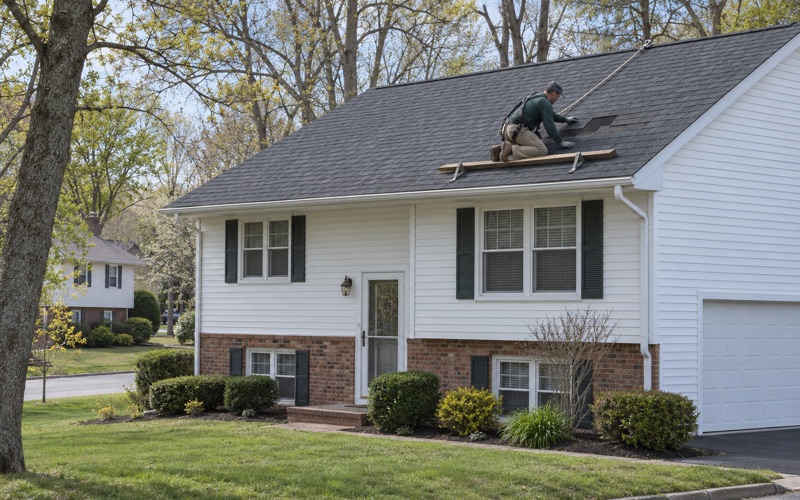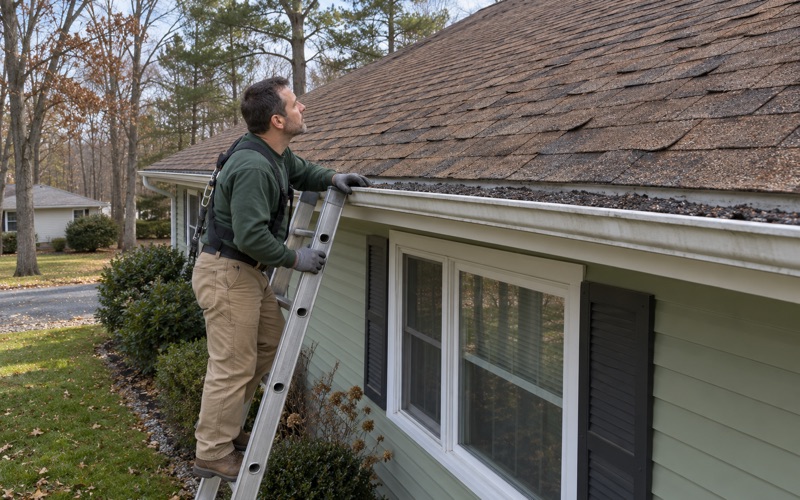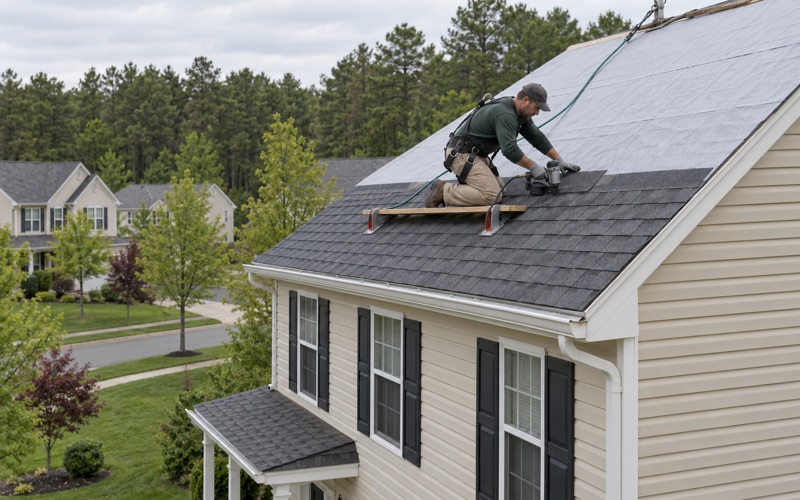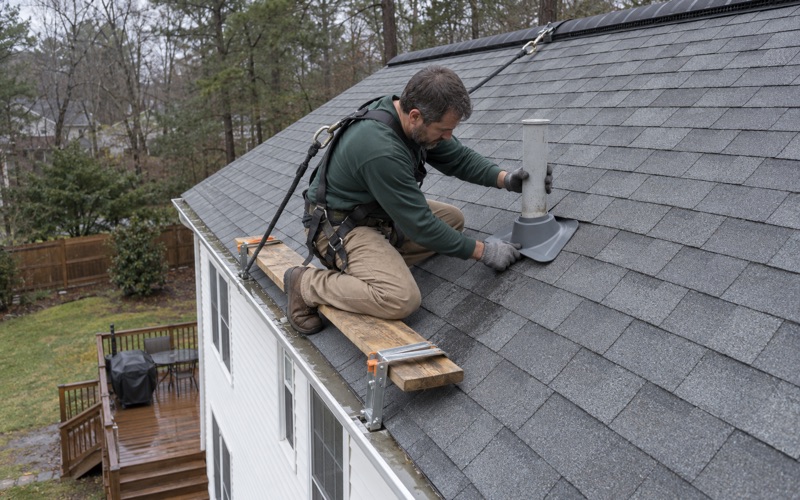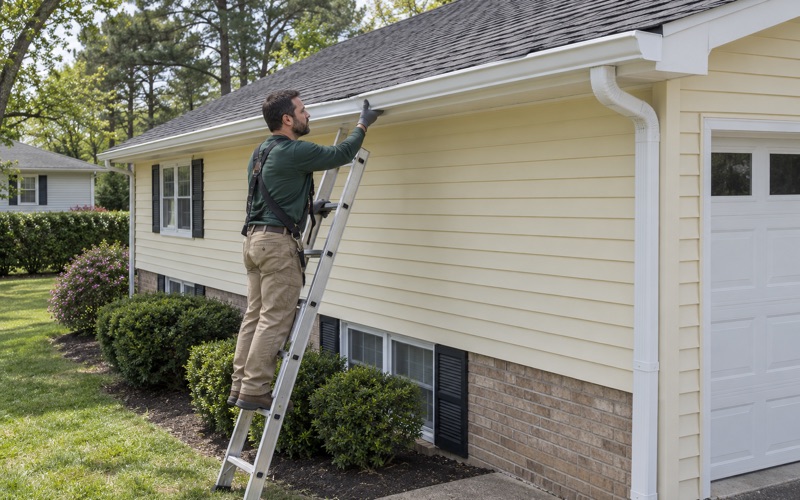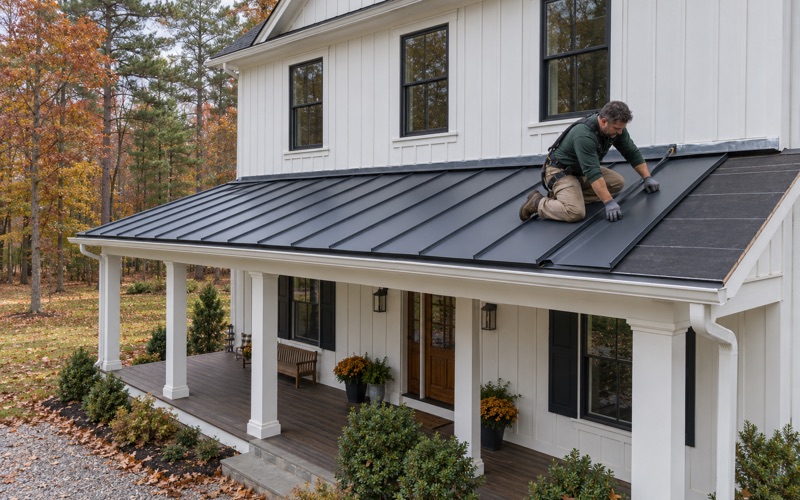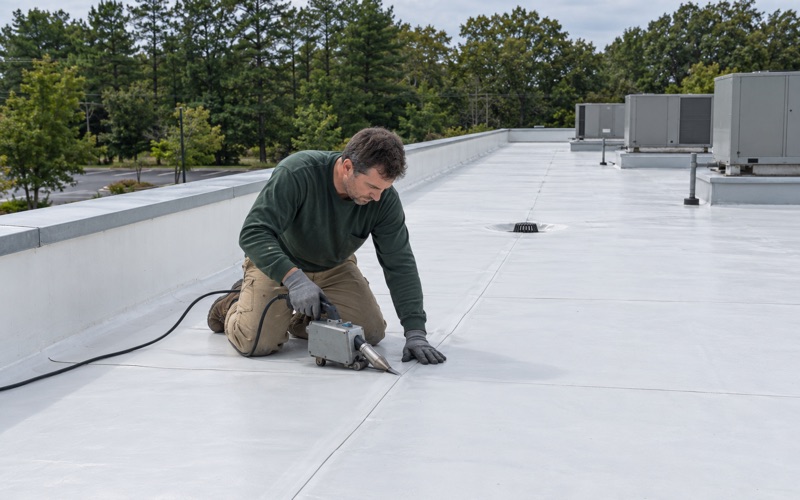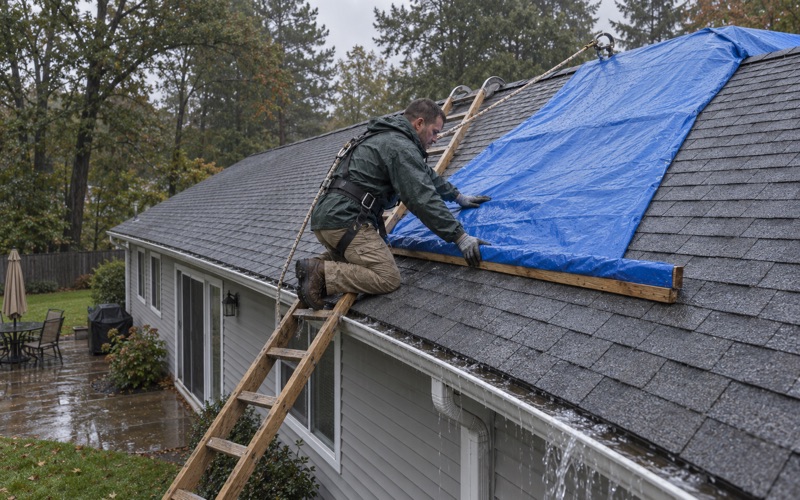
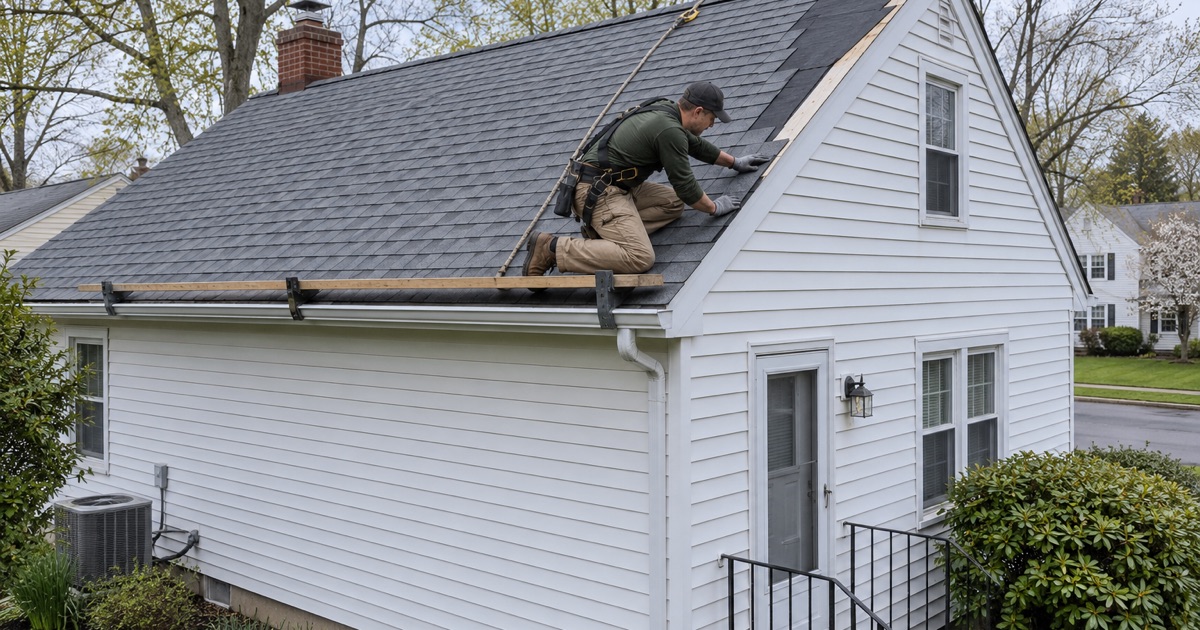
Jackson Elite Roofing brings more than 20 years of roof work to roofing in South River, and every call starts in two places: up on the shingles and up in the attic. Water rarely drips where it gets in, so we follow the stain, the darkened sheathing and the rusty nail tips back to the real entry point. Only after that do we put a price on paper.
The first thing you hear from us is whether the roof can be repaired. Replacement comes up only when a repair would be money spent on a roof that is finished anyway. When it does, the written scope breaks tear-off, decking, underlayment, flashing, ventilation and gutters into separate lines, so you can set our number beside anyone else’s and compare them item for item.
In parts of this borough, though, the roof is not the biggest question on the table. Some owners are deciding whether to lift the house, sell it or keep living in it as it is, and a new roof only makes sense once that answer is clear. This page is about roofing on that timeline, where the right move depends on what happens to the rest of the building.
Roofing Where the River Meets the Floodplain
How tidal flooding reaches the neighborhoods
The borough takes its name from the South River, a Raritan River tributary that forms its eastern and northeastern line. The 2014 Strategic Recovery Planning Report prepared for the borough says the river’s banks are subject to tidal flooding during yearly storm events, hurricanes and nor’easters, and even during times of non-storm high tide. That describes a recurring condition, not a once-in-a-generation event.
The same report maps the flood-prone areas: east of Whitehead Avenue, the entire Waterfront Revitalization District, the Ferry/Reid Street corridor and north of Reid Street. If your house sits in one of those areas, the condition of your roof is one line in a longer list of things the river can decide for you. We keep that whole list in mind when we talk through your options.
Flood water and the roof are different problems
Flood water rises from the ground up, and in South River the record shows it reaching ground floors, not roofs. We say that plainly because a roofer has no business selling a flood fix. What the roof does is keep rain and wind-driven water out of the upper floors and the attic, which matters most in a house that has already been dried out once.
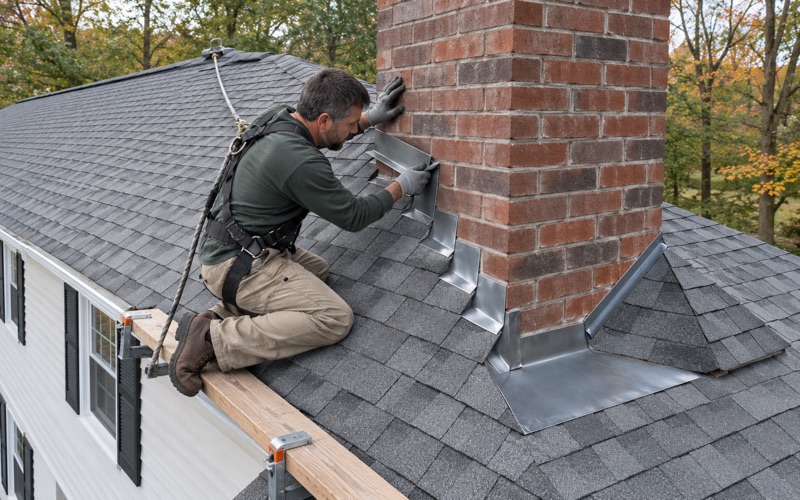
So on a floodplain house we look at the same things we check anywhere: flashing at chimneys and sidewalls, pipe boots, the drip edge at the eaves and rakes, and the attic sheathing for old stains. If a ceiling carries a mark, we find out whether it came from the roof or from somewhere else before anyone talks about shingles. A wrong diagnosis is the most expensive kind.
A long record of claims
The borough’s own flood information page says portions of town have historically been susceptible to flooding, and it names Hurricane Irene and Tropical Storm Sandy among the events. From 1978 to 2013, South River residents filed 353 flood insurance claims totaling $12,131,273.50. Those are the borough’s figures, and they describe losses spread across 35 years rather than a single bad night.
For a roof decision, the dollar total matters less than the pattern behind it. A house that has taken water before can take it again, and an owner in that position should think about how long they plan to stay before choosing a roof built to last decades. We would rather have that conversation early than sell a roof the house may not keep.
Looking for roofing closer to Aberdeen? See Roofing in Aberdeen.
What Sandy Left on Reed, Washington and Water Streets
The night of October 29, 2012
At about 9:00 p.m. on October 29, 2012, Sandy’s surge and the tide overtopped the river’s banks. The recovery report records the waterline at 28 inches on Reed Street and as high as 40 inches on Washington Street, the same street where the municipal building stands at number 48. Both figures come from the borough’s own planning report.
Most homes east of Water Street took on several feet of water on the ground floor, and standing water stayed for several weeks. That is how the borough measured the event: depth in the street and on the first floor. It is not a record of roof damage, and we do not treat it as one when we walk a house on those blocks today.
The streets that took the most
The report concentrates the damage on the borough’s eastern floodplain, in the neighborhoods of Water, Lee, Elizabeth, Russell and Martin Streets. The tax assessor put the loss of assessed value at about $7.4 million and the damages at about $3.7 million. Those are borough-wide figures, set down in the plan the borough commissioned after the storm.
Owners on those blocks have spent more than a decade making choices the rest of town has not had to make. When one of them calls us about a leak or a worn roof, the first question we ask is not about shingle color or brand. It is how long the family expects to be in the house, because that answer shapes everything we recommend afterward.
Storm write-ups for the roof, and only the roof
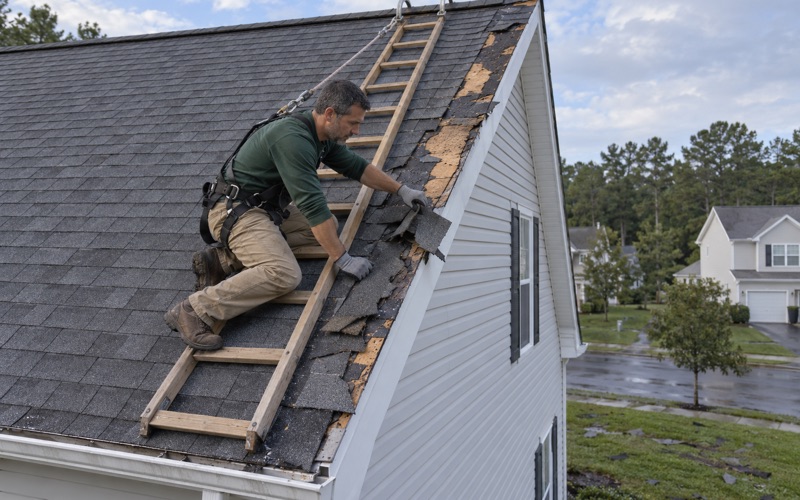
When wind or a falling limb damages a roof, we photograph it and write it up for the owner’s own claim, and a crew member will meet the insurance adjuster on site if you ask. The write-up covers what we saw on the roof and in the attic: lifted tabs, missing shingles, torn flashing and wet sheathing, each one photographed where it sits.
Flood losses to a ground floor sit outside that record. They are between you, your flood insurer and whoever you hire for that work, and we do not handle them. Keeping the roof report separate makes it easier for an adjuster to read, because each item of damage is tied to the cause that produced it rather than folded into one large figure.
The Levee That Was Never Built, and the Buyouts That Followed
The Army Corps plan on paper
The Army Corps of Engineers flood project for this stretch of river was authorized by the Water Resources Development Act of 2007. It called for a surge barrier spanning the South River for a length of 320 feet, about 10,712 linear feet of levees, and floodwalls 1,655 feet long, with the work divided between South River and Sayreville.
The 2014 recovery report says no construction had occurred and calls the project uncertain and unlikely. We have not seen a later record of its status, so we make no claim about where it stands today. Owners who want the current answer can ask the borough at 48 Washington Street or by phone at 732-257-1999, and we would plan around whatever they hear.
Blue Acres on the eastern floodplain
With the barrier unbuilt, the state’s Blue Acres program bought floodplain houses instead. The 2014 report put South River’s share at $11.9 million of $39 million, covering approximately 76 properties. In November 2014 a demolition at 16 Water Street became the program’s 100th post-Sandy demolition, and every one of those to that point was in Sayreville or South River.
By 2019, state releases counted two rounds of buyouts in South River, producing 106 purchases and 96 demolitions, and the program’s 700th purchase was on Henry Street. Each of those lots held a house whose owner chose to sell rather than repair, elevate or reroof. For that house, a buyout ends the roof question entirely.
What a pending buyout means for your roof
If you are in talks with Blue Acres, or think you might be, a full replacement is probably the wrong purchase. A new roof on a house the state may buy and demolish is money you are unlikely to see again. We say that directly, even when it costs us a job, and we have no part in the buyout process itself.
What we can do is keep the house dry while the decision is made. A targeted repair, resealed flashing or a replaced pipe boot can hold off attic leaks through the months a process like that takes. We price the repair on its own and explain how long we expect it to last, so you are not guessing about what you bought.
Timing a Roof on a House That May Be Raised, Sold or Kept
When the house may be lifted
Some floodplain owners choose elevation over a sale. We do not raise houses; an engineer and a lifting contractor run that project. Our part is to fit the roof into their schedule, once they have said whether roofing belongs before the lift or after the house is set on its new foundation. Until then, a sound existing roof is left alone.
Gutters and leaders deserve the same planning. On a raised house they drain from a greater height, and where the water lands needs thinking through so it does not pool against the new foundation. We size and pitch seamless aluminum gutters with the roof, rather than hanging them as an afterthought once the shingles are down.
When a repair is the honest answer
Many roofs that look finished are not, just neglected. Worn sealant at a chimney, a cracked pipe boot or a few lifted shingles can make an older roof look worse than it is. If a repair will buy several good years, that is what we recommend, and you hear it from us before replacement is ever mentioned.
That answer suits owners who are still deciding whether to stay. A sound repair keeps rain out of the attic while the bigger choice is made, and it does not commit you to spending on a roof you may leave behind. If we think the roof is past saving, we show you why with photos taken on the roof and in the attic.
When staying means a full replacement
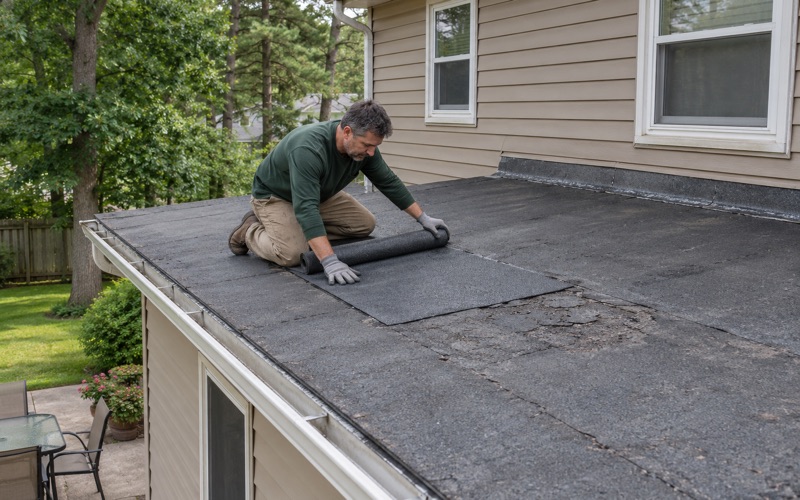
Owners who have decided to stay usually want the roof done once and done properly. Step, counter and chimney flashing is replaced with the roof rather than reused under new material, and attic ventilation is checked on every replacement, because a roof that cannot breathe ages from underneath. Each of those items shows up as its own line in the scope.
If the old roof comes off and the decking is rotten, we photograph it and show you before replacing it, at the per-sheet price written into the contract. That contract follows New Jersey’s home improvement rules, including the three-day cancellation notice. At the end of each work day the yard, driveway and gutters are cleaned, with a magnet sweep for roofing nails.
- 20+ Years in Business
- Free Written Estimates
- Attic Checked on Every Leak Call