Jackson Elite Roofing has spent more than 20 years on roofing in Tinton Falls and across this part of New Jersey, and the jobs that take the most planning here often start in the yard rather than on the shingles. A big oak or pine leaning over a house is part of that roof’s condition, so we look at it together with the roof. When the tree has to come down, the order of the work matters.
We do not cut trees, and we do not file tree paperwork. What we do is tell a homeowner plainly what the limbs have already done to the shingles, the flashing and the gutters, and whether the roof can be repaired once the tree is gone. That answer comes before anyone mentions replacement, and only after we have been in the attic as well as up on the roof.
That sequence is what this page is about. Below we explain how the borough treats large trees, what the permit for taking one down asks for, what a recent storm left behind on local streets, and why we would rather inspect a roof after the tree work is finished than before it starts. The aim is one visit that prices the roof as it really is.
Big Trees and Tinton Falls Roofs
A limb is part of the roof’s condition
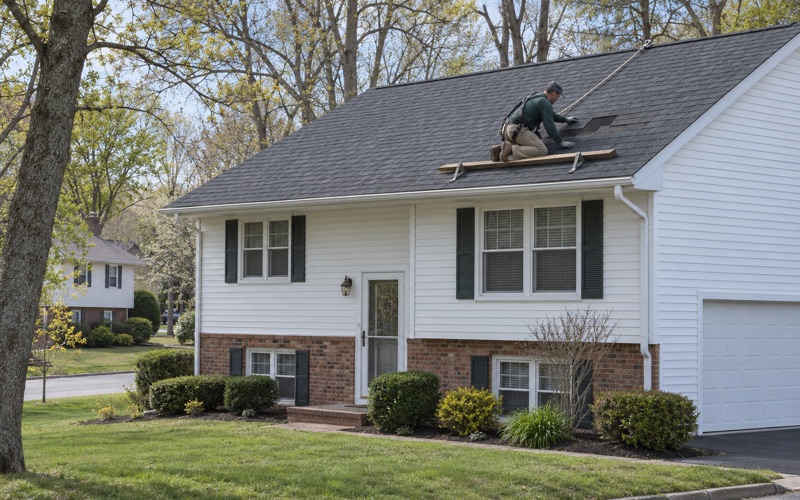
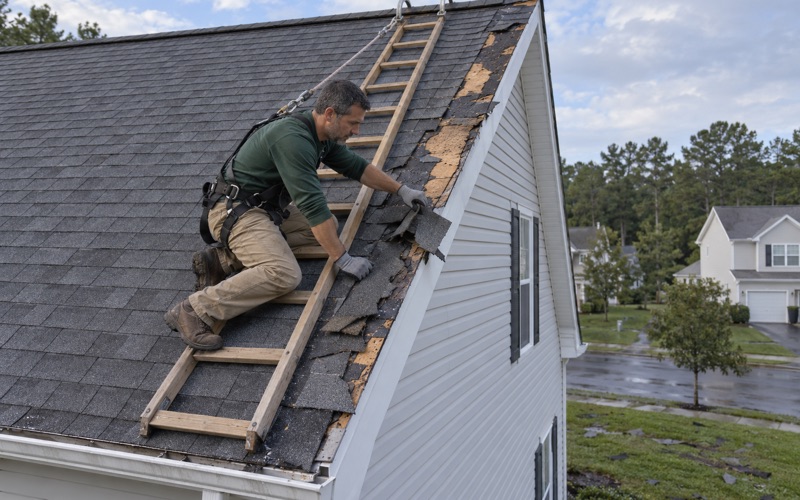
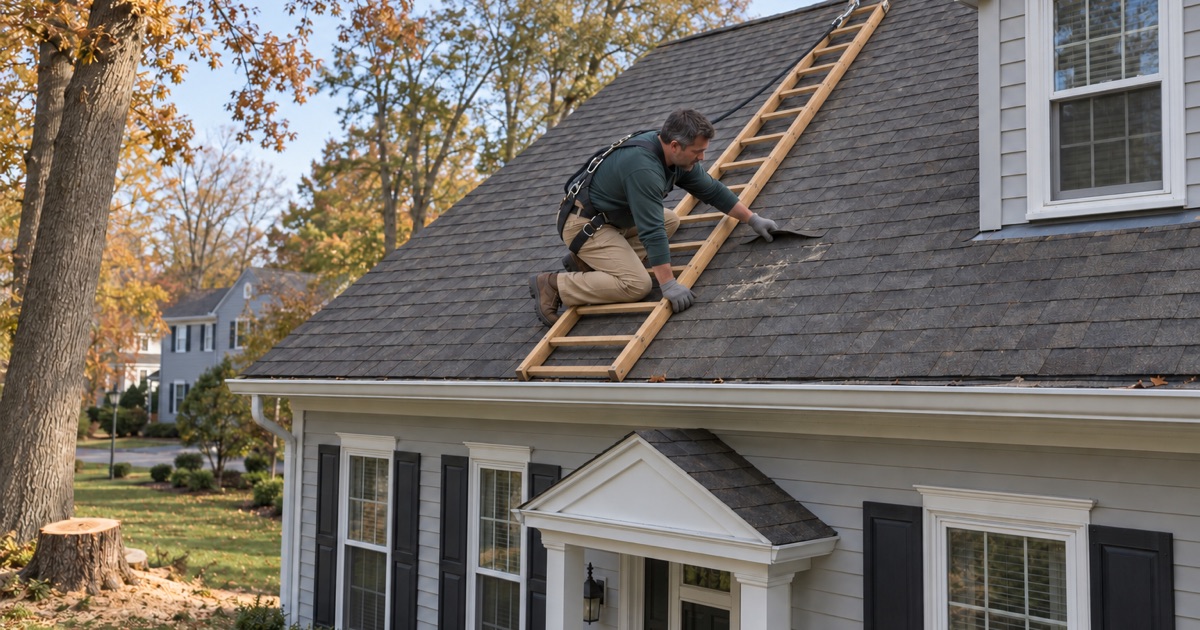
When a branch hangs within reach of the roof, every gust drags it across the shingles. The granules wear away in a strip, the mat underneath starts to show, and the sealant strips along the tabs can let go. From the driveway the roof may look fine, which is why we walk it and photograph any scuffed areas for the owner.
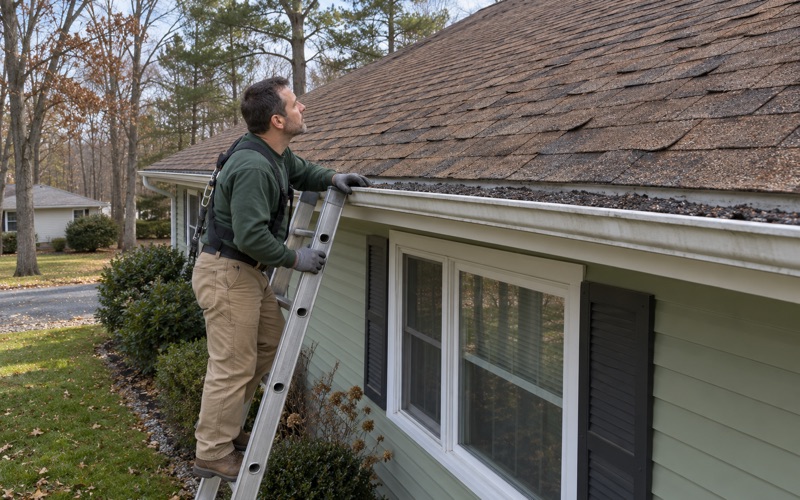
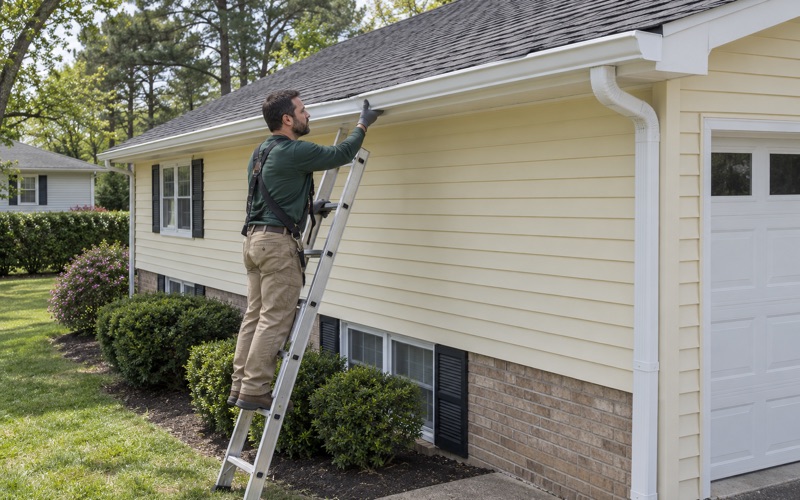
Overhang matters at the eaves and valleys too. Needles and leaves collect behind chimneys and along valleys, hold moisture against the underlayment, and pack the gutters until water backs up under the drip edge. We note each of these on the same visit, because together they often explain a ceiling stain better than the shingles alone ever do.
What the attic tells us
Every leak call includes a trip into the attic. Water that gets in near a branch-worn patch often runs along a rafter or across the decking before it drips, so the stain below can sit several feet away from the real entry point. Tracing it from the inside keeps us from pricing a repair in the wrong place on the roof.
The attic also shows whether the decking has stayed dry. Dark rings around nail tips, soft spots between rafters and a musty smell all point to moisture that has been at work for some time. We report what we find up there first, before any conversation about shingles, so the owner knows what the repair actually has to fix.
Gutters below the canopy
Gutters under a big pine fill quickly with needles, and a clogged run sends water over its back edge and into the fascia board. When we size and pitch gutters and leaders along with a roof, we plan for that load so they drain rather than hold debris. Seamless aluminum gutters with properly sized leaders carry the volume far better than undersized runs.
We also look at where the leaders discharge. Water dumped beside a foundation under a heavy tree tends to stay wet, and a downspout clogged at the elbow will overflow at the top no matter how clean the gutter looks. Clearing and resetting those pieces is a small job that saves the fascia and the first course of shingles.
Looking for roofing closer to Asbury Park? See Roofing Services in Asbury Park.
What the Borough’s Tree Chapter Regulates
Ordinance 2022-1490 and the six-inch line
Tinton Falls rewrote its tree removal and replacement chapter in its entirety through Ordinance 2022-1490, adopted on July 12, 2022. The chapter applies on all lands in the borough and defines a regulated tree as any deciduous or coniferous species with a diameter at breast height of six inches or greater. Its stated purpose is to prevent indiscriminate, uncontrolled and excess destruction, removal and cutting of trees.
A trunk six inches across is not a large tree by roofing standards. An oak or pine tall enough to reach over a two-story roof is usually far past that size, so a homeowner who wants one taken down should expect the chapter to apply and start with the borough rather than with a tree crew’s calendar.
Who enforces it
The chapter is enforced by the Zoning Officer together with the Shade Tree Commission and its Tree Specialist. That makes the borough Zoning Office the first stop for any question about whether a particular tree may come down and under what conditions. We send homeowners there for answers about the tree, because our part of the job is the roof underneath it.
We do not speak for the commission or predict what it will decide about any given tree. Questions about a dead or leaning tree, or about trimming rather than removal, belong with the Zoning Office as well. The rules we have read deal with removal, and we would rather point an owner to the source than guess at the answer.
The Zoning Permit, the Survey and the Fee
The application
The Zoning Office’s page on required permits lists tree removal among the projects that need a zoning permit, and the homeowner starts with a zoning permit application for the tree or trees involved. The borough offices are at 556 Tinton Avenue, which also houses the Construction Department, so paperwork for a property generally begins in one building.
The application belongs to the homeowner and whoever they hire for the tree, not to us. When an owner tells us a permit is still pending, we simply hold the roof inspection until the tree is down and the ground below the eaves is clear. That keeps our schedule honest and saves the owner from paying for two visits.
The property survey
The same page asks for a property survey indicating the location of each tree to be removed and its diameter. Many owners already have a survey from their closing, and marking the tree on that drawing is often the simplest way to answer the request. If the survey is old or missing, it is worth tracking down before booking the tree work.
The survey helps us as well. A drawing that shows which trees stand closest to the house makes it easier to explain which slopes have been carrying the most debris and abrasion. It also lets the owner see why one side of the roof has aged faster than the other, which shapes whether a repair is enough.
The $25 residential fee
The Zoning Office page lists a $25 fee for a residential tree removal permit, with commercial fees set under Chapter 17-8. That is the figure on the borough’s own permit page, and it is the one we repeat here. Other published sources do not agree with it, so confirm the current amount with the office when you apply.
The fee is small next to the cost of roof repairs, and the permit step is not one we would skip. A tree taken down out of order can leave questions hanging over the property while the roof waits, and nobody benefits from opening up a roof while the tree beside it is still unresolved.
After a Storm: Tree First, Roof Second
What Isaias left on local streets
On August 4, 2020, Tropical Storm Isaias left thousands of people in Tinton Falls without power, with uprooted trees littered on local streets and NJ Transit service suspended. The reports we have read describe trees down on the streets, not on houses. Even so, a storm like that is a fair reminder of what a large tree does in high wind.
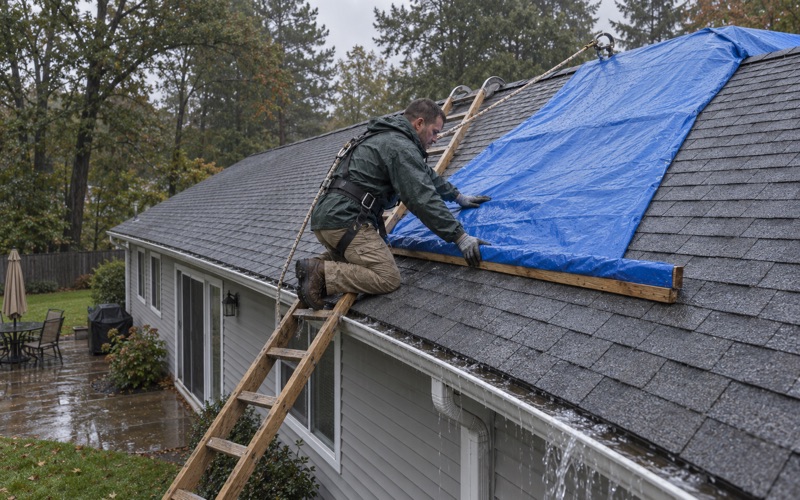
After a storm, the trees that fall are only part of the picture. Limbs that crack but stay up, and branches that whip against a roof for hours, can loosen shingles and bend gutters without ever coming down. Those quieter effects are what we look for when an owner calls us after a wind event in the Western Monmouth forecast zone.
Documenting storm damage for a claim
When we find wind damage, we photograph it and write it up so the owner has a record for their own insurance claim. If the adjuster wants to see the roof in person, our crew will meet them on site when asked. The New Jersey Department of Banking and Insurance publishes storm claims guidance that is worth reading before calling a carrier.
We keep that write-up factual: which slopes, which materials, what is missing or creased, and what the attic showed. An owner who hands an adjuster that kind of record is in a stronger position than one relying on memory of how the roof looked before the storm, and the photographs settle questions that words alone cannot.
Why the inspection waits for the tree
A roof inspection done with a big tree still overhanging the house is only half an inspection. The canopy hides parts of the roof, the limbs keep dropping debris, and a repair made beneath them may be scraped again within weeks. So when a regulated oak or pine is coming down, the zoning permit and the removal come first, and the roof inspection follows.
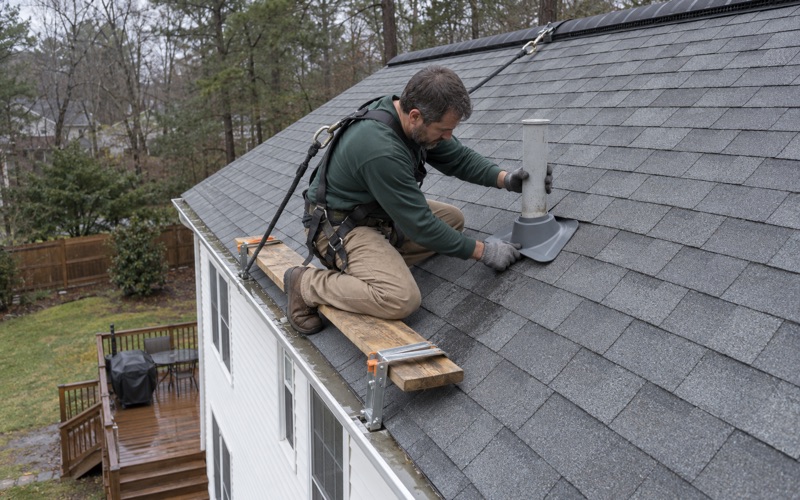
Once the tree is gone, we can see the whole roof in daylight. We check the shingles along the old line of the branches, the flashing at walls and chimneys, the pipe boots and the gutters, and then we go back into the attic. That is the point at which a repair-or-replace answer means something.
What a replacement scope lists
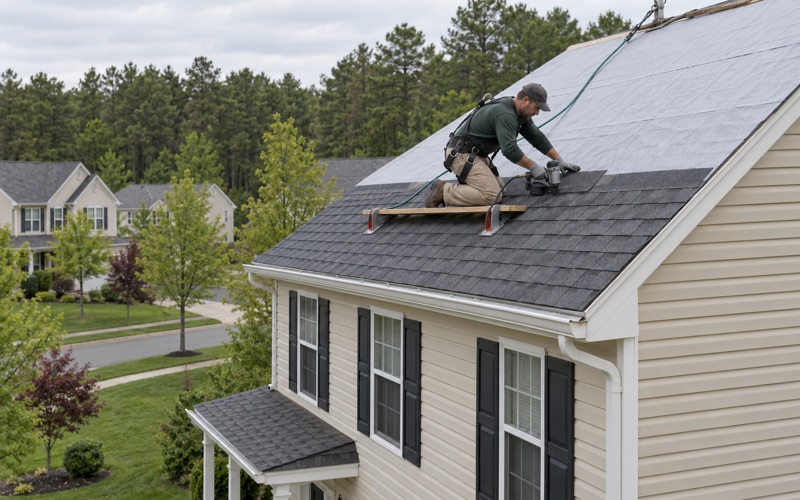
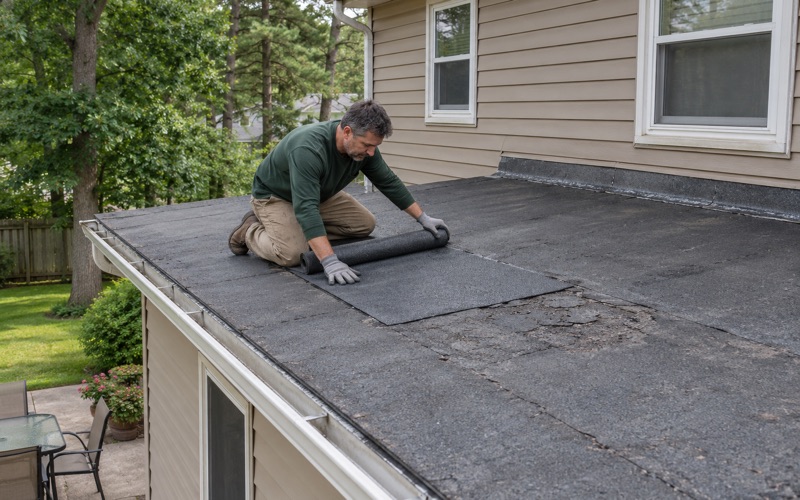
If the roof does need replacing, our written scope lists tear-off, decking, underlayment, flashing, ventilation and gutters as separate lines, so two estimates can be compared item by item. Any decking found damaged under the old roof is photographed and shown to the owner before it is replaced, at a per-sheet price already set in the contract.
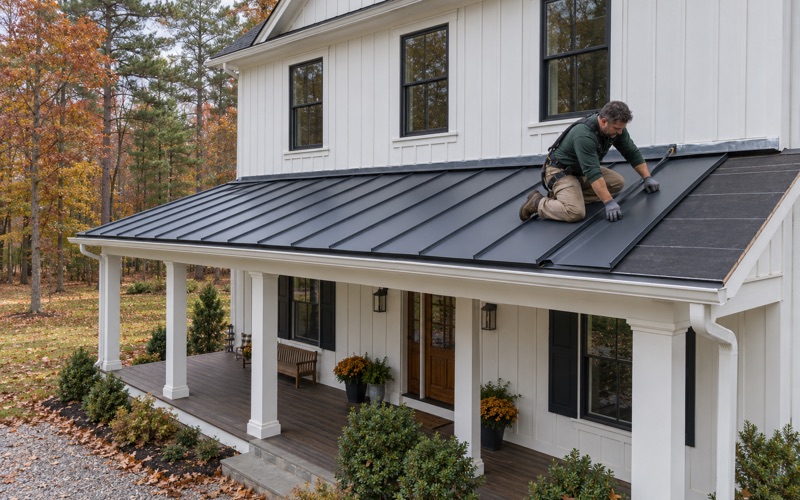
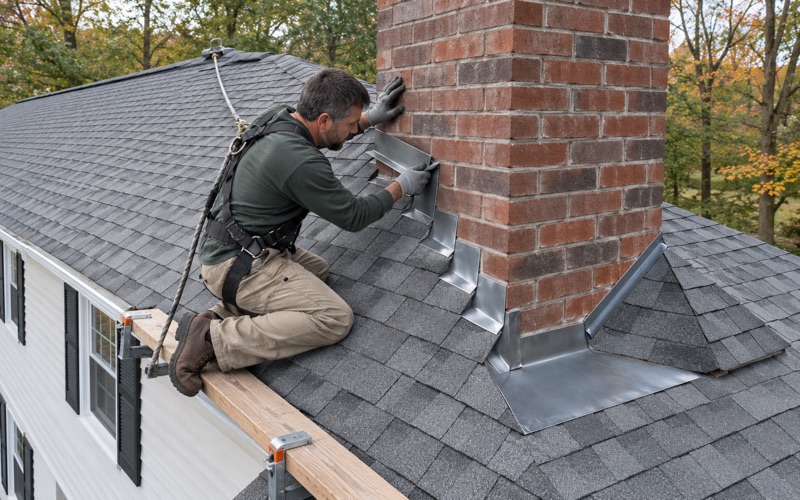
Step, counter and chimney flashing is replaced with the roof rather than reused, and attic ventilation is checked on every replacement. On a detached one- or two-family house, replacing the roof covering is ordinary maintenance under N.J.A.C. 5:23-2.7 and needs no permit, so once the tree is down the roofing itself can be scheduled without another trip to Tinton Avenue.
- 20+ Years in Business
- Free Written Estimates
- Attic Checked on Every Leak Call